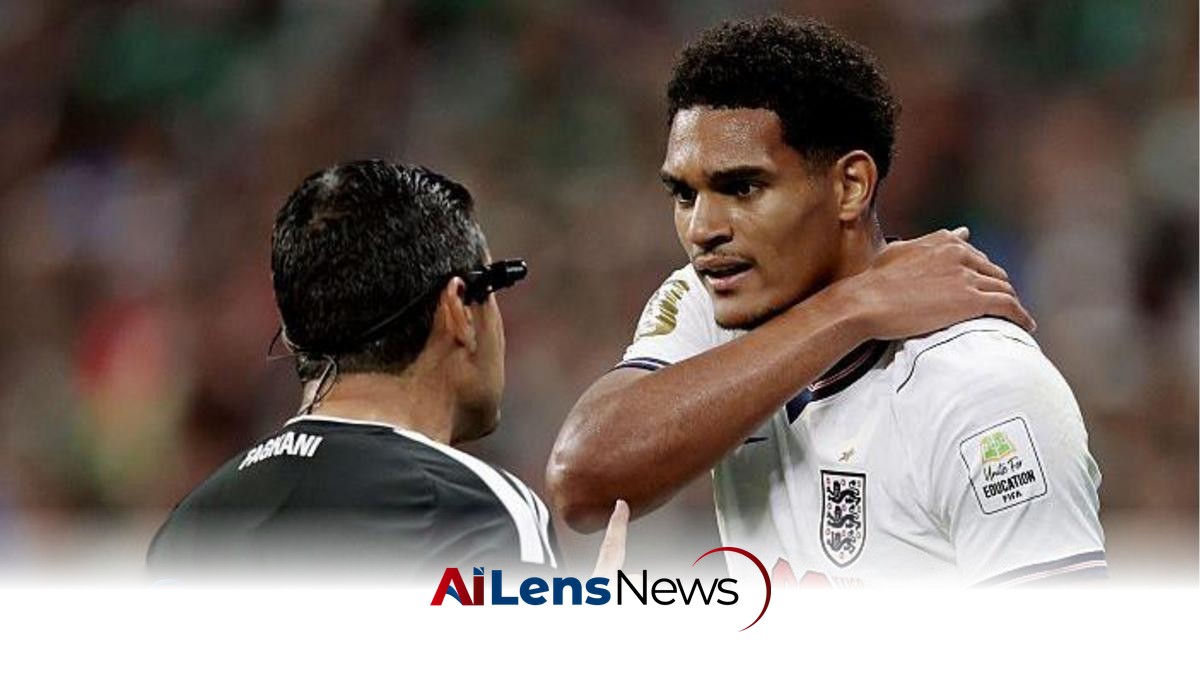


The FA is evaluating an appeal regarding Jarell Quansah's red card during England's World Cup match against Mexico.
New Delhi, India Jul 7, 2026 ALN: The Association is considering whether to appeal against England defender Jarell Quansah's red card during the World Cup victory over Mexico.
Quansah was sent off in the 54th minute of Sunday's 3-2 win following a high challenge on Jesus Gallardo. This incident has sparked significant debate regarding the interpretation of foul play in high-stakes matches such as the World Cup. The red card was issued after the referee deemed Quansah's challenge dangerous, classifying it as serious foul play. As a result, the Bayer Leverkusen defender could face a two-game ban, which would have serious implications for England's squad as they progress in the tournament.
The FA is weighing its options after United States star striker Folarin Balogun had a red card overturned following intervention from US President Donald Trump. Balogun was sent off for a foul on Bosnia-Herzegovina defender Tarik Muharemovic in the last 32 of the tournament, raising questions about the consistency of officiating and the possibility of political influence in decisions. President Trump requested FIFA to review Balogun's one-match suspension, arguing that the red card was unjust, as there was no intent to harm. FIFA ultimately made the unexpected decision to suspend the automatic one-match ban for 12 months, a move that has drawn criticism from various quarters within the community.
This incident has highlighted the complexities surrounding red card decisions and the rules governing them. The World Cup rules do not allow appeals for red cards in general, yet FIFA officials invoked Article 27 of their regulations to suspend Balogun's ban. This clause, which had never been utilized before at the World Cup, allows FIFA to make any decision it deems appropriate without adhering to conventional criteria, thereby opening the door to potential inconsistencies in how rules are applied across different cases.
The ramifications of Balogun's overturned ban may lead to a surge of appeals from other teams, as evidenced by reports indicating that France is challenging Michael Olise's yellow card during their victory over Paraguay. Such challenges could potentially disrupt the integrity of the tournament, as teams may seek to exploit this precedent to overturn disciplinary decisions that they believe are unfair.
While the US authorities argued that Balogun's red card was unjust due to the lack of intent, it is important to note that intent was removed from the laws of the game many years ago. The current regulations stipulate that only the outcome of a challenge is considered when determining the severity of a foul. This raises questions about the fairness of the officiating process and whether the rules should be revisited to accommodate the nuances of individual situations. Balogun's red card was not rescinded in the traditional sense; rather, FIFA rules do not permit the rescinding of a red card but instead allowed for the suspension of the subsequent ban. Essentially, the US striker, who has scored three goals for the co-hosts in this tournament, received a temporary reprieve from a sin-bin against Bosnia.
Quansah's situation bears similarities to Balogun's, as he too was sent off for an accidental studs-up challenge. However, the context of the challenge is vital; Quansah was sliding in for a tackle, which complicates the narrative surrounding his dismissal. The interpretation of such challenges often varies among referees, leading to inconsistencies that can affect the outcome of matches. This inconsistency is particularly concerning in a high-stakes tournament like the World Cup, where every decision can have far-reaching consequences.
The potential ban for Quansah would exacerbate an already precarious situation for England's right-back position. Manager Thomas Tuchel has expressed concerns about the depth of his squad in this area, especially with key players sidelined due to injuries. Reece James, who is typically the first-choice right-back, has been unavailable since injuring a hamstring in England's second group match against Ghana. His absence has been felt keenly, as he is known for his defensive prowess and ability to contribute offensively.
In addition to James, other players such as Djed Spence, Ezri Konsa, John Stones, Quansah, and midfielder Declan Rice have all been utilized as right-sided defenders during the World Cup. The frequent changes in personnel have disrupted the defensive cohesion that is crucial for success in knockout stages. Quansah himself had sustained an injury against Panama but was deemed fit enough to start against Mexico, demonstrating the physical toll that the tournament is taking on players.
As England prepares to face Norway in the quarter-finals in Miami on Saturday, the team will need to navigate these challenges carefully. The potential loss of Quansah could force Tuchel into making further adjustments to his lineup, which may impact the team's overall performance. The right-back position is not just about defense; it also plays a critical role in the team's ability to transition from defense to attack. A lack of stability in this area could hinder England's ability to capitalize on offensive opportunities against a strong Norwegian side.
The implications of Quansah's potential ban extend beyond just the immediate challenges faced by the team. They also raise broader questions about the consistency of officiating at the World Cup and the standards applied to different players and teams. With the tournament attracting global attention, the scrutiny on refereeing decisions is intensifying, and any perceived inconsistencies can lead to discontent among fans and teams alike.
Moreover, the debate surrounding red card appeals and the influence of external factors, such as political intervention, can undermine the integrity of the tournament. The situation with Balogun has set a precedent that could lead to further interventions, whether from national federations or even governments, which could complicate the officiating landscape and create an environment where decisions are questioned more frequently.
As the tournament progresses, the FA's decision regarding Quansah's red card will be closely monitored. If they choose to appeal, it could set a significant precedent for future cases, potentially leading to a more contentious atmosphere surrounding officiating decisions. Conversely, if the appeal is rejected, it may reinforce the current standards and practices, but at the cost of England's defensive stability.
In conclusion, the situation surrounding Jarell Quansah's red card and the potential appeal by the FA underscores the broader issues of officiating consistency and the interpretation of rules in high-pressure environments like the World Cup. As teams navigate the complexities of player discipline and the implications of injuries, the focus will remain on how these factors influence the tournament's outcome. The coming days will be crucial as England prepares for its next match, and the decisions made regarding Quansah could have lasting repercussions for the team's campaign. With the stakes so high, both on and off the pitch, the eyes of the ing world will be watching closely.
To learn more about the latest developments in Football (Soccer), stay updated with our exclusive reports and analyses on AiLensNews.

