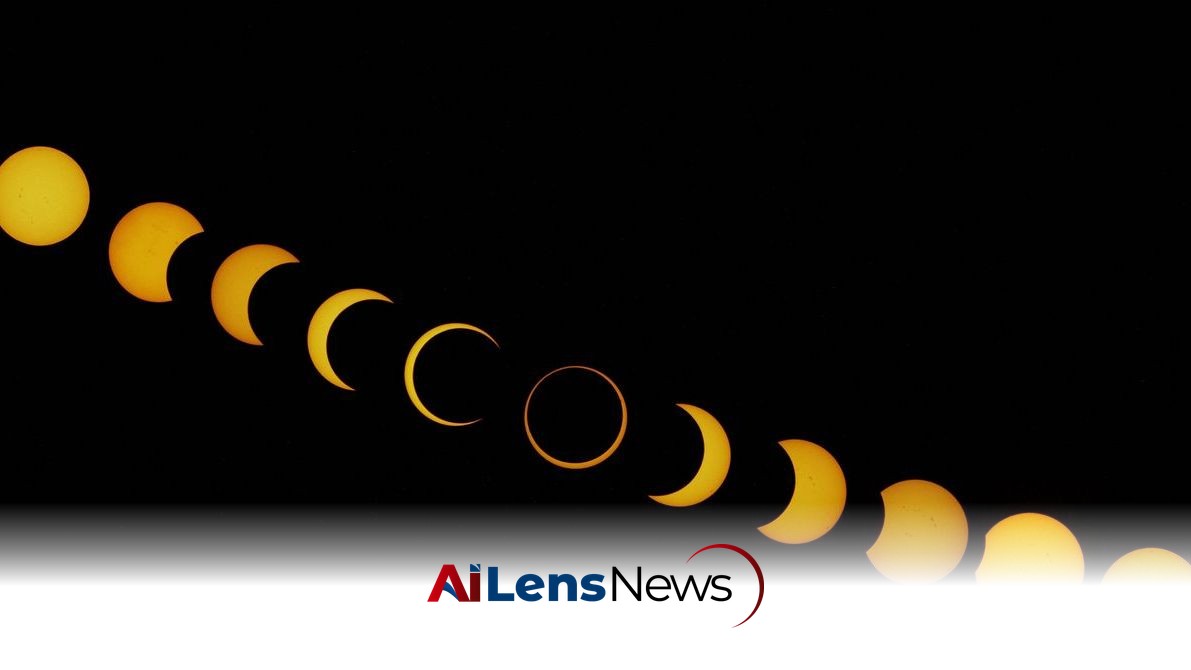


Discover how to witness the solar and lunar eclipses occurring this August, including viewing tips and paths of totality.
Washington DC, United States Aug 2, 2026 ALN: The 2026 astronomical calendar features only four eclipses, yet August stands out as a particularly exciting month for astronomy enthusiasts, with two significant celestial events set to unfold: a total solar eclipse on August 12 and a partial lunar eclipse on August 27 and 28. These eclipses mark the last opportunities for sky watchers in 2026 to witness such phenomena, as the other two eclipses of the year will have already occurred earlier in the year.
The anticipation surrounding these events stems not only from their rarity but also from the unique viewing conditions and geographical locations where they will be most visible. Eclipses have fascinated humanity for millennia, often inspiring awe, fear, and curiosity. They serve as reminders of the intricate dance of celestial bodies in our solar system and provide a chance for both amateur and professional astronomers to engage with the cosmos.
The first of the two eclipses is a total solar eclipse, which occurs when the moon moves directly between the Earth and the sun, casting a shadow on the Earth and blocking the sun's light in certain areas. This particular eclipse will be observable primarily in the northern hemisphere, where the moon's shadow will trace a path from the Arctic down toward parts of Europe.
Path: The path of totality, where observers can experience the full effect of the eclipse, will begin in the Arctic region. Observers in parts of Alaska will have the opportunity to see a partial view of the eclipse, as will individuals in Canada, Iceland, and various locations across the North Atlantic. Notably, some areas in Europe and the eastern United States will also witness portions of the eclipse. However, only a limited number of locations will experience totality, where the sun is completely obscured by the moon. This includes sparsely populated regions of eastern Greenland and the far western edge of Iceland. The most populated area within the path of totality will be Spain, which will experience its first total solar eclipse in over a century, making it a significant event for both locals and tourists.
How to view it: Observers are reminded that viewing a solar eclipse requires proper eye protection. Looking directly at the sun without appropriate filters can cause severe eye damage. For those in the path of totality, the eclipse will reach its peak in the late afternoon, a time that offers dramatic viewing conditions as the sun is low on the horizon. In Spain, for example, the eclipse will occur around sunset, with totality expected at approximately 8:30 PM Central European Time. The entire event will last about an hour, with totality lasting approximately two minutes, providing a brief window for observers to experience the awe of a total solar eclipse.
The second eclipse of the month is a partial lunar eclipse, which occurs when the Earth passes between the sun and the moon, causing a portion of the moon to enter the Earth's shadow. During this event, while part of the lunar surface remains illuminated, the remainder will darken or take on a reddish hue, often referred to as a "blood moon." This phenomenon occurs due to Rayleigh scattering, the same effect that causes sunsets to appear red.
Path: Unlike solar eclipses, which follow a narrow path across the Earth, lunar eclipses can be viewed from a much broader area. The partial lunar eclipse will be visible simultaneously across vast regions of the planet, with the best views expected across the Americas. This includes eastern and central Canada, the United States, Mexico, and extending throughout Central America, the Caribbean, and South America. Given that up to 96 percent of the lunar disk will be obscured by the Earth's shadow during this eclipse, observers can expect a striking visual display.
How to view it: For those in the Americas, the eclipse will begin late on August 27 and continue into the early hours of August 28. For instance, in Mexico City, the partial phase will commence at 8:30 PM local time, peak around 10:13 PM, and conclude at 11:53 PM. To witness the eclipse, observers should seek locations with clear skies and minimal light pollution; the farther one is from urban areas, the better the viewing experience will be.
The significance of these eclipses extends beyond mere observation. They serve as an opportunity for educational outreach and community engagement, allowing schools, observatories, and local astronomy clubs to organize events that promote interest in science and the natural world. Eclipses can be a catalyst for scientific inquiry, encouraging discussions about the mechanics of celestial movements, the nature of light, and the importance of protecting our night skies from light pollution.
Moreover, eclipses often attract tourists and enthusiasts from around the globe, boosting local economies in areas that fall within the path of totality. The influx of visitors can lead to increased business for hotels, restaurants, and local attractions, providing a tangible benefit to communities that host these rare celestial events.
In summary, the total solar eclipse on August 12 and the partial lunar eclipse on August 27–28 represent significant astronomical events that offer unique viewing opportunities for people across various regions. As these dates approach, individuals and communities are encouraged to prepare for these celestial spectacles, ensuring they have the necessary equipment and knowledge to safely enjoy the experience. Whether it’s the thrill of totality or the beauty of a partially eclipsed moon, these events promise to captivate and inspire awe among those who take the time to observe them.
Looking back at historical eclipses, the fascination with solar and lunar eclipses is deeply rooted in human history. Ancient civilizations often viewed eclipses as omens, and many cultures developed myths and legends to explain these celestial events. For example, the ancient Greeks believed that solar eclipses were a sign of the gods' displeasure, while the Chinese associated them with the emperor's fate. In modern times, scientific advancements have demystified eclipses, allowing us to understand the mechanics behind them and appreciate their beauty without fear.
As we prepare for the eclipses of August 2026, it is important to recognize the role that technology plays in enhancing our viewing experience. Advances in photography and imaging technology allow enthusiasts to capture stunning images of these celestial events. Social media platforms enable individuals to share their experiences in real-time, fostering a sense of community among observers worldwide. Live-streaming options also make it possible for those unable to travel to the path of totality to witness the event from the comfort of their homes.
In conclusion, the upcoming eclipses in August 2026 serve as a reminder of our connection to the universe and the wonders that lie beyond our planet. They represent an opportunity for education, community engagement, and economic benefit, as well as a chance for individuals to engage with the cosmos in a meaningful way. As the dates draw near, the excitement will undoubtedly build, and those fortunate enough to witness these celestial phenomena will carry the memories of these extraordinary events for a lifetime.
This story originally appeared on en Español and has been translated from Spanish.
To learn more about the latest developments in Environment & Climate, stay updated with our exclusive reports and analyses on AiLensNews.

