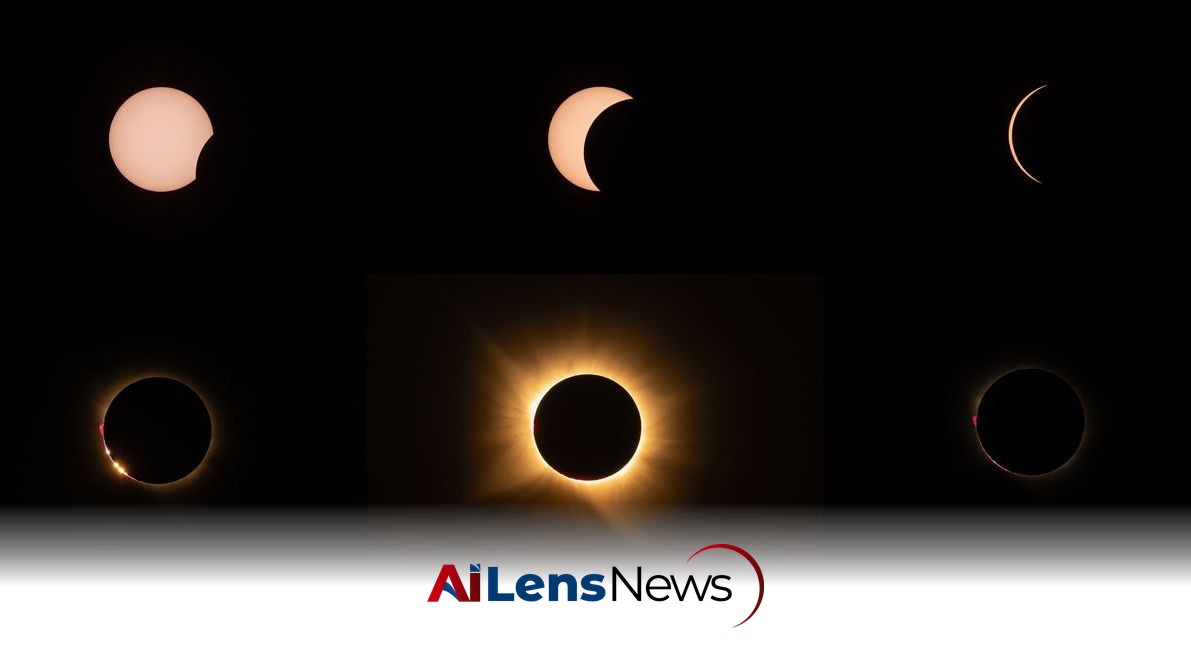


Mark your calendars for the incredible solar eclipses in 2027 and 2028, featuring the longest total eclipse of the century and a stunning annular eclipse.
Washington DC, United States Aug 16, 2026 ALN: The total solar eclipse on August 12 produced some of the most spectacular images of this phenomenon in recent years. But the mini golden age of eclipses in Europe is just beginning. The so-called “Iberian eclipse trio” still has two events to go—and both promise to be even more incredible than the one that just occurred.
The next eclipse will occur in 2027 and has been dubbed “the eclipse of the century” due to its extraordinarily long duration, while the last one—set for 2028—will offer a chance to glimpse the “ring of fire” associated with an annular eclipse. Whether you’re in Spain or planning to be there (or elsewhere in the path of totality), it’s not too early to create your viewing plan.
On August 2, 2027, one of the longest total solar eclipses of this century will occur. At its peak, the moon will completely cover the sun for 6 minutes and 23 seconds. To put that in perspective, the totality phase of the August 12 eclipse lasted approximately 2 minutes and 18 seconds. The 2027 eclipse will keep the sun hidden for nearly three times as long, making it the longest eclipse in 100 years.
A narrow band across the planet will be able to view the total eclipse. The path will begin in southern Spain and northern Africa, cross Morocco, Algeria, Tunisia, Libya, and Egypt, and then continue through Saudi Arabia, Yemen, and Somalia. Spain will be the only European country from which the total phase can be observed. (Well, technically, UK residents and visitors in the overseas territory of Gibraltar will also get a view.)
Egypt will see both the peak of the eclipse and the longest duration. The moon’s shadow will fall over ancient Thebes, home to the temples of Karnak and Luxor, and, on the other side of the Nile, the Valley of the Kings. The pyramids of Giza, further north, will lie just outside the path of totality and will experience a partial eclipse.
The third eclipse in the series will occur on January 26, 2028. This time, the moon will not completely cover the sun. Instead, it will leave a bright ring of fire visible around it. The path of annularity will cross South America, from Ecuador and Peru to Brazil, before crossing the Atlantic and ending in Portugal and Spain.
Brazil will offer the longest-lasting spectacle. There, the ring will remain visible for 10 minutes and 27 seconds—a duration that makes this event one of the longest annular eclipses of the century. Spain will experience a shorter but potentially very photogenic version. In cities such as Seville, Córdoba, Albacete, and Valencia, the ring of fire will last about seven minutes and will appear very close to the horizon, shortly before sunset.
Solar eclipses have captivated humanity for centuries, often regarded as celestial events that evoke both wonder and fear. Historically, eclipses were seen as omens, and various cultures developed myths and rituals to explain their occurrence. In modern times, however, they serve as a reminder of the intricate mechanics of our solar system and the relative positions of celestial bodies.
As we approach the eclipses of 2027 and 2028, interest in these astronomical events is expected to surge. Astronomers and enthusiasts alike are preparing for these rare opportunities to witness such phenomena. For many, viewing a total solar eclipse is a once-in-a-lifetime experience, prompting extensive travel plans and gatherings in areas situated along the path of totality.
For those planning to witness the 2027 eclipse, it is essential to understand the importance of location. The path of totality is often quite narrow, and being situated within this band is crucial for experiencing the full effect of the eclipse. Viewing conditions, such as weather and light pollution, can significantly affect the experience, making it advisable to scout locations in advance and have contingency plans in place.
Moreover, safety precautions are paramount when observing solar eclipses. Special eclipse glasses or solar viewers are necessary to protect the eyes from harmful solar radiation during partial phases of the eclipse. It is crucial to avoid looking directly at the sun without proper eye protection, as this can lead to serious eye damage.
In addition to the visual spectacle, solar eclipses have profound implications for scientific research. They provide unique opportunities for astronomers to study the sun's corona, the outer atmosphere that is usually obscured by the bright light of the sun's surface. During totality, scientists can gather data that can lead to a deeper understanding of solar dynamics and phenomena, including solar flares and coronal mass ejections.
As excitement builds for the upcoming eclipses, various organizations and institutions are gearing up to facilitate public engagement and education. Events may include talks, workshops, and guided viewing sessions, aimed at enhancing the experience of both seasoned astronomers and novice enthusiasts. Schools and educational institutions are also likely to incorporate eclipse-related activities into their curricula, fostering a greater understanding of astronomy among students.
In conclusion, the eclipses of 2027 and 2028 promise to be monumental events, not only for their visual grandeur but also for their potential to inspire curiosity and scientific inquiry. As preparations continue, individuals and communities are encouraged to embrace the opportunity to witness these celestial wonders and to appreciate the intricate dance of the cosmos that makes such events possible.
This story originally appeared on en Español and has been translated from Spanish.
To learn more about the latest developments in Environment & Climate, stay updated with our exclusive reports and analyses on AiLensNews.

