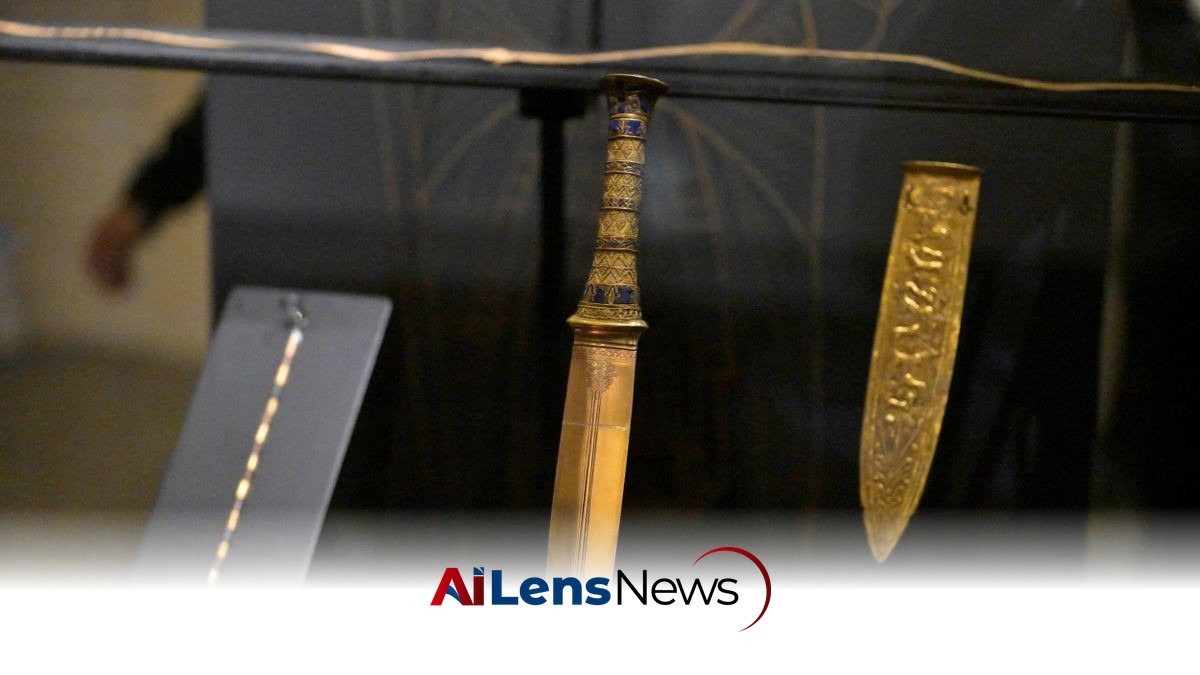


A recent study reveals that elite ancient Egyptian women were skilled warriors, challenging the notion of their passive lifestyles.
London, United Kingdom Jul 17, 2026 ALN: Recent research into the lives of elite ancient Egyptian women, particularly princesses, has revealed a strikingly different narrative than the one traditionally accepted by historians. This groundbreaking study suggests that these royal women were not merely passive figures living in luxury but were instead skilled warriors and active participants in their society. The findings challenge long-held beliefs about the roles of women in ancient Egypt, particularly those of high status.
Historically, it was assumed that royal women in ancient Egypt spent their lives in harems, devoted to the domestic sphere and serving the needs of their families. This stereotype painted a picture of idleness and leisure, with little emphasis on their potential contributions to society. However, the new research sheds light on a more dynamic and engaged existence, revealing that these women were likely trained in various physical disciplines, including archery and weaponry.
The study in question focuses on five mummies of Egyptian princesses, dating back approximately 4,000 years. These mummies, identified as Khenmet, Itaweret, Ita, Sathathormeryt, and Noub-Hotep, were discovered in the 1890s at the archaeological site of Dahshur, a complex known for its pyramids and tombs. After being misplaced for many years, they were rediscovered in the Egyptian Museum during a curation project in 2020, allowing researchers to conduct a detailed study of their remains.
Upon examination, the mummies were found to be buried with an array of weapons, including bows, arrows, and daggers. Initially, archaeologists were uncertain whether these items were merely ceremonial or indicative of the princesses' actual combat training. However, the latest research has provided compelling evidence that these royal women were not only capable of using these weapons but had likely undergone extensive training from a young age.
According to Zeineb Hashesh, an archaeologist involved in the study, the skeletal remains of the princesses exhibited specific adaptations that indicate they had engaged in rigorous physical activity. The presence of muscle attachments on their bones suggests they had developed the strength necessary for archery and other physical pursuits. Dr. Hashesh noted that the bones displayed distinct textures and ridges, which typically result from habitual high-intensity physical tasks. This evidence points to a lifestyle far removed from the sedentary existence previously assumed.
The implications of this research extend beyond the physical capabilities of these women. It suggests that they may have played significant roles in various aspects of society, including hunting, ceremonial activities, and even the defense of the royal court. The ability to wield weapons and engage in physical combat could have empowered these women, allowing them to act as leaders and protectors within their communities.
One of the most remarkable aspects of the findings is the level of skill required to master archery. Dr. Hashesh emphasized that archery demands not only upper-body strength but also a stable grip that can lead to permanent changes in the bones of the hand over time. This level of dedication to mastering such a challenging skill underscores the commitment these princesses had to their training and their roles within their society.
The study also highlights the possibility that these women trained in the use of other weapons, such as daggers and maces. For example, Princess Ita, believed to be between 28 and 34 years old at the time of her death, showed strong upper-body muscle attachments, indicating habitual use of such weapons. Meanwhile, Princess Khenmet, who was in her late 30s or 40s, exhibited signs of thinning bones but had robust ligament attachments, further supporting the notion of her physical training.
Additionally, the research suggests that the medical care available to these royal women was more advanced than previously recognized. The skeletal evidence indicates that Princess Itaweret survived significant injuries, including broken ribs and foot fractures, without any signs of infection or malalignment. Dr. Hashesh posited that this level of healing suggests a sophisticated understanding of medical treatment in ancient Egypt, possibly involving techniques such as fracture reduction and splinting.
The findings from this study not only reshape our understanding of the roles of women in ancient Egypt but also challenge the broader narrative of gender roles in historical contexts. By demonstrating that high social status could allow women to transcend traditional expectations, the research opens up new avenues for exploring the lives of women in other ancient cultures. This is particularly significant in light of the often male-centric narratives that dominate historical accounts, which can obscure the contributions of women across various cultures and time periods.
In ancient Egypt, women of high status, such as princesses, often held considerable power and influence. They could own property, engage in trade, and even rule as regents in the absence of their male counterparts. This research adds a layer of complexity to our understanding of their roles, suggesting that they were not only influential in domestic matters but also capable of participating in the physical and political arenas of their time.
Moreover, the evidence of physical training and combat skills among these princesses invites a reevaluation of how we perceive the intersection of gender and power in ancient societies. It raises questions about the roles women may have played in military contexts and the extent to which they were involved in the defense of their realms. Such considerations can lead to a more nuanced interpretation of historical events, including warfare and governance, where women may have had more agency than previously assumed.
The study of these ancient Egyptian princesses reveals a complex and nuanced picture of their lives, characterized by physical prowess and active engagement in society. As researchers continue to unearth the past, it becomes increasingly clear that the roles of women in ancient civilizations were far more diverse and dynamic than previously thought. This research not only enriches our understanding of ancient Egypt but also serves as a reminder of the importance of challenging stereotypes and preconceived notions in the study of history.
In conclusion, the implications of this research extend well beyond the specifics of ancient Egyptian society. The findings encourage a broader reconsideration of women's roles in history and the ways in which societal structures can shape and limit perceptions of gender. By uncovering the realities of the lives of these princesses, scholars are not only contributing to a more accurate historical record but also inspiring future research that may uncover similar dynamics in other ancient cultures. As the field of archaeology continues to evolve, the stories of women like Khenmet, Itaweret, Ita, Sathathormeryt, and Noub-Hotep remind us that history is often more intricate and multifaceted than the narratives we have come to accept.
To learn more about the latest developments in Research & Discoveries, stay updated with our exclusive reports and analyses on AiLensNews.

