

As wind turbine blades reach the end of their life, innovative solutions are being developed to recycle them into sustainable materials.
New Delhi, India Jul 4, 2026 ALN: When a renewable energy hero needs to be replaced, how do you maintain its green credentials?
That is the challenge facing the wind farm industry, as turbines across the island begin to reach the end of their useful life. The transition from older to newer technology is not merely a matter of replacing equipment; it also raises significant questions regarding sustainability and al responsibility. As the world increasingly turns to renewable energy sources to combat climate change, the management of decommissioned wind turbine blades has emerged as a pressing issue.
Thousands of tonnes of wind turbine blade material are expected to require replacement by 2030, leading to the question of what to do with them. Wind turbine blades are typically made from composite materials, which are durable but notoriously difficult to recycle. Currently, they largely go to landfill or incineration, practices that contradict the very principles of sustainability that wind energy aims to uphold.
The first ever commercial wind farm on the island of Ireland - Bellacorrick in County Mayo - was decommissioned at the start of the year. This milestone represents not just the end of an era for the facility but also a significant moment for the industry as it grapples with the implications of decommissioning aging infrastructure. Now, two Northern Ireland companies are working together to make the disposal of its blades as eco-friendly as possible, setting a precedent for future practices in the sector.
Over the next 15 years, it is estimated that more than 400 turbines in Northern Ireland will need to be replaced. This statistic underscores the scale of the challenge ahead. The impending wave of decommissioned turbines means a lot of currently non-recyclable material heading to landfill or incineration unless innovative solutions are developed. Scientists from around the world have been working on turning decommissioned blades into other useful products, thereby addressing the waste issue while also creating new opportunities for sustainable materials.
Research by Queen's University Belfast (QUB) has shown that these blades can be safely used to build bridges and other street furniture, effectively repurposing materials that would otherwise contribute to al degradation. This innovative approach not only reduces waste but also promotes the idea of a circular economy where materials are reused and recycled rather than discarded.
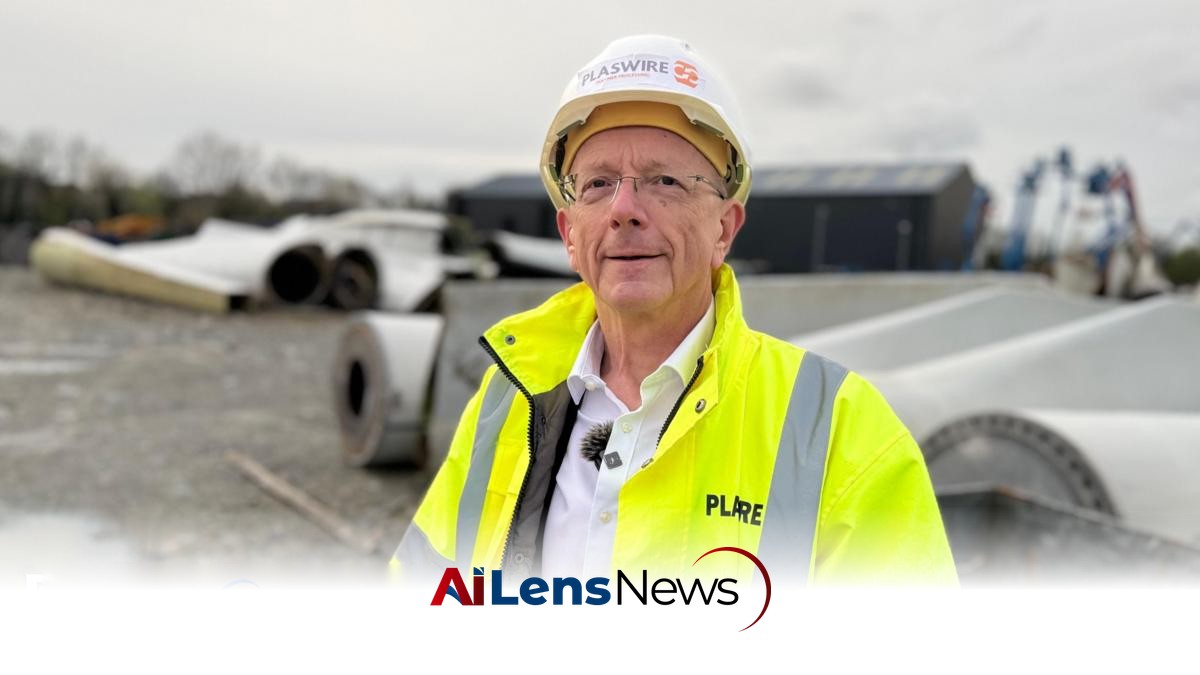
Other companies are looking at different options. The yard at the Plaswire Ltd site in Lurgan, County Armagh, is covered with wind turbine parts and other kinds of large-scale industrial materials looking for an alternative ending. The company specializes in converting these materials into reusable products, highlighting the potential for transformation in what is often seen as a waste problem.
The company's Chief Executive Andrew Billingsley emphasized that finding a way to take blade waste beyond the end of its useful life is an essential part of creating a green, circular economy. "The issue today is, I could say, colossal," he remarked. The scale of the problem is underscored by the fact that the blades are large and have been traditionally disposed of in ally harmful ways, such as being sent to landfills or abandoned in quarries. According to Billingsley, there are currently around 125,000 tonnes of blades across the world being disposed of, but very rarely is this done in a sustainable manner.
Plaswire Ltd is pioneering efforts to turn the blades into a long-lasting reusable material that can serve as an alternative to timber, for applications such as fence posts and reusable transport pallets. Billingsley believes this material could even be utilized as an alternative to precast concrete and timber, thereby reducing the carbon footprint associated with these traditional materials. He points out that producing a tonne of virgin plastic requires about three tonnes of CO2 emissions, while the incineration of plastics produces between 2.7 and 2.9 tonnes of CO2 for every tonne burned. By preventing the incineration of plastics, the company is contributing to a reduction in overall greenhouse gas emissions.
However, proving those green credentials is another matter. The challenge lies not only in creating sustainable products but also in demonstrating their al benefits to consumers and stakeholders. This is where technology plays a crucial role.
Kieran Kelly uses technology to "talk" to recycled blades and other products. The company he founded, ubloquity, attaches a QR code or radio frequency technology to a product, enabling it to be tracked from source to end on its entire journey through the supply chain. This level of traceability is becoming increasingly important as consumers demand transparency regarding the sustainability of the products they purchase.
"Hold your phone close to the product and the product will actually transmit and tell you the story through a mobile device, through your phone, or through an RFID scanner that will tell you when it was made, who made it, what production line it came off, where it originated, and what it is in its final product," Kelly explained. This technology not only allows consumers to understand the lifecycle of the products they use but also empowers brands to showcase their commitment to sustainability.
Kelly noted that similar technology is being employed in post-Brexit checks on freight crossing the Irish Sea border, highlighting its versatility and potential applications across different sectors. With growing requirements for traceability, he stated there is increasing demand for technological solutions to sustainability problems. "It's extremely remarkable to take a legacy industry to show the circular economy, to promote green and to use Northern Ireland's triple market access for positive economic growth, creating jobs," he said.
Moreover, the ability to use technology to transform a very static product from source all the way through to the end user is being recognized as a groundbreaking approach, particularly for Northern Ireland.
When Bellacorrick was opened in 1992, it was a cutting-edge facility, with 21 turbines supplying 6.5 megawatts of power to meet the needs of about 4,500 houses per year. Over the years, advancements in technology have made it possible to produce more energy from fewer turbines. The original wind farm was expected to have a life cycle of 25 years, which it has exceeded, marking a significant achievement in renewable energy generation.
The blades of the original turbines stretched to between 46 and 53 metres at their tip, but newer, more modern blades can reach heights of up to 200 meters. This increase in size allows for more efficient energy production, as larger blades can capture more wind energy. In fact, eighteen very large turbines will replace the 21 that operated at Bellacorrick, with each individual new turbine capable of producing more power than was generated by the entire original wind farm.
The site will be amalgamated with the adjacent Oweninny wind farm, where 60 turbines already produce 192 megawatts of electricity, powering up to 140,000 homes and businesses. When the expansion is complete, the addition of the 18 turbines will increase that capacity to 220,000. This transition not only reflects the evolution of wind energy technology but also emphasizes the industry's commitment to meeting increasing energy demands while minimizing al impact.
As the wind farm industry navigates the complexities of decommissioning aging infrastructure, the focus on sustainable practices in the disposal of wind turbine blades is more critical than ever. The collaborative efforts of companies like Plaswire Ltd and ubloquity, along with the innovative research from institutions like Queen's University Belfast, are paving the way for a more sustainable future in renewable energy. By transforming waste into valuable resources, the industry can uphold its green credentials and continue to contribute positively to the fight against climate change.
To learn more about the latest developments in Environment & Climate, stay updated with our exclusive reports and analyses on AiLensNews.

