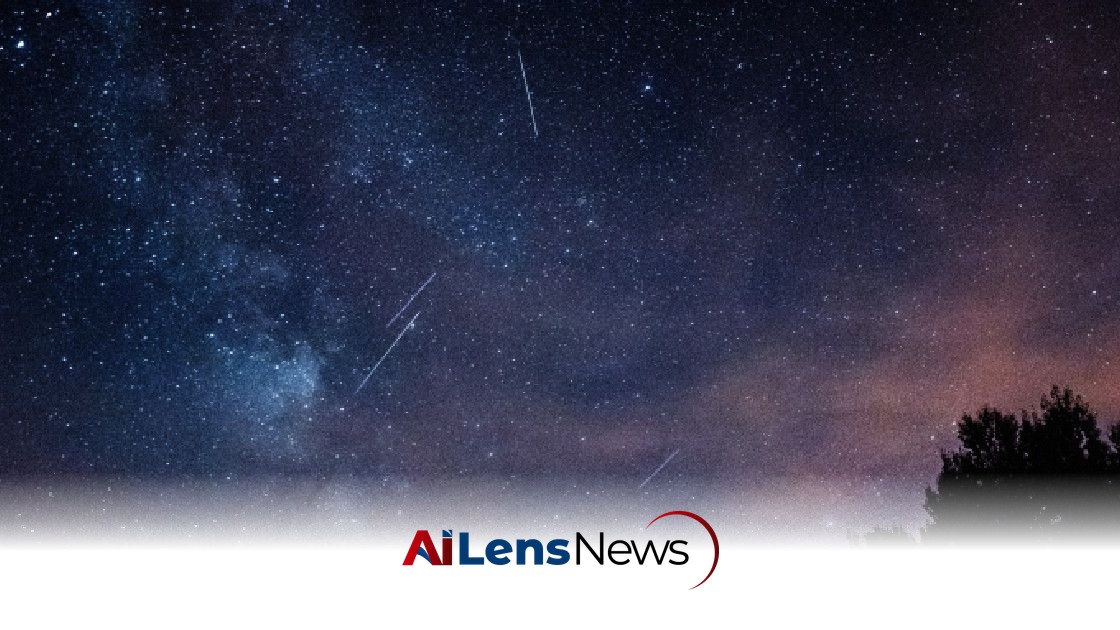


The Southern Delta Aquariids meteor shower will peak on July 29 and 30, offering a chance to see up to 25 meteors per hour in Singapore's skies.
Singapore, Singapore Jul 29, 2026 ALN: The Southern Delta Aquariids meteor shower is an annual celestial event that captivates skywatchers around the world, and this year, it is set to illuminate the skies over Singapore on July 29 and 30. This meteor shower is particularly notable for its potential to produce up to 25 meteors per hour under ideal viewing conditions, making it an exciting opportunity for both amateur and seasoned astronomers alike.
The phenomenon of meteor showers occurs when Earth passes through trails of dust and debris left behind by comets. In the case of the Southern Delta Aquariids, this annual event is linked to Comet 96P/Machholz, which sheds tiny particles as it travels through the inner solar system. When these particles enter Earth’s atmosphere at speeds reaching up to 150,000 miles per hour (approximately 241,000 kilometers per hour), they ignite due to friction with the atmosphere, creating bright streaks of light commonly referred to as shooting stars.
The Southern Delta Aquariids meteor shower is part of a larger cycle of meteor showers that occurs throughout the year. It is one of several meteor showers that enthusiasts look forward to, with the Perseids being another major event on the calendar. The Perseids are expected to peak around August 12 and 13, providing another opportunity for stargazers to witness a spectacular display of shooting stars. Each meteor shower has its unique characteristics, including the number of meteors visible, the speed of the meteors, and the celestial bodies associated with them.
The Science Centre Observatory in Singapore has provided guidance on the best times to witness this celestial display. Stargazers are encouraged to look to the skies between 2 AM and 5:30 AM on both days of the peak. During this period, the sky is typically darker, providing optimal conditions for viewing the meteors. However, the observatory has also noted that the peak of the meteor shower coincides with a full moon on July 29. The brightness of the full moon may hinder visibility for some of the fainter meteors, potentially reducing the overall experience for viewers. This interplay between lunar brightness and meteor visibility is a crucial factor that observers must consider when planning their viewing experience.
For those interested in maximizing their viewing experience, the observatory recommends several locations around Singapore that are known for their minimal light pollution. Ideal viewing spots include East Coast Park, Changi Beach Park, West Coast Park, Marina Barrage, and the Southern Ridges. These locations are advantageous due to their open spaces and the reduced presence of artificial lighting, which can obstruct the view of the night sky. Light pollution is a significant concern for urban areas like Singapore, where bright city lights can drown out the visibility of celestial events. As such, stargazers are advised to seek out darker areas away from the glow of city lights.
In addition to finding the right location, viewers should take care to prepare their eyes for night viewing by avoiding bright screens prior to watching the meteor shower. It is recommended to allow the eyes 20 to 30 minutes to adjust to the darkness, which can enhance the ability to spot the meteors as they streak across the sky. This adjustment period is crucial, as the human eye takes time to adapt to low-light conditions, and doing so can significantly improve the viewing experience.
Understanding the science behind meteor showers can enhance the appreciation of these events. Meteor showers are not only beautiful to observe but also provide insights into the solar system's history and the materials that make up comets. The particles that create meteors are remnants from the early solar system, offering a glimpse into the conditions that existed when our solar system was forming. By studying these particles, scientists can learn more about the composition of comets, the processes that lead to the formation of meteors, and the dynamics of our solar system. This scientific perspective adds depth to the experience of watching a meteor shower, transforming it from a mere visual spectacle into an opportunity for education and exploration of the cosmos.
As the Southern Delta Aquariids meteor shower approaches, it serves as a reminder of the wonders of the universe and the accessibility of astronomical events to the general public. With no special equipment required to view the meteors, this event encourages community engagement and fosters a sense of curiosity about the night sky. Many local astronomy clubs and organizations may also host events or gatherings to coincide with the meteor shower, providing opportunities for enthusiasts to gather, share their experiences, and learn more about astronomy. Such community events can play a vital role in promoting interest in science and fostering a sense of connection among individuals who share a passion for the stars.
In conclusion, the Southern Delta Aquariids meteor shower presents an exciting opportunity for residents of Singapore to connect with the cosmos. By planning ahead, choosing optimal viewing locations, and preparing for the experience, stargazers can enjoy the beauty of shooting stars lighting up the night sky. As the peak dates approach, anticipation builds not only for the Southern Delta Aquariids but also for the subsequent Perseids meteor shower, ensuring that the summer months are filled with celestial excitement for all those who gaze upward. The excitement surrounding these meteor showers highlights the importance of astronomical events in bringing communities together and inspiring future generations to explore the mysteries of the universe.
To learn more about the latest developments in Environment & Climate, stay updated with our exclusive reports and analyses on AiLensNews.

