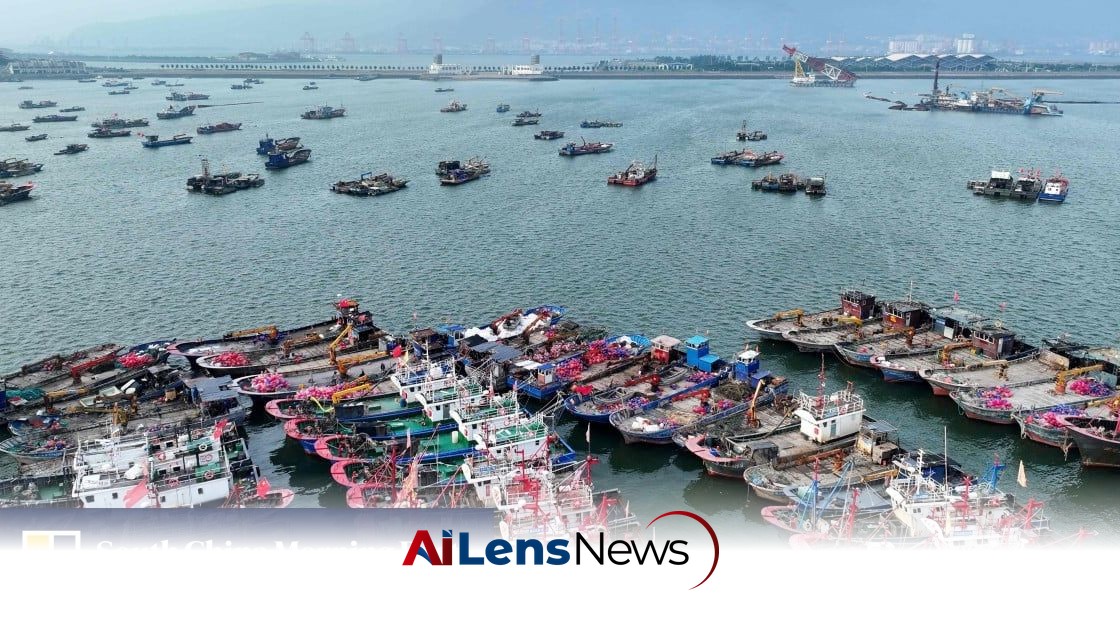


Online ‘weather enthusiasts’ in China are posting typhoon predictions, prompting criticism from state media.
London, United Kingdom Jul 11, 2026 ALN: As residents of eastern China brace for Typhoon Bavi to make landfall, the situation has sparked a notable response from both the public and state media regarding the use of artificial intelligence (AI) in weather forecasting. In recent days, a surge of amateur weather forecasts has emerged on social media platforms, primarily from bloggers who are leveraging AI weather models to predict the storm’s trajectory and impact. This has raised concerns among authorities about the legality and accuracy of such predictions, particularly as the typhoon approaches coastal areas.
Typhoon Bavi, classified as a significant weather event, has been monitored closely by meteorological agencies due to its potential to cause severe damage, including flooding and strong winds. The storm's trajectory has been a topic of intense speculation, and as such, many individuals have turned to social media to share their interpretations of the data available to them. This trend has been particularly pronounced in the age of social media, where information can spread rapidly and reach a vast audience in a matter of minutes.
State broadcaster China Media Group reported on Thursday that several individuals, identifying themselves as “weather enthusiasts,” have been using data from various open-source AI weather models to issue their forecasts. The proliferation of these amateur predictions has not gone unnoticed, as state media emphasized the risks associated with unofficial weather reports during a time of impending natural disaster. The term "weather enthusiasts" often refers to individuals who may not possess formal meteorological training but have developed an interest in weather patterns and forecasting through online resources.
Some of these bloggers have taken their forecasts a step further by offering predictions for specific locations for a fee. This commercialization of weather forecasting raises additional questions about accountability and the reliability of the information being disseminated to the public. For instance, on Thursday evening, a blogger from Shandong province claimed that there was a “90 percent chance” that Typhoon Bavi would move deep into Shandong, basing this assertion on the latest tracking models available to them. Such predictions, while potentially grounded in data, lack the rigorous validation processes that official forecasts undergo.
However, the dissemination of such forecasts is not without legal implications. According to the Meteorology Law of the People’s Republic of China, public weather alerts are required to follow a centralized release system. This law stipulates that only official meteorological stations are authorized to issue forecasts and severe weather warnings. The rationale behind this regulation is to maintain a clear and consistent communication channel during severe weather events, thereby preventing public confusion and ensuring that residents receive accurate and timely information. The law reflects a broader understanding of the potential consequences of misinformation during critical weather events.
Huang Xiang, a researcher at Nanjing University of Information Science and Technology (NUIST), articulated the importance of this centralized system in an interview with the broadcaster. He explained that allowing multiple sources to issue weather forecasts could lead to conflicting information, which could endanger public safety. In times of natural disasters, having a single, authoritative source of information is crucial for effective disaster preparedness and response. The presence of conflicting forecasts can create uncertainty among the public, leading to inadequate preparations for severe weather events.
The emergence of AI technology in weather forecasting has transformed how information is generated and shared. AI models can analyze vast amounts of data and generate predictions with remarkable speed and accuracy. However, the use of these technologies by untrained individuals poses significant risks. Inaccurate forecasts can lead to poor decision-making among the public, such as underestimating the severity of a storm or failing to take necessary precautions. The speed at which AI can process data is a double-edged sword; while it can provide timely updates, it can also propagate errors quickly if the underlying data or models are flawed.
Moreover, the legal ramifications of issuing unauthorized forecasts could lead to penalties for those involved. The government has been known to crack down on unauthorized information dissemination, especially in contexts where public safety is at stake. This has led to a broader discussion about the balance between innovation in technology and the need for regulation to protect the public. The challenge lies in fostering an environment where technological advancements can flourish while ensuring that they do not compromise public safety or lead to misinformation.
As Typhoon Bavi approaches, authorities are likely to intensify their monitoring of social media and other platforms to ensure compliance with the Meteorology Law. This could involve issuing warnings to individuals who continue to post unauthorized forecasts or even taking legal action against those who profit from providing misleading information. The government’s proactive stance on monitoring social media reflects a growing recognition of the power of digital platforms in shaping public perception and behavior during emergencies.
In light of these developments, residents are advised to rely on official sources for weather updates. The China Meteorological Administration (CMA) is the primary authority responsible for issuing weather forecasts and warnings in the country. The CMA employs advanced meteorological technology and has a network of professional meteorologists who analyze data and provide accurate information to the public. The CMA’s role is particularly vital during severe weather events, as they serve as the trusted source of information that can help mitigate the impact of disasters.
In addition to the immediate concerns surrounding Typhoon Bavi, this situation highlights a broader trend in society regarding the intersection of technology and regulation. As AI continues to advance and become more accessible, the potential for misuse in various fields, including weather forecasting, raises important questions about how to manage and regulate such technologies. The challenge lies in fostering innovation while ensuring that public safety and accuracy remain paramount. As AI tools become more sophisticated and user-friendly, the potential for misuse can increase, necessitating a thoughtful approach to regulation.
Ultimately, as Typhoon Bavi draws closer, the emphasis on official forecasts underscores the necessity of reliable information during critical times. While the enthusiasm for AI-generated predictions reflects a growing interest in technology, it also serves as a reminder of the importance of adhering to established regulations designed to protect the public. As the storm approaches, the focus remains on ensuring that residents are equipped with the most accurate information possible to navigate the impending challenges posed by the typhoon. The balance between technological enthusiasm and regulatory compliance will be crucial in shaping future interactions between amateur forecasters and official meteorological institutions.
To learn more about the latest developments in Environment & Climate, stay updated with our exclusive reports and analyses on AiLensNews.

