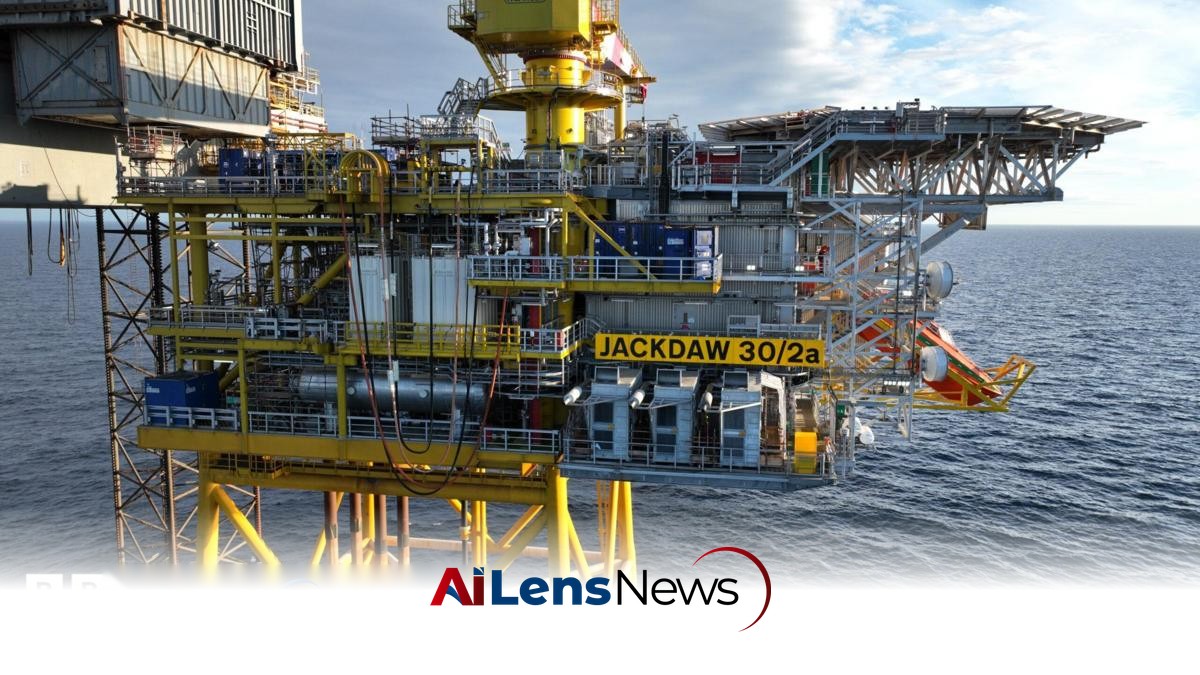


A new report claims emissions from the Jackdaw gas field will have minimal impact on global warming, despite legal challenges and al concerns.
New Delhi, India Jul 8, 2026 ALN: Emissions from the controversial Jackdaw gas field in the North Sea will "not materially influence" global warming, according to a new report from its owner.
The Jackdaw gas field, located in the North Sea, has been a focal point of debate regarding the future of fossil fuel extraction in the UK, especially in light of the escalating climate crisis. The updated al Impact Assessment (EIA) released by Adura, the joint venture behind the project, which includes UK energy giant Shell and Norwegian firm Equinor, claims that the project would account for less than 0.02% of annual global greenhouse gases during its operational lifetime. This assertion comes amidst growing scrutiny of fossil fuel projects and their contributions to climate change.
The updated assessment was mandated by the industry regulator, the Offshore Petroleum Regulator for and Decommissioning (Opred), after a previous submission was found lacking in several critical areas. This requirement followed a legal ruling from a judge who deemed the ministerial consent for the Jackdaw project unlawful, in response to a legal challenge spearheaded by al advocacy groups.
Campaigners have been vocal in their opposition to not only the Jackdaw gas field but also the Rosebank oil field developments, which are similarly contentious. The overarching concern among these groups is the potential al impact of continued fossil fuel extraction in a world that is increasingly seeking to transition to renewable energy sources to mitigate climate change.
The previous revised EIA, submitted in November, indicated that the Jackdaw field could produce up to 35.8 million tonnes of carbon dioxide emissions or equivalent over its operational life. This figure is significant, amounting to approximately 90% of Scotland's total emissions, raising alarms among alists who argue that such projects are incompatible with the UK's climate commitments. The UK government has previously pledged to reduce greenhouse gas emissions to net zero by 2050, a target that many believe is jeopardized by the continued expansion of fossil fuel extraction.
The updated assessment, as requested by Opred, necessitated that Adura provide additional context regarding how emissions from the Jackdaw gas field would impact global ambitions to limit climate change. In its 159-page report, Adura argued that displacing imported liquefied natural gas (LNG) from the United States with gas from the Jackdaw field would save the equivalent of four million tonnes of CO2 emissions. This claim is predicated on the notion that domestic gas production would result in lower overall emissions compared to imports, which involve energy-intensive processes such as liquefaction, transportation, and regasification. However, critics argue that this perspective overlooks the broader context of climate change and the urgent need to phase out fossil fuels entirely.
Furthermore, the report posited that the climate effects of the Jackdaw project would be "minor" due to the UK's well-regulated industry, which has established targets and commitments aligned with the Paris Agreement. The Paris Agreement, an international treaty, aims to limit global warming to well below 2°C, with a target of 1.5°C, to avoid catastrophic climate impacts. Adura's assertion suggests that the UK’s regulatory framework provides a safety net that could mitigate the climate impact of the Jackdaw gas field. However, many alists caution that regulatory frameworks alone may not be sufficient to address the urgency of the climate crisis, especially when fossil fuel extraction continues to expand.
In a landmark decision last year, the Court of Session in Edinburgh ruled that both the Jackdaw and Rosebank projects had been unlawfully approved. The court found that the government had failed to adequately consider the climate impact of burning the oil and gas extracted from these fields, which has led to heightened scrutiny of fossil fuel projects in the UK. The ruling was a significant victory for al groups, including Uplift and Greenpeace, who have been advocating for a more robust assessment of the climate implications of such projects. This legal precedent may set a critical benchmark for future fossil fuel developments, emphasizing the need for comprehensive climate assessments.
Tessa Khan, the executive director of Uplift, has been particularly critical of the Jackdaw project, stating that it would have "no impact on our energy bills and do precious little to increase our gas supply." Her remarks underscore a growing sentiment among critics that, after decades of fossil fuel extraction, the UK has largely exhausted its domestic gas reserves, meaning that smaller fields like Jackdaw are unlikely to make a meaningful difference in energy supply or security. This perspective raises questions about the rationale behind pursuing new fossil fuel projects in an era that demands a shift towards renewable energy sources, as many argue that investments should instead focus on sustainable alternatives.
Greenpeace has also expressed skepticism regarding Adura's claims, arguing that they should not be accepted uncritically. Doug Parr, the chief scientist for Greenpeace UK, emphasized that approving any new oil and gas field is fundamentally incompatible with the goal of limiting global warming to 1.5°C. He characterized the decision to move forward with the Jackdaw project as "reckless and indefensible," particularly given the pressing need to transition away from fossil fuels to avert the worst impacts of climate change. This sentiment reflects a broader concern among alists that continued investment in fossil fuels undermines the urgent actions needed to address climate change.
The debate surrounding the Jackdaw gas field encapsulates broader tensions in the UK and globally regarding energy security, climate commitments, and the transition to renewable energy. As countries grapple with the dual challenges of meeting energy demands while adhering to climate goals, the fate of fossil fuel projects like Jackdaw will likely continue to be contested. The legal and regulatory landscape surrounding such developments is increasingly shaped by public sentiment and al advocacy, which call for a reevaluation of priorities in light of the climate crisis. The potential for legal challenges and public opposition to influence energy policy is becoming more pronounced, as seen in the recent court rulings.
In conclusion, while the owner of the Jackdaw gas field asserts that its emissions will have a negligible impact on climate change, ongoing legal challenges and al concerns continue to fuel an intense debate over the development of fossil fuel resources in the UK. As the country navigates its energy future, the implications of projects like Jackdaw will resonate far beyond the immediate local context, influencing national and global discussions on energy policy and climate action. The outcome of this debate may ultimately shape the trajectory of the UK's commitment to reducing greenhouse gas emissions and transitioning to a more sustainable energy system, reflecting the broader global struggle to balance energy needs with al responsibilities.
To learn more about the latest developments in Environment & Climate, stay updated with our exclusive reports and analyses on AiLensNews.

