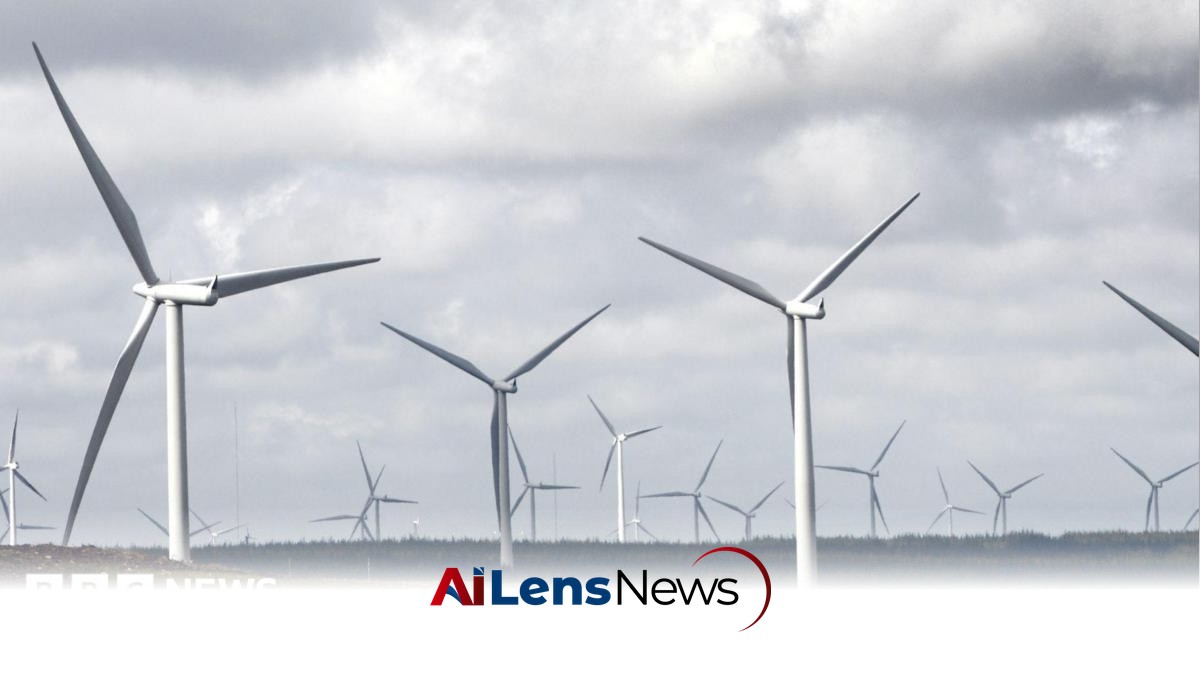


Scotland's Whitelee Windfarm, one of Europe's largest, will be rebuilt with fewer but taller turbines, doubling its electricity output to 1 gigawatt.
New Delhi, India Jul 22, 2026 ALN: One of Europe's biggest onshore wind farms is to be flattened and rebuilt with fewer, taller turbines, its owner has announced.
Whitelee Windfarm has been producing electricity for about 20 years on a stretch of moorland near Eaglesham, south of Glasgow, but is reaching the end of its life. The wind farm has played a significant role in Scotland's renewable energy landscape, contributing to the country's ambitious climate goals and demonstrating the potential of wind energy as a sustainable power source.
Scottish Power Renewables, the owner and operator of the wind farm, states that the existing 215 turbines will be replaced in three phases with around 124, each of which will be about 110m (361ft) taller. This substantial increase in height is indicative of advancements in turbine technology, which have improved efficiency and energy output while reducing the overall number of turbines needed to generate the same amount of electricity.
The £1.5 billion "repowering" project is set to take 10 years to complete and is projected to double the electricity output from 539 megawatts to 1 gigawatt. This increase in capacity is significant, as it is enough to power approximately 650,000 homes. The project's scale reflects the growing demand for renewable energy solutions in the face of climate change and the need for a transition away from fossil fuels.
An application has been made to the Scottish government's energy consents unit, with the full planning application expected to be submitted by the end of next year. This regulatory process is crucial, as it ensures that all al, social, and economic impacts are considered before any construction begins. The anticipated timeline suggests that the upgrade will be fully operational by 2035, aligning with broader governmental targets for renewable energy generation.
The first phase of Whitelee was officially opened by then first minister Alex Salmond in 2009, having been commissioned a year earlier. At that time, it was the largest onshore wind farm in Europe, marking a significant milestone in Scotland's renewable energy journey. The wind farm initially consisted of 140 turbines but has been expanded twice to its current size, reflecting the increasing reliance on wind energy as a viable alternative to traditional energy sources.
Scottish Power Renewables chief executive, Charlie Jordan, emphasized the importance of planning for the future as the turbines approach the end of their natural lifespan. He stated, "At this critical moment in the push for home-grown clean, green energy, it's important we don't go in reverse and lose the clean capacity that's been hard-earned over the last two decades as it comes to the end of its operational life." This sentiment underscores the urgency of maintaining and enhancing renewable energy infrastructure to meet future energy demands.
Keith Anderson, Scottish Power's chief executive, described the repowering of the site as "critical" for its future. In an interview with BBC Radio Scotland Breakfast, he remarked, "Whitelee is an iconic wind farm, it's the biggest one in the UK and it's a huge attraction." His comments highlight the wind farm's significance not only as a power generator but also as a landmark in the UK’s renewable energy landscape.
Anderson further elaborated on the visual impact of the new turbines, noting, "They will be bigger and taller, but you need to put that in context of the landscape. It's a huge open area which was covered with commercial forestry, a lot of which we've taken away. We've turned the back to actually more of its natural state." This approach reflects a growing trend in renewable energy projects to balance energy generation with al stewardship and landscape preservation.
Whitelee Windfarm, built on Eaglesham Moor, is not just a power generation facility; it also serves as a recreational area, featuring footpaths and tracks for walkers to explore between the turbines, as well as a visitor centre. Covering an area of approximately 83 sq km (32 sq miles), it is almost half the size of neighbouring Glasgow, making it a popular destination for outdoor enthusiasts, particularly dog walkers. Scottish Power has assured the public that its three-phase approach to repowering will allow continued access to the site during the rebuild, minimizing disruption to the local community and visitors.
This repowering initiative is not unique to Whitelee; it follows a trend in the wind energy sector where older turbines are being replaced with larger, more efficient models. For instance, the 26 turbines at Hagshaw Hill in South Lanarkshire were repowered last year and replaced with 14 larger ones. However, Whitelee will stand out as the largest wind farm to undergo such a comprehensive turbine replacement, setting a precedent for future projects in the UK and beyond. The company has committed to ensuring that 99% of the existing turbines will be recycled, reflecting a commitment to sustainability and reducing waste in the energy sector.
According to analysts at Regen, more than half of Great Britain's current wind farm capacity is expected to reach the end of its operational life within the next decade. This presents a significant opportunity for repowering initiatives across the country, creating a pipeline of construction work and contributing to economic growth. Industry body Scottish Renewables has emphasized that repowering offers a tremendous opportunity to bolster energy security in the UK.
Angela Hepworth, CEO of Scottish Renewables, noted, "Modern turbines can generate significantly more electricity from existing sites, helping Scotland make the most of its abundant renewable resources." This statement highlights the potential for maximizing the efficiency of existing wind farms, which is crucial as the UK seeks to transition to a low-carbon economy and reduce its reliance on fossil fuels.
The work at Whitelee is expected to generate approximately £330 million for the Scottish economy, contributing to job creation and local development. As the UK navigates the challenges of climate change and energy security, projects like the repowering of Whitelee Windfarm will play a vital role in shaping a sustainable energy future and ensuring that the country meets its climate targets while supporting economic growth.
To learn more about the latest developments in Energy Science, stay updated with our exclusive reports and analyses on AiLensNews.

