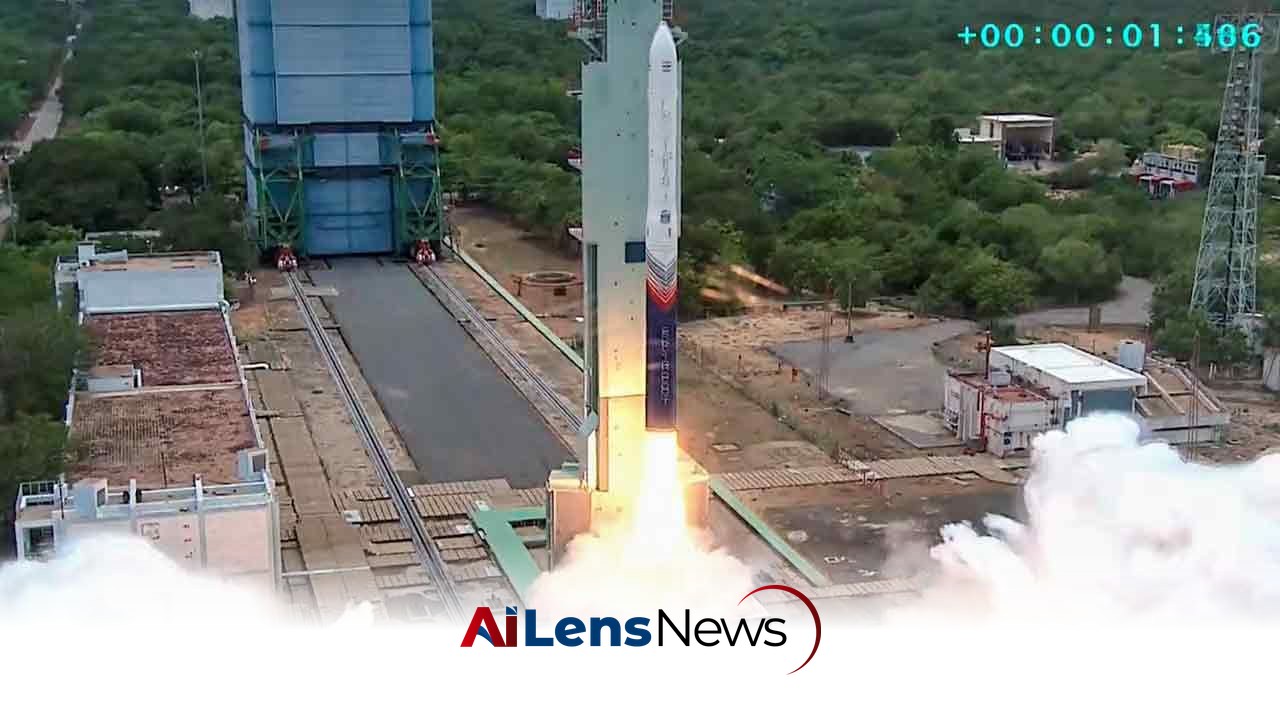


The successful launch of Vikram-1 positions Skyroot Aerospace as a formidable player in the global small-satellite launch market.
New Delhi, India Jul 19, 2026 ALN: India’s space journey has reached a historic milestone with the successful launch of Vikram-1, the first orbital rocket developed in the private sector. This achievement is particularly significant because it accomplished what is exceptionally rare in the space launch industry: a successful orbital mission on its very first attempt. Most new rockets typically encounter failures or major anomalies during their maiden flights, making the flawless insertion of payloads into a 450-km orbit a remarkable demonstration of engineering maturity, rigorous testing, and execution.
Hyderabad-based Skyroot Aerospace has now joined a small and elite group of global companies that have successfully developed and launched orbital rockets. With this launch, India becomes only the third country, after the United States and China, where a private company has independently placed payloads in orbit. The seven-storey rocket, aptly named ‘Aagaman’ (meaning 'arrival'), carried technology demonstration payloads and postcards. It lifted off from ISRO’s First Launch Pad at Sriharikota, and a little over 15 minutes later, successfully placed its payloads in an orbit roughly 450 km above the Earth. This launch is the first of two test flights that Skyroot plans to conduct this year before commencing commercial launches next year.
For nearly six decades, the Indian space sector was entirely under the control of the government. Every celebrated milestone, from the launch of Aryabhatta, India’s first satellite, to the successful missions of Chandrayaan-3, every Polar Satellite Launch Vehicle (PSLV) that became the workhorse of global commercial launches, and every Mars and Moon mission, bore the unmistakable signature of the Indian state. This monopoly has now been broken with the emergence of private players in the sector. The achievement of Skyroot Aerospace is a validation of India’s 2020 space-sector reforms, which opened ISRO’s infrastructure to private firms, thereby proving that Indian startups can independently design, build, and launch orbital-class rockets.
India has set an ambitious target of increasing its share in the global space business market from the current 2% to 10% by 2030. The successful launch of Vikram-1 has established Skyroot as a serious competitor in the fast-growing global small-satellite launch market. The company was founded in 2018 by Chandana and Naga Bharath Daka, who were colleagues at ISRO. They decided to quit their jobs and co-found the space-tech startup with the vision of building rocket components for satellites. Unlike traditional aerospace companies that evolved from defense contractors, Skyroot was born as a startup, embodying a fresh approach to the space industry.
Since the opening of the sector to private players, more than 400 space startups have been established across India. However, Skyroot stands out as the most successful among them, being the only unicorn in the sector. The launch of ‘Aagaman’ comes at a time when India’s space program has garnered significant attention, following ISRO’s historic missions to the Moon, Mars, and the Sun in recent years. Looking ahead, India plans to send astronauts into space next year, launch an orbiter to Venus by 2028, and construct its own space station by 2035. Additionally, Skyroot’s services could also cater to ISRO’s expanding space programs, further integrating the private sector into national space endeavors.
The global demand for launching small satellites has exploded in recent years, driven by advancements in technology and a growing need for satellite-based services. Governments around the world have increasingly turned to specialized private companies that can innovate faster, manufacture at lower costs, and respond more rapidly than traditional state agencies. This shift has led to a burgeoning market for small satellite launches, with private companies in the U.S. and elsewhere leading the charge. India cannot afford to miss this revolution, and the successful launch of Vikram-1 positions it well to capitalize on the growing demand for satellite launches.
The implications of this launch extend beyond just the immediate success of Skyroot Aerospace. It represents a significant shift in how India approaches its space endeavors. The involvement of private companies is expected to foster a more competitive environment, encouraging innovation and efficiency within the industry. As private firms like Skyroot continue to develop their capabilities, they are likely to drive down costs associated with satellite launches, making space more accessible to a wider range of customers, including universities, research institutions, and even smaller nations looking to deploy their own satellites.
Moreover, the success of Vikram-1 may inspire further investment in the Indian space sector, attracting both domestic and international investors who are eager to tap into the potential of a burgeoning space economy. The Indian government has recognized the importance of fostering this sector, and initiatives to support startups and encourage private investment are likely to continue. This could lead to an ecosystem where collaboration between public and private entities becomes the norm, further propelling India’s ambitions in space exploration and technology.
In conclusion, the successful launch of Vikram-1 marks a new era for India's space industry, characterized by the active participation of private companies. As Skyroot Aerospace continues to innovate and expand its capabilities, it not only paves the way for its own success but also contributes to India's broader goals of becoming a significant player in the global space market. The future of India's space endeavors looks promising, with the potential for groundbreaking advancements and a more inclusive approach to space exploration that leverages the strengths of both public and private sectors.
This new chapter in India's space journey is not just about technological advancements; it reflects a broader transformation in the country's economic landscape. The successful integration of private players into the space sector is likely to create a ripple effect, inspiring young entrepreneurs and innovators to explore opportunities in various high-tech fields. The success of Skyroot Aerospace could serve as a blueprint for other startups looking to enter the aerospace domain, showcasing that with the right vision, dedication, and support, it is possible to achieve remarkable milestones.
Furthermore, as India aims to establish itself as a global hub for space technology and research, the role of educational institutions and research organizations will become increasingly crucial. Collaborations between private companies and academic institutions can lead to a rich exchange of ideas, fostering innovation and nurturing the next generation of space scientists and engineers. This synergy will be essential for maintaining India's competitive edge in the global space arena.
In light of these developments, the Indian government is also expected to enhance its policies and frameworks to ensure a conducive environment for private players. This may include simplifying regulations, providing financial incentives, and facilitating easier access to ISRO's resources and infrastructure. Such measures would not only benefit companies like Skyroot but also ensure that India retains its position as a leading player in the international space community.
As the world watches India's evolving space landscape, the successful launch of Vikram-1 stands as a testament to the country's growing capabilities and ambitions. The implications of this launch extend far beyond the immediate success of a single rocket; they signal a profound shift in the dynamics of the global space industry and position India as a formidable contender in the race for space exploration and satellite deployment.
To learn more about the latest developments in Space & Astronomy, stay updated with our exclusive reports and analyses on AiLensNews.

