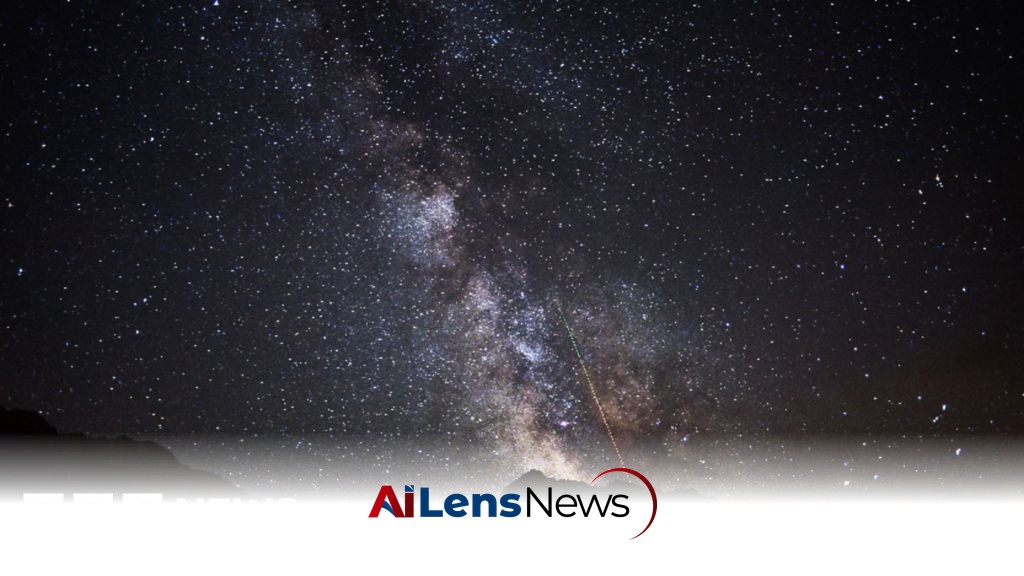


The Perseid meteor shower is set to illuminate the night sky, offering a spectacular display for stargazers. Here's when and how to catch the best views.
New Delhi, India Jul 23, 2026 ALN: The Perseid meteor shower, one of the most anticipated astronomical events of the year, is approaching. Known for its bright meteors and high activity, this shower provides a stunning opportunity for skywatchers to witness nature's celestial fireworks. The Perseids are not only a visual feast but also carry significant cultural and scientific importance, making them a focal point for both amateur and professional astronomers alike.
This year's peak viewing period for the Perseid meteor shower will occur on the night of August 12 and the early morning hours of August 13. During this time, observers can expect to see up to 100 meteors per hour under optimal conditions. The Perseids are known for their reliability, often providing a consistent display of shooting stars each year. Their peak occurrence typically aligns with the warm summer nights in the Northern Hemisphere, making it a popular event for families and friends to gather outdoors.
The Perseids are known for their bright and fast meteors, often leaving glowing trails. These meteors originate from the debris left by the comet Swift-Tuttle, which orbits the sun every 133 years. As Earth passes through this debris field, particles enter the atmosphere at high speeds, creating the spectacular light show. The meteors can appear in a variety of colors, depending on their composition and the altitude at which they burn up in the atmosphere. Most meteors are small, ranging from the size of a grain of sand to a pea, but they can produce brilliant displays as they incinerate upon entering the Earth’s atmosphere.
The Perseid meteor shower has been observed for over 2,000 years, with historical records tracing back to ancient civilizations. The name "Perseid" comes from the fact that the meteors appear to originate from the constellation Perseus. This connection to mythology adds an additional layer of intrigue for those interested in the stories and legends that have accompanied celestial events throughout human history. Various cultures have associated the Perseids with different myths; for instance, in ancient Greece, the shower was linked to the hero Perseus, who is celebrated for slaying Medusa.
The study of meteor showers like the Perseids provides valuable insights into the composition of comets and the nature of our solar system. By analyzing the meteors, scientists can learn about the materials that were present during the formation of the solar system over 4.5 billion years ago. This research can help in understanding the origins of water and organic compounds on Earth, which are essential for life. For instance, studies of meteoric material can reveal clues about the building blocks of life, which may have been delivered to Earth via comets and asteroids.
Additionally, meteor showers serve as a reminder of the dynamic nature of our universe. The Perseids are just one of many meteor showers that occur throughout the year, each with its unique characteristics and origins. Other notable meteor showers include the Geminids in December and the Quadrantids in January, each offering their own displays and opportunities for observation. The study of these events can help scientists understand the history of our solar system and the processes that govern celestial bodies.
The Perseid meteor shower has also had a significant cultural impact over the centuries. In many societies, meteor showers have been viewed as omens or messages from the heavens. They have inspired countless works of art, poetry, and literature, reflecting humanity's fascination with the cosmos. For example, the sight of shooting stars has often been associated with wishes and dreams, leading to the popular tradition of making a wish upon seeing a meteor.
The Perseids have also become a community event in many regions, with organized gatherings and public viewings. Astronomy clubs and local observatories often host events to educate the public about the shower and provide telescopes for closer observation of celestial objects. These events foster a sense of community and shared experience, encouraging people of all ages to engage with and the wonders of the night sky.
The Perseid meteor shower is a breathtaking event that offers a unique chance to connect with the cosmos. Mark your calendars for August 12-13, gather your friends and family, and prepare for a night of wonder as the sky lights up with meteors. This annual phenomenon not only captivates the hearts of those who witness it but also inspires future generations to look up and explore the mysteries of the universe. Whether you are a seasoned astronomer or a casual observer, the Perseids provide an accessible and awe-inspiring experience that highlights the beauty and wonder of our night sky. As we continue to explore our universe, events like the Perseids remind us of our place within it and the shared experiences that connect us all.
To learn more about the latest developments in Environment & Climate, stay updated with our exclusive reports and analyses on AiLensNews.

