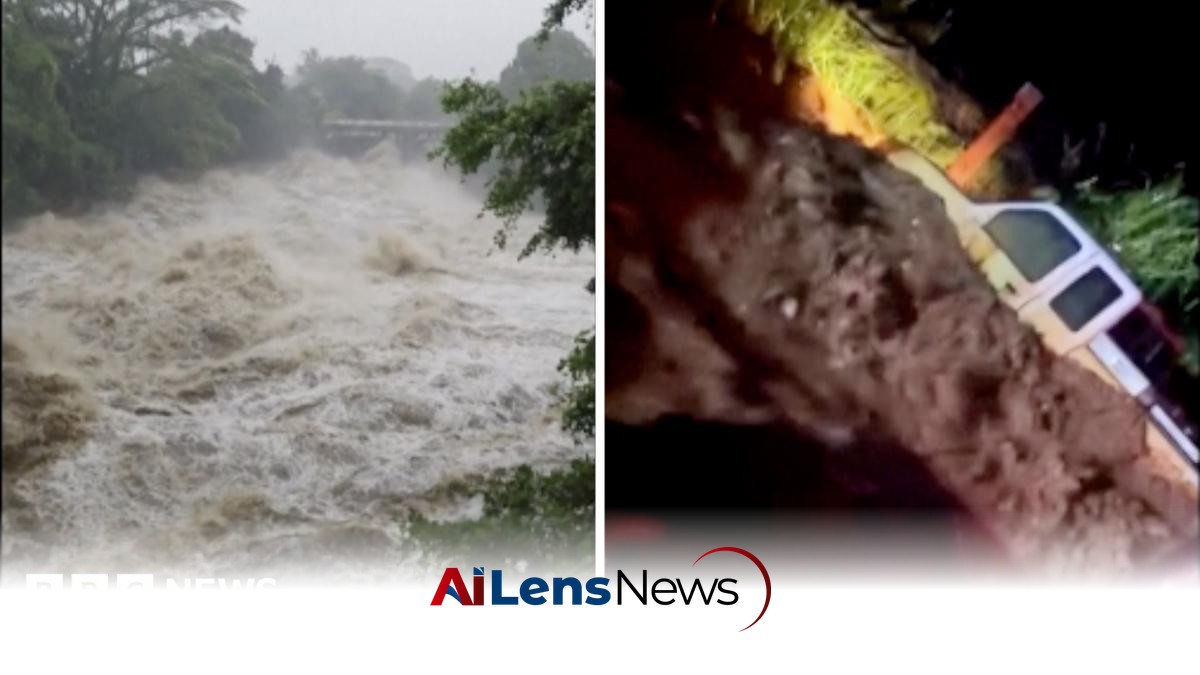


Flash floods and mudslides in Hawaii have caused significant damage following Hurricane Lala, leaving one dead and over 200,000 without power.
New Delhi, India Aug 17, 2026 ALN: Hurricane Lala has wreaked havoc in Hawaii, leading to severe flash floods and mudslides that have devastated the Big Island. The storm, categorized as a one, skirted the island over the weekend, resulting in the tragic death of one individual. The impact of this hurricane is felt deeply across the region, as communities grapple with the immediate aftermath and begin to assess the long-term implications of such natural disasters.
According to officials, the heavy rains and strong winds associated with the hurricane were powerful enough to displace approximately 100 homes from their foundations. This level of destruction highlights not only the ferocity of the storm but also the vulnerability of certain areas in Hawaii to extreme weather events. The displacement of homes signifies a significant disruption to lives, as families are forced to seek shelter and assistance in the wake of the storm's destruction.
Moreover, the impact has been widespread, with more than 200,000 households losing power as the storm progressed. Power outages during such storms can lead to a cascade of additional challenges, including the loss of access to clean water, food preservation, and communication. Emergency services face increased pressure to respond to the needs of those affected, and the restoration of power is crucial for recovery efforts.
As the situation unfolds, officials are closely monitoring the storm's trajectory, which is expected to continue moving westward over the next few days. The unpredictability of hurricanes poses a significant challenge for meteorologists and emergency management teams. Residents are urged to remain vigilant as further weather warnings are issued, emphasizing the need for preparedness in the face of natural disasters.
This incident highlights the increasing frequency and intensity of extreme weather events, raising concerns about climate change and its effects on vulnerable regions. Studies have shown that climate change is likely contributing to the increased severity of hurricanes and other weather phenomena. Experts emphasize the need for improved infrastructure and emergency preparedness to mitigate the impact of such natural disasters. In Hawaii, where tourism and agriculture are vital to the economy, the implications of severe weather can be particularly damaging, affecting not only local communities but also the broader economic landscape.
In the wake of the disaster, local authorities are mobilizing resources to assist affected residents and restore essential services. This includes deploying emergency response teams, setting up shelters, and coordinating with local and federal agencies to ensure that aid reaches those in need. Recovery efforts will be crucial in the coming days as the community begins to assess the full extent of the damage. The process of recovery is often long and arduous, requiring significant resources and support from various levels of government and non-profit organizations.
As Hawaii braces for the aftermath of Hurricane Lala, the focus remains on safety and recovery, with officials urging residents to stay informed and prepared for any further developments. Community resilience is tested during such crises, and the collective response can foster a sense of solidarity among residents. It is during these challenging times that the importance of community networks and support systems becomes evident, as neighbors come together to assist those in need.
Additionally, the long-term implications of Hurricane Lala's impact on Hawaii's infrastructure and will need to be addressed. With the increasing threat of climate change, discussions around sustainable development and disaster preparedness are more critical than ever. Policymakers may need to consider investing in more resilient infrastructure, such as improved drainage systems and flood barriers, to better protect communities from future storms.
Furthermore, the psychological impact of such disasters cannot be overlooked. The trauma associated with losing one's home or community can have lasting effects on individuals and families. Mental health support services will be essential in the recovery process, helping residents cope with the emotional toll of the disaster.
In conclusion, Hurricane Lala serves as a stark reminder of the power of nature and the vulnerabilities faced by communities in its path. As recovery efforts begin, the focus will not only be on rebuilding but also on learning from this experience to better prepare for future events. The need for a comprehensive approach to disaster management, which includes climate adaptation strategies, infrastructure investment, and community support, is paramount as Hawaii continues to navigate the challenges posed by changing weather patterns and increasing storm intensity.
To learn more about the latest developments in Environment & Climate, stay updated with our exclusive reports and analyses on AiLensNews.

