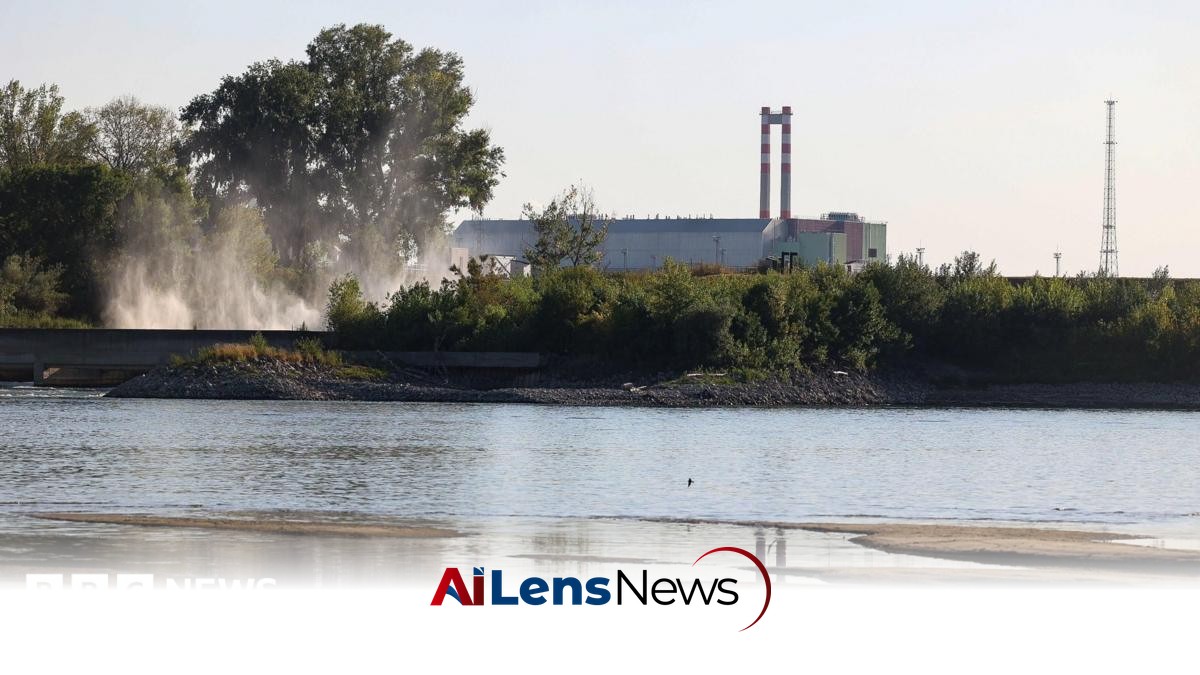


Hungary's only nuclear power plant is shutting down due to unprecedented low water levels in the Danube, raising concerns about energy supply amid ongoing heatwaves.
New Delhi, India Jul 30, 2026 ALN: Hungary's only nuclear power plant will be forced to shut down entirely for the first time due to record low water levels of the River Danube, Prime Minister Péter Magyar has said.
The Soviet-era Paks power plant, located about 100 kilometers southwest of Budapest, relies on the Danube River for its cooling system. The low water levels have reached a critical point where the suction nozzles used to draw water for cooling purposes are unable to function effectively. This unprecedented situation marks a significant moment in Hungary's energy landscape, as the Paks plant has historically been a cornerstone of the country's electricity supply.
Prime Minister Magyar has expressed concerns that the shutdown of the Paks plant could lead to a "critical" energy supply situation starting Monday. This warning comes amidst an ongoing heatwave that has seen temperatures soar to around 37 degrees Celsius (98.6 degrees Fahrenheit) for an extended period. The combination of elevated temperatures and diminished water levels poses a dual challenge for Hungary's energy infrastructure.
As with many nations across Europe, Hungary has faced a summer characterized by low rainfall and extreme heat. The situation is not unique to Hungary; neighboring countries, including Serbia and Romania, have also reported similarly low water levels in the Danube, which has fallen to its lowest levels in three decades. The Danube, which flows through ten countries in Central and Eastern Europe, serves as a vital waterway for commerce, industry, and energy production.
In light of the impending energy crisis, Prime Minister Magyar has urged citizens to conserve electricity, particularly during peak demand hours from 17:00 to 22:00. He has recommended that residents limit energy-intensive activities such as charging electric vehicles and operating air conditioning units. Furthermore, he mentioned the possibility of implementing a "rotational shutdown regime" if necessary, indicating that the government may need to take additional measures to ensure the stability of the national power grid. This could involve compiling a list of large electricity and water consumers whose usage might be restricted during peak times.
The situation in Hungary mirrors developments in Romania, where one of the two reactors at the Cernavoda nuclear power plant has also been shut down due to low water levels in the Danube. The Cernavoda plant, which contributes approximately 20% of Romania's electricity, has been forced to take this precautionary measure to prevent further complications. The state-owned company Nuclearelectrica is working diligently to avoid a complete shutdown of its second reactor, as doing so would leave Romania temporarily without any nuclear energy production, similar to Hungary's predicament.
The broader implications of this energy crisis are significant. Climate change is increasingly recognized as a driving force behind extreme weather events, including the heatwaves and drought conditions currently affecting Europe. According to reports from the Copernicus Climate Change Service, Europe is the fastest-warming continent, experiencing temperature increases at nearly double the global average. This trend has led to more frequent and intense summer heatwaves, heightened pressure on water resources, and a rise in wildfires across the region.
In Romania, the National Institute of Hydrology has reported a drastic drop in the average river flow where the Danube enters the country. Typically measured at 4,700 cubic meters per second in July, the flow has plummeted to less than one-third of that figure, reaching just 1,600 cubic meters per second. Forecasts suggest that this decline will continue, potentially falling to 1,500 cubic meters per second by Tuesday. Such low water levels not only affect energy production but also disrupt shipping and other economic activities reliant on the river.
The Danube River stretches 2,857 kilometers (1,775 miles) through 19 countries, making it one of Europe's most significant waterways. The river's upper reaches flow from Germany to Slovakia, while the middle basin runs from Bratislava to the Serbia-Romania border. The lower stretch extends through Romania and Bulgaria, ultimately reaching the Danube Delta, which flows into the Black Sea. The river's ecosystem and the communities that depend on it are now facing unprecedented challenges due to the ongoing drought.
The low water levels have led to unexpected discoveries along the riverbanks. In Croatia, the remains of a sunken Hungarian cargo ship have resurfaced, while in Serbia, the remnants of a German river flotilla have become visible. In Bulgaria, a resident of Ruse found bones on the riverbed, which experts later identified as belonging to a mammoth, including a lower jaw, two tusks, and possibly a rib. Such discoveries highlight the historical and ecological significance of the Danube, even as current conditions threaten its vitality.
Shipping operations have been severely impacted, particularly in Bulgaria, where border police had to evacuate 186 passengers from the Viking Ullur river cruise ship after it ran aground near Vidin. The passengers faced shortages of food and water as the ship was unable to dock, and efforts to send a rescue vessel were hampered by shallow waters. Ivan Zhekov, head of river supervision at Bulgaria's maritime administration, noted that the current water levels are unprecedented, stating, "I have never heard of such low levels over the years. There has certainly not been a similar situation since 1990."
The challenges posed by low river levels extend beyond the Danube. In Serbia, tributaries like the Sava and Tisa are also experiencing low water levels, exacerbated by the combination of high temperatures and insufficient rainfall during the spring months. Serbian hydrologist Dejan Vladiković highlighted that the Danube's current levels are the lowest seen in 50 to 60 years, with climatologists predicting no significant improvement until mid-September. In addition, temperatures in Serbia are expected to reach as high as 38 degrees Celsius (100.4 degrees Fahrenheit), with local areas potentially experiencing even higher temperatures.
The situation is not confined to Hungary and its immediate neighbors; across Europe, forecasters warn that fire-prone conditions are likely to spread into central regions. Countries such as Greece and Turkey are among those facing severe heat and drought, which have contributed to widespread wildfires. In recent weeks, vast areas of France and Spain have experienced some of the most intense and widespread wildfires in living memory, resulting in hundreds of thousands of evacuations and significant damage to property and the .
As Hungary grapples with the implications of the Paks nuclear plant's shutdown, the situation serves as a stark reminder of the interconnectedness of climate change, energy production, and water resource management. The challenges faced by Hungary and its neighbors underscore the need for comprehensive strategies to address the impacts of climate change while ensuring a stable and sustainable energy supply for the future.
To learn more about the latest developments in Environment & Climate, stay updated with our exclusive reports and analyses on AiLensNews.

