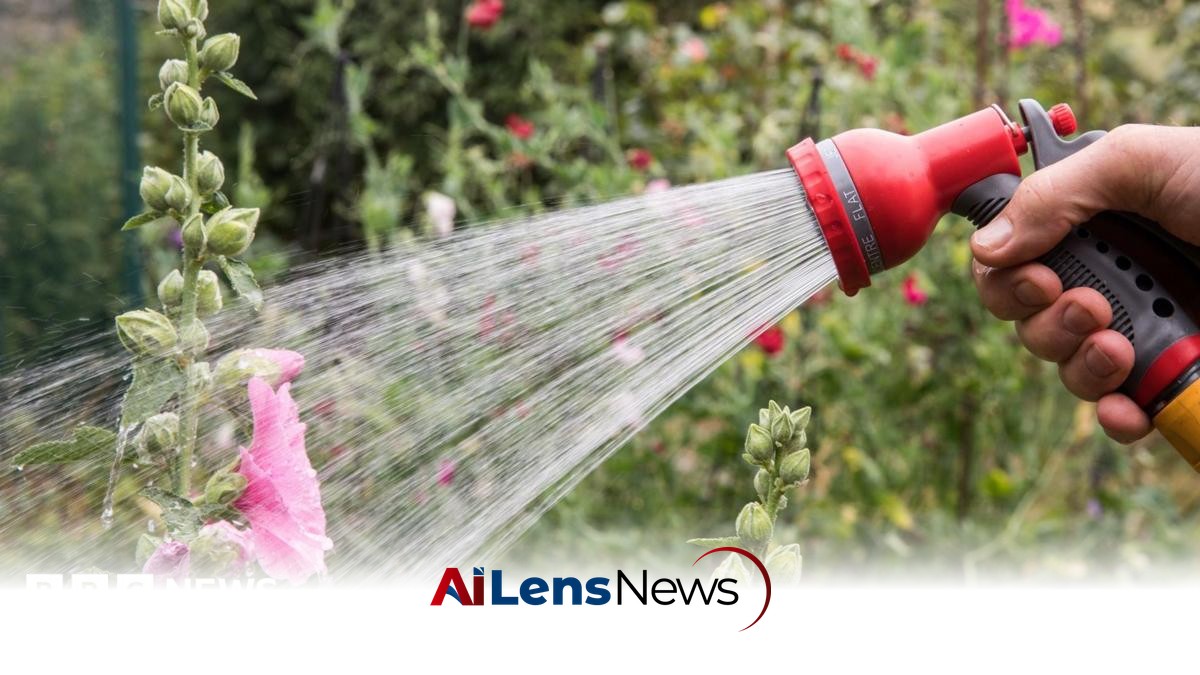


Over eight million households in the UK face hosepipe bans due to water supply strains from recent heatwaves, raising questions about water management.
New Delhi, India Jul 21, 2026 ALN: Hosepipe bans have been introduced across large areas of southern and eastern England and parts of Wales, as successive heatwaves have left water supplies under strain.
But while spring and early summer have been relatively dry for much of the UK - with temperatures regularly exceeding 30C - winter was much wetter than usual. This disparity in seasonal weather patterns has raised concerns about the overall management of water resources in the UK, especially as climate change is expected to lead to drier summers in the future.
More than 20 million people have been placed under hosepipe bans. This means hosepipes cannot be used for watering gardens, washing vehicles and windows, and filling pools. Such bans are not only a response to immediate water supply concerns but also reflect a broader strategy to manage water resources more sustainably in the face of changing climate conditions.
The implementation of hosepipe bans has sparked discussions about the effectiveness of current water management practices and whether the UK is adequately prepared for the increasing likelihood of drier summers. The current situation has led to a reevaluation of water conservation measures and the infrastructure needed to support long-term water availability.
So how is your area doing and how close are you to a drought? There is no single definition of drought, but it is ultimately caused by a prolonged period of low rainfall, which has knock-on effects for nature, agriculture, and water supplies. The variability in weather patterns complicates the situation, as regions may experience different levels of rainfall and temperature, leading to uneven water availability across the country.
Authorities in each UK nation decide whether to declare drought or water scarcity based on an assessment of current water levels and long-term weather forecasts. Both of these states can trigger a hosepipe ban. Drought is characterized by a lack of precipitation, whereas water scarcity refers to a mismatch between water supply and demand - so it is not just about the weather. This distinction is crucial for understanding the underlying issues affecting water availability.
This summer, bans have been introduced to manage high water demand, particularly in areas where water resources are being stretched thin. The decision to impose these restrictions is often made in consultation with al agencies and local authorities to ensure that water supplies can be sustained for essential needs.
In England, most areas are currently in "normal" status, according to the Agency. However, the situation is not uniform across the country. So far, eight UK water companies have announced hosepipe bans, seven in England and one in Wales. This indicates a growing concern among water providers about the sustainability of their supplies amidst changing weather patterns.
In East Anglia, the Cam and Ely Ouse, North West Norfolk, and North Norfolk catchments are in "prolonged dry weather" status - the category below drought. Similarly, Devon, Cornwall, and the Isles of Scilly are also classified under prolonged dry weather, as are the Hampshire and the Isle of Wight parts of the Solent and South Downs Area. North and south-east Wales have been moved from "normal" to prolonged dry weather status, according to Natural Resources Wales, while there are no official droughts currently in Northern Ireland. Scotland does not declare droughts but monitors "water scarcity," with several areas in eastern Scotland classified as being in "moderate scarcity" but none in the most extreme category of "significant scarcity."
Our three main sources of water are rivers, reservoirs, and groundwater. Each of these sources plays a critical role in ensuring that communities have access to fresh water. Following the hot, dry weather, river flows were low in June for parts of the UK, highlighting the impact of reduced rainfall on surface water supplies.
"Without significant rainfall, we could see increasing impacts on wildlife, agriculture, and water resources as the summer progresses," said Steve Turner, a hydrologist at the UK Centre for Ecology & Hydrology (UKCEH). This statement underscores the interconnectedness of water resources with ecological health and agricultural productivity, both of which are vital to the UK economy and food security.
Reservoirs are a crucial part of water supplies, and levels in Northern Ireland, Wales, and Scotland are all "healthy" and above expected for this time of year. However, England's reservoirs are at roughly average levels for the time of year, albeit with some variation across the country. This regional disparity in reservoir levels indicates that some areas may be more vulnerable to water shortages than others, necessitating targeted conservation measures.
South-east England relies more heavily on groundwater than reservoirs. Groundwater originates as rainfall and is naturally stored beneath the surface in the pore spaces and fractures in rocks. In June, groundwater levels were generally at or just below normal, having been topped up by winter rainfall but depleted by a drier spring in most regions. This highlights the importance of seasonal rainfall patterns in maintaining groundwater levels, which can take longer to replenish compared to surface water sources.
But water can flow more slowly through some rock types than others, sometimes taking years to fully respond to current conditions. These groundwater stores "respond more slowly to changes in the climate than rivers, which is why they provide a useful buffer during periods of drought," said Prof Alan MacDonald of the British Geological Survey. Understanding the dynamics of groundwater is essential for effective water management, especially in areas that rely heavily on this resource.
It is why groundwater droughts in the south of England generally take a longer time to develop but can be longer-lasting if they do occur. This characteristic makes groundwater management a critical component of long-term water supply strategies, particularly as the UK faces the prospect of more frequent and intense dry spells due to climate change.
Droughts are complex phenomena, driven by a mix of natural and human causes. The Met Office expects the UK to experience drier summers on average in future as the world warms, though there has been no clear trend so far. This uncertainty complicates planning and management efforts, as water providers must adapt to an evolving climate landscape.
But rising temperatures can play a more direct role by drawing extra moisture from the soil via evaporation. "A warmer atmosphere is thirstier for moisture and this can mean water in the soil, rivers, and reservoirs are depleted more effectively, leading to more rapidly onsetting droughts, heatwaves, and wildfires," said Richard Allan, professor of climate at the University of Reading. This perspective emphasizes the need for integrated water management strategies that consider both climate impacts and human consumption patterns.
However, there are other factors that determine whether dry conditions lead to water shortages, including how we use water. The efficiency of water use and management practices can significantly influence the resilience of water supplies during periods of low rainfall. In a landmark review into the water sector of England and Wales, water companies were criticized for historic underinvestment in water infrastructure. This criticism has led to calls for reform and investment to ensure that the water supply system can withstand future challenges.
As part of plans to address water shortages, the government and water companies are planning nine new reservoirs for England by 2050, in addition to one under construction at Havant Thicket in Hampshire. These initiatives reflect a proactive approach to enhancing water storage capacity and improving resilience against future droughts.
But the Agency has warned that measures to tackle water leaks and control water demand - potentially including hosepipe bans and more smart meters - may be needed in England too. Addressing water leaks is critical, as a significant amount of treated water is lost through aging infrastructure. Water companies in Scotland, Wales, and Northern Ireland - which are all public bodies or non-profit - also said they were taking steps to secure future supplies. These efforts include improving infrastructure, enhancing conservation measures, and engaging with communities to promote responsible water use.
In conclusion, the hosepipe bans currently in effect across parts of the UK serve as a reminder of the delicate balance between water supply and demand, particularly as the nation grapples with the realities of climate change. As the UK prepares for potentially drier summers ahead, the need for effective water management strategies has never been more pressing. The actions taken today will shape the sustainability of water resources for future generations.
To learn more about the latest developments in Environment & Climate, stay updated with our exclusive reports and analyses on AiLensNews.

