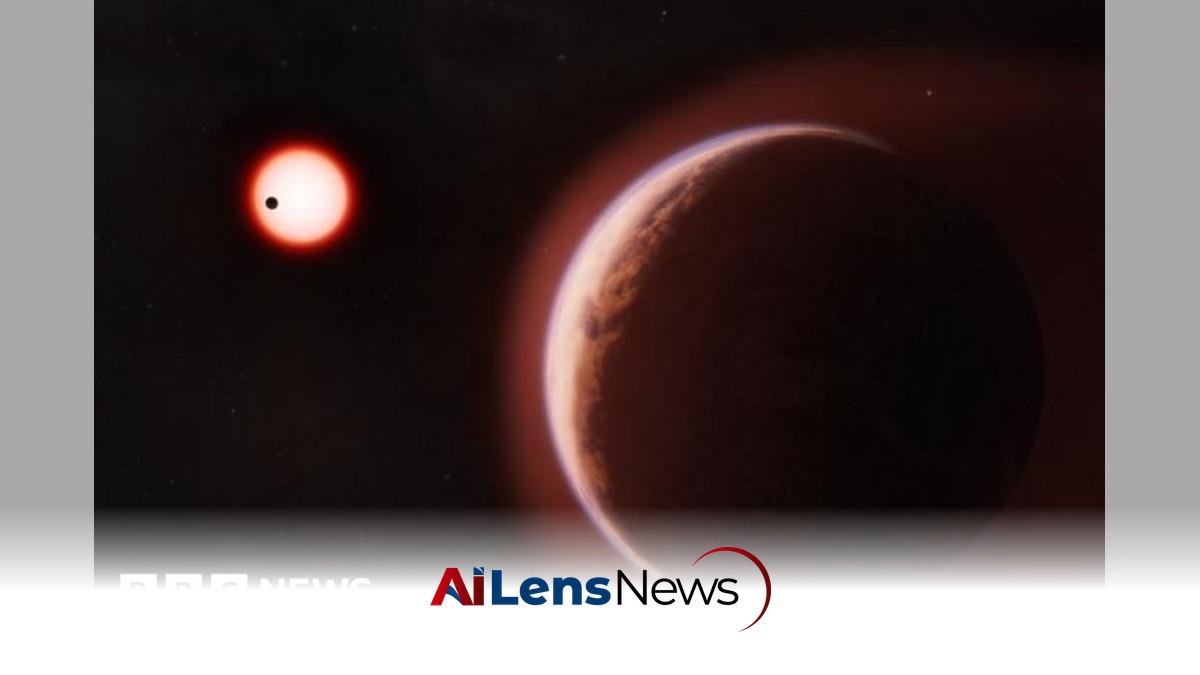


Researchers have identified the first atmosphere surrounding an Earth-like planet in the habitable zone of a distant star, marking a significant milestone in the search for extraterrestrial life.
New Delhi, India Jul 17, 2026 ALN: Researchers have found the first atmosphere surrounding an Earth-like, rocky planet orbiting within the habitable zone of a distant star.
The researchers say that their discovery provides the strongest evidence yet that worlds with conditions similar to Earth could exist beyond our solar system. This finding is significant not only for the field of astronomy but also for the broader scientific community and the public's understanding of our place in the universe.
The gas detected in the atmosphere is helium, which would not be able to support life, but other gases may also be present. Helium is a noble gas, known for its lack of reactivity, which makes it unlikely to participate in the chemical processes necessary for life as we know it. However, the presence of helium could indicate complex atmospheric dynamics and processes at play.
The lead author, Dr. Collin Cherubim of Harvard University, described the discovery as "a big deal". He emphasized the importance of this finding in the context of humanity's quest to understand whether we are alone in the universe. "This is the first time anyone has found an atmosphere on a rocky planet in the habitable zone of another star," he stated, highlighting the significance of the research in advancing our knowledge of exoplanets.
The planet, called LHS 1140 b, is located 48 light-years from Earth, orbiting a red star that is much smaller and cooler than our Sun. Red dwarfs, like the star LHS 1140 orbits, are the most common type of star in the Milky Way galaxy. They have a longer lifespan than larger stars, which allows for a more extended period during which planets within their habitable zones can potentially develop life-sustaining conditions.
More than 6,000 worlds have been discovered orbiting distant stars. However, this new discovery is significant because it brings us a step closer to one of the biggest prizes in astronomy: the discovery of life on another world. The search for exoplanets has accelerated in recent years, particularly with the advent of space telescopes such as Kepler and TESS (Transiting Exoplanet Survey Satellite), which have vastly expanded our catalog of known planets.
The researchers, writing in a scientific journal, are clear that they have not confirmed the presence of life yet. For a planet to support life, it must have water and be at the right distance from its star—not too close, as it would be too hot, and not too far, as it would be too cold—existing in what is known as the "Goldilocks zone". This zone is crucial for the potential development of life, as it allows for the existence of liquid water, a fundamental ingredient for life as we understand it.
Planetary scientists refer to this zone as the ideal range for sustaining life, similar to the fairy tale character who was particular about the temperature of her porridge. While hundreds of planets have been found in the Goldilocks zones of their respective stars, only a few dozen are small and rocky, like Earth, which is another factor in determining a planet's ability to support life.
Until now, none of those planets have been found to possess an atmosphere. The presence of an atmosphere is critical because it can regulate temperature, protect against harmful radiation, and provide essential elements for biological processes. The discovery of LHS 1140 b's atmosphere is a pivotal moment in exoplanet research, as it may pave the way for future studies to determine the composition of atmospheres on other Earth-like planets.
However, the only gas discovered in the atmosphere so far is helium, likely found in the upper atmosphere, which on its own would not support life. Researchers are hopeful that further observations will reveal additional gases that could indicate a more complex atmosphere capable of sustaining life. The search for such gases is a crucial part of understanding the potential habitability of exoplanets.
There may be other, more life-sustaining gases present lower down. Dr. David Charbonneau, also from Harvard, emphasized that the important aspect is the discovery of an Earth-like planet outside our solar system with an atmosphere. "People are generally interested in the big questions: Are we alone? Is there life beyond Earth or our solar system? To that end, this study reveals the first atmosphere discovered on a rocky planet in the habitable zone of a star outside our solar system," he remarked, underscoring the significance of this research in addressing fundamental questions about life in the universe.
LHS 1140 b isn't the only world under scrutiny in the search for life. K2-18 b, a sub-Neptune with a possible water-rich interior, made headlines when scientists detected signs of dimethyl sulfide—a gas linked to marine life on Earth. This finding sparked excitement about the possibility of life on that planet, but a NASA-led reanalysis in 2025 found the signal too weak to confirm and indicated that the gas can form without biological processes. This highlights the challenges and complexities involved in interpreting atmospheric data from distant worlds.
The seven rocky worlds of TRAPPIST-1 remain intriguing as well: NASA's James Webb Space Telescope ruled out an Earth-like atmosphere on TRAPPIST-1 d, while data for TRAPPIST-1 e remains frustratingly inconclusive. The TRAPPIST-1 system has captured the imagination of both scientists and the public due to its potential for habitability and the variety of planets within the system, each presenting unique opportunities for exploration.
This groundbreaking discovery of LHS 1140 b offers hope and excitement in the ongoing quest to find life beyond our planet. As technology advances and our observational capabilities improve, scientists are optimistic that more atmospheres of potentially habitable exoplanets will be discovered, leading to a deeper understanding of the conditions necessary for life and the potential for finding life elsewhere in the universe. The implications of these discoveries could reshape our understanding of biology, evolution, and the very nature of life itself, making this an exhilarating time for both astronomers and the general public alike.
To learn more about the latest developments in Space & Astronomy, stay updated with our exclusive reports and analyses on AiLensNews.

