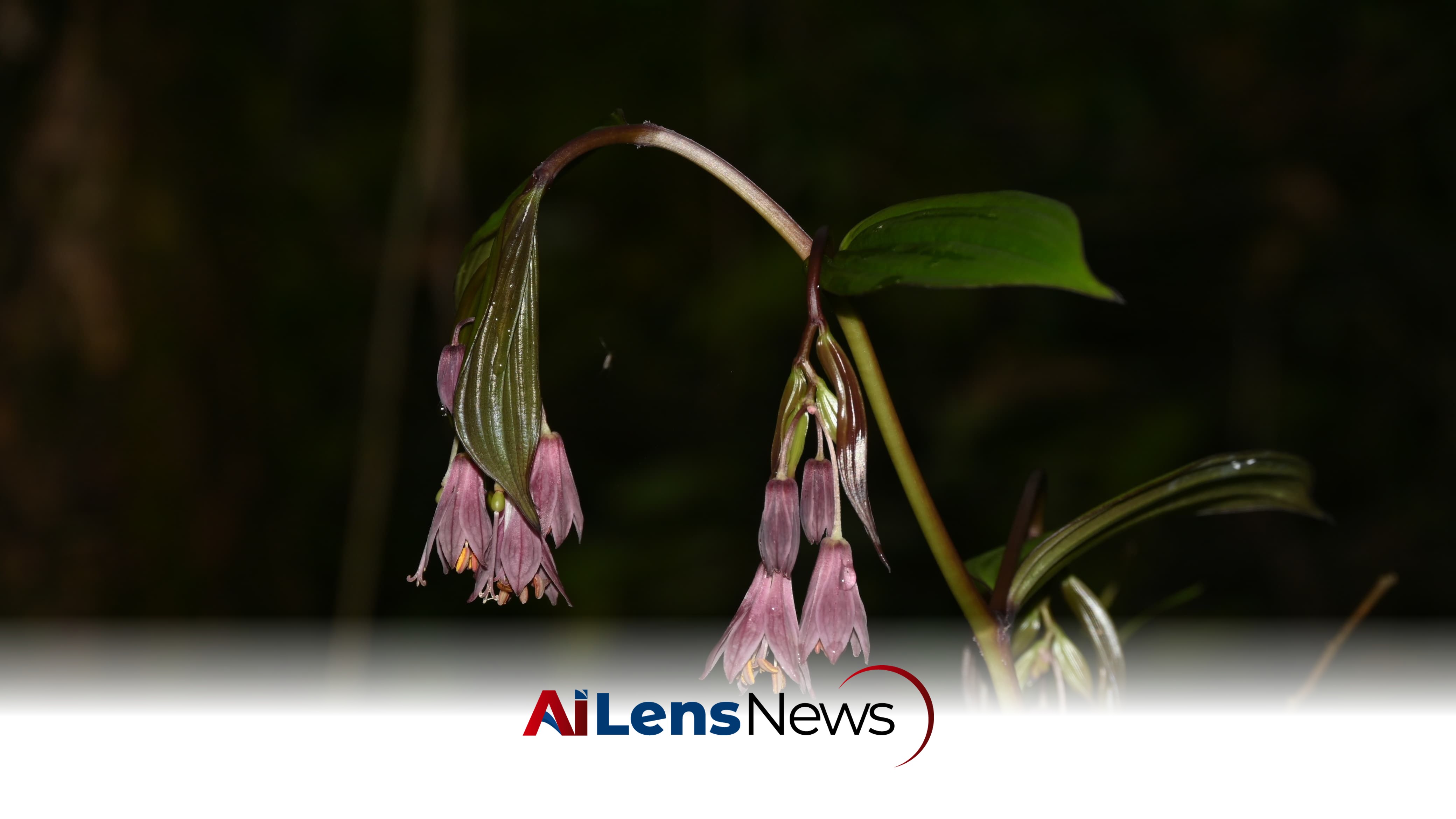


A newly discovered flowering plant, Disporum yobinorum, found in Arunachal Pradesh, honors the indigenous Yobin tribe, highlighting the region's biodiversity.
Itanagar, India Jul 21, 2026 ALN: Guwahati: A remote corner of Arunachal Pradesh bordering Myanmar has yielded yet another species new to science, with botanists discovering a flowering plant found nowhere else on Earth and naming it after the indigenous Yobin tribe that inhabits the region.
The new species, Disporum yobinorum, was discovered in the forests of Vijaynagar in Changlang district by researchers from the Botanical Survey of India (BSI) and has been formally described in the latest issue of the international journal Phytotaxa.
The species was described by Vinay Kumar Sahani and Krishna Chowlu of the Botanical Survey of India (BSI), Arunachal Pradesh Regional Centre, Itanagar. The formal description of a new species is a significant scientific event, as it adds to the body of knowledge regarding the planet's biodiversity and highlights the importance of conservation efforts in underexplored regions.
Known only from a single location, fewer than 40 individual plants have so far been recorded, prompting researchers to recommend that the species be treated as Data Deficient under IUCN criteria until further surveys are conducted. The classification of a species as Data Deficient indicates that there is insufficient information to assess its risk of extinction, which underscores the need for ongoing research and monitoring of the plant's population and habitat.
The discovery adds to the growing list of unique plants emerging from Vijaynagar, one of India’s least disturbed forest landscapes. Nestled along the border with Myanmar’s Kachin State, the region shares its geography and flora with the forests of Yunnan in China, making it part of a biologically rich transboundary landscape. This transboundary region is characterized by a complex interplay of ecosystems that support a high level of biodiversity, including many species that are endemic to the area.
Researchers say the find is another reminder that Arunachal Pradesh’s remote frontier forests continue to harbour species unknown to science and require careful conservation as development activities expand. The increasing pressure from development, such as road construction and agriculture, poses significant threats to these fragile ecosystems, making conservation efforts more critical than ever.
The species was named yobinorum in honour of the Yobin community, recognising their support for scientific exploration in the region. Naming a species after a local community not only acknowledges their contributions but also emphasizes the cultural significance of the relationship between indigenous peoples and their natural environment.
The Yobin, also known as the Lisu in Myanmar and China, are one of Arunachal Pradesh’s smallest indigenous tribes. Most members of the community live in the remote Vijaynagar Circle of Changlang district, a frontier region bordered by Myanmar on three sides and Namdapha National Park on the fourth. The geographical isolation of the Yobin has preserved their unique cultural heritage and traditional practices, which are closely tied to the rich biodiversity of their homeland.
For decades, the Yobin remained one of India’s most isolated communities, with Vijaynagar accessible only by foot or air. Until recently, reaching the nearest town of Miao required a trek of nearly six days through dense forests. This isolation has enabled the Yobin to maintain their traditional way of life, which is deeply intertwined with the natural world, relying on hunting, fishing, and cultivation, including large cardamom, while maintaining a close relationship with the region’s biodiversity.
The researchers also acknowledged the assistance of the local Gorkha community, as well as that of the Arunachal Pradesh Forest Department, in facilitating the fieldwork. Collaborative efforts between local communities and researchers are essential for successful conservation initiatives, as they help bridge the gap between scientific knowledge and traditional ecological wisdom.
According to the study, the plant grows in moist, shaded evergreen forests at elevations of 1,100-1,500 metres, alongside streams in habitats rich in native vegetation. The specific habitat requirements of Disporum yobinorum suggest that it is adapted to specific ecological conditions, which may make it vulnerable to environmental changes and habitat degradation.
Scientists say the discovery underscores the conservation significance of Vijaynagar, where the combination of rugged terrain, limited disturbance, and its location within the Eastern Himalayan biodiversity hotspot has enabled many rare, endemic and previously undocumented species to survive. The Eastern Himalayas are recognized as one of the most important biodiversity hotspots in the world, with a high level of endemism and a wide variety of ecosystems ranging from subtropical forests to alpine meadows.
The researchers said future infrastructure development and land-use changes in the region should be planned carefully to ensure that this exceptional botanical heritage is not compromised, as the forests form part of a larger ecological continuum stretching across northeastern India, northern Myanmar and southwestern China. This interconnectedness highlights the importance of cross-border conservation efforts and international collaboration to protect the rich biodiversity of the region.
In conclusion, the discovery of Disporum yobinorum is not just a testament to the rich biodiversity of Arunachal Pradesh but also serves as a reminder of the urgent need for conservation efforts in the face of increasing development pressures. The collaboration between scientists, local communities, and governmental bodies will be crucial in safeguarding the unique flora and fauna of this ecologically significant region for future generations. As more species are discovered and documented, it becomes increasingly vital to recognize the intrinsic value of preserving these natural habitats, which are not only home to unique species but also to the cultural heritage of the indigenous peoples who have lived in harmony with these landscapes for generations.
To learn more about the latest developments in Environment & Climate, stay updated with our exclusive reports and analyses on AiLensNews.

