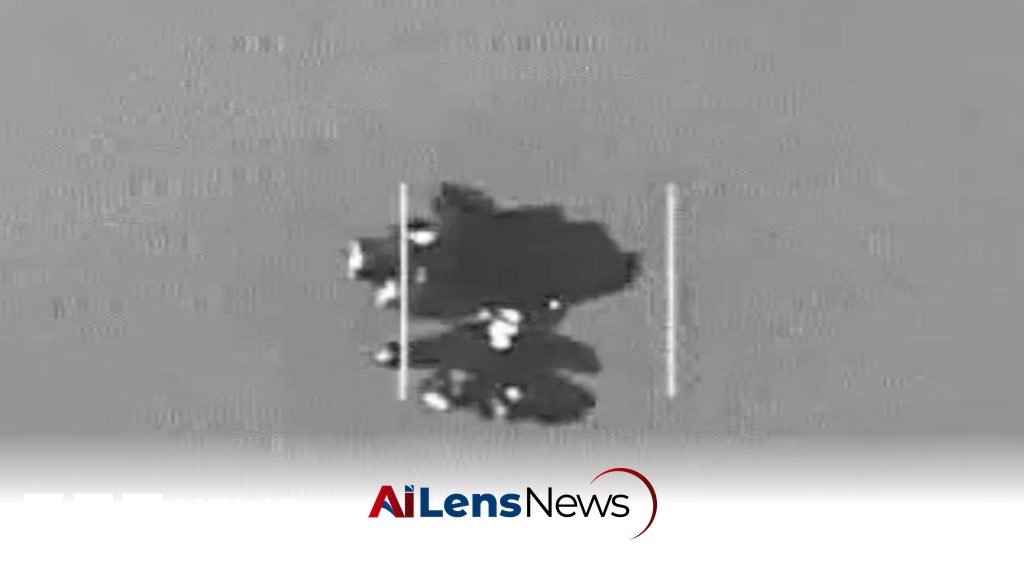


The US government has released a new batch of records on Unidentified Anomalous Phenomena, continuing its commitment to transparency regarding UFOs.
New Delhi, India Jul 10, 2026 ALN: The US government has taken another significant step in its ongoing effort to declassify information related to Unidentified Anomalous Phenomena (UAPs), commonly known as UFOs. In a recent announcement, the Defense Secretary revealed the release of a fourth tranche of previously classified records, which has sparked renewed interest and speculation among the public and researchers alike.
Defense Secretary Pete Hegseth emphasized the importance of transparency, stating that the long-classified files have historically fueled "justified speculation." He asserted that the American people have a right to access this information, which has often been shrouded in secrecy. This latest release is part of a broader initiative to provide the public with insights into the government's findings and investigations surrounding UAPs. The push for transparency is not just about satisfying public curiosity; it also reflects a recognition of the changing societal attitudes toward UFOs and the need for accountability in government actions.
The newly declassified files include a variety of reports and observations that detail encounters with UAPs. These documents aim to shed light on the nature of these phenomena, which have been a topic of intrigue and debate for decades. The government has committed to releasing more files on a rolling basis, indicating that this is just the beginning of a larger effort to inform the public. The contents of these files range from pilot reports to military encounters, and they often include descriptions of strange aerial objects that exhibit flight capabilities beyond known human technology.
The release of these files has ignited a wave of speculation among UFO enthusiasts, researchers, and the general public. Many are eager to analyze the content of the documents to uncover potential evidence of extraterrestrial life or advanced technology. The ongoing interest in UFOs reflects a broader cultural fascination with the unknown and the possibility of life beyond Earth. Social media platforms and online forums have become buzzing hubs of discussion, with enthusiasts dissecting the details of the reports and sharing their interpretations. The excitement surrounding these revelations can be seen as part of a larger trend where the boundaries between fiction and reality are increasingly blurred.
The topic of UFOs has been a contentious one, with various government agencies historically downplaying or dismissing reports of sightings. The stigma surrounding UFOs has been deeply ingrained, often leading to ridicule for those who claim to have witnessed them. However, recent shifts in policy and public interest have led to a more open approach. This change can be traced back to a growing acknowledgment of the need for transparency in government operations, particularly regarding national security matters. The government's decision to declassify these files aligns with a growing demand for accountability and transparency regarding national security matters. This shift is not merely a reaction to public pressure but also reflects a broader cultural change where the exploration of the unknown is increasingly accepted as a legitimate scientific endeavor.
As the US government continues to release additional files, experts and enthusiasts alike are watching closely. The promise of more information has the potential to reshape our understanding of UAPs and their implications for national security. The ongoing dialogue surrounding these phenomena is likely to evolve as new data becomes available. Researchers are particularly interested in how these releases might inform not only our understanding of potential extraterrestrial encounters but also the implications for air safety and military readiness. The collaboration between civilian researchers and government agencies could pave the way for a more comprehensive understanding of aerial phenomena.
The implications of these releases extend beyond mere curiosity about extraterrestrial life. They touch upon critical issues such as airspace security, technological advancements, and the potential for international cooperation in addressing unidentified aerial phenomena. As the government acknowledges the reality of UAPs, there may be increased pressure to develop protocols for investigating sightings and ensuring that airspace remains safe for both civilian and military aircraft. Furthermore, the declassification of these files could lead to a renaissance in scientific research concerning atmospheric phenomena, as academics and scientists are encouraged to explore these occurrences without the stigma that has historically accompanied the study of UFOs.
The declassification of these UFO files marks a pivotal moment in the ongoing quest for knowledge about UAPs. With each new release, the public gains a clearer view of what the government knows, fostering a culture of transparency that may ultimately lead to groundbreaking discoveries. As society continues to grapple with the implications of these phenomena, the conversation surrounding UAPs is likely to evolve, encompassing not only the question of extraterrestrial life but also the broader implications for humanity's understanding of the universe. The unfolding narrative surrounding UAPs represents not just a governmental initiative but a collective journey into the unknown, one that could redefine our place in the cosmos.
This newfound openness regarding UFOs is also indicative of a shift in popular culture. Movies, television shows, and literature have long explored the themes of extraterrestrial life and unidentified flying objects, often reflecting societal fears and fascinations. The public's interest in UFOs has been echoed in various forms of media, from classic films like "Close Encounters of the Third Kind" to contemporary series such as "The X-Files," which have both shaped and mirrored public perceptions of the unknown.
As government transparency increases, it may also influence how such themes are portrayed in the media. The portrayal of UFOs and extraterrestrial life may evolve from sensationalism to a more nuanced discussion that considers scientific inquiry and the implications of these phenomena on humanity as a whole.
The declassification of UFO files is not limited to the United States; several other countries have also begun to release their own records related to UFO sightings and investigations. This global perspective can foster international collaboration in understanding UAPs and addressing the challenges they may pose. Countries such as the United Kingdom, France, and Brazil have all made strides in making their UFO-related documents accessible to the public, contributing to a more comprehensive understanding of these phenomena worldwide.
International cooperation could lead to the establishment of a unified framework for investigating UAPs, sharing data, and developing protocols for airspace security. Such collaboration would not only enhance safety but could also promote a sense of unity in the face of the unknown, potentially paving the way for joint scientific endeavors that explore the possibilities of life beyond Earth.
As the government continues to release files and investigate UAPs, ethical considerations must also be addressed. The implications of these findings could have profound effects on society, including shifts in belief systems, potential public panic, or even the militarization of space. Ensuring that the public is informed responsibly and ethically is crucial in maintaining trust between the government and its citizens.
Moreover, as researchers delve deeper into UAPs, ethical standards must be established to guide investigations, ensuring that they are conducted with integrity and respect for all individuals involved. As scientific inquiry into these phenomena progresses, maintaining a balance between curiosity and caution will be essential.
The future of UAP investigation is ripe with potential. As more files are declassified and research continues, the conversation surrounding UFOs will likely expand, encompassing a range of interdisciplinary fields, including physics, astronomy, psychology, and sociology. The implications of these investigations could lead to advancements in technology, a better understanding of our atmosphere, and perhaps even a new chapter in humanity's exploration of the cosmos.
In conclusion, the recent declassification of UFO files represents a significant moment in the ongoing quest for knowledge about UAPs. As society continues to evolve in its understanding of these phenomena, the potential for groundbreaking discoveries and a deeper comprehension of our place in the universe remains tantalizingly within reach. The journey into the unknown is not just a governmental initiative; it is a collective endeavor that invites all of humanity to ponder the possibilities that lie beyond our current understanding.
To learn more about the latest developments in Space & Astronomy, stay updated with our exclusive reports and analyses on AiLensNews.

