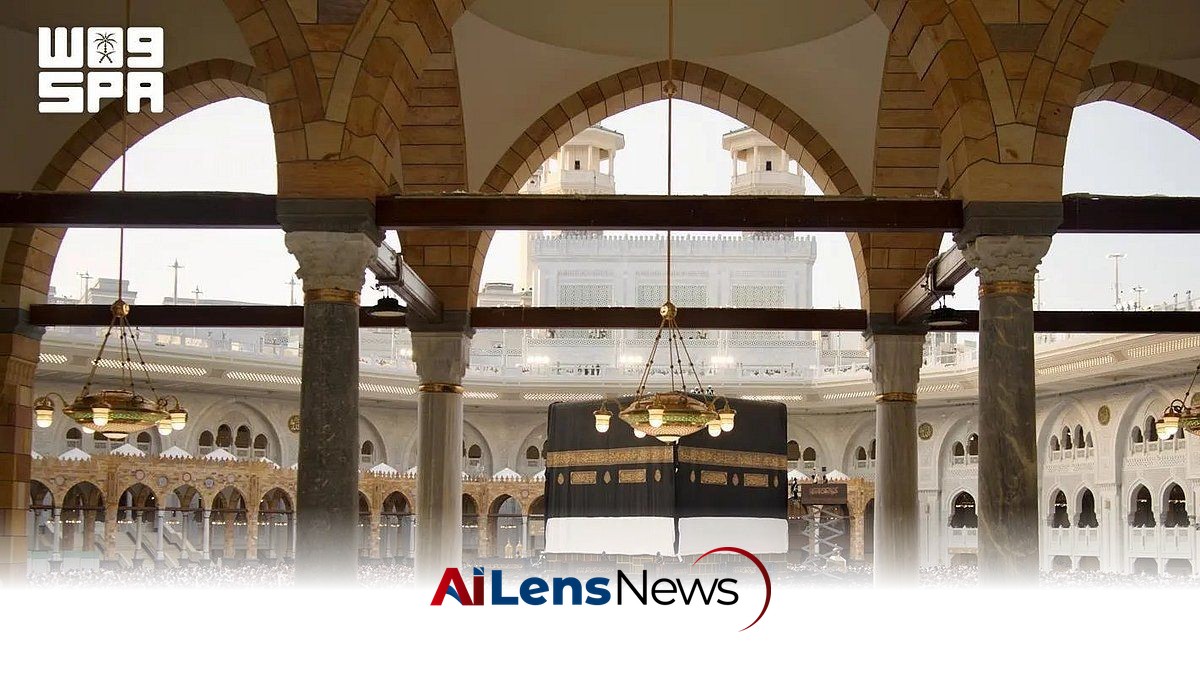


Saudi Arabia has launched a digital service for pilgrims at the Grand Mosque in Mecca, enabling real-time crowd monitoring to enhance their experience during rituals.
Riyadh, Saudi Arabia Jul 18, 2026 ALN: Dubai: Saudi authorities have introduced a new digital service allowing worshippers and pilgrims at the Grand Mosque in Mecca to monitor crowd levels in the Mataf and Masa'a areas in real time, helping them choose less congested routes for Tawaf and Sa'i.
The General Authority for the Care of the Affairs of the Grand Mosque and the Prophet's Mosque stated that the service provides live crowd density indicators and instant updates, alongside smart guidance designed to improve crowd management and enhance the experience of visitors performing their rituals.
Accessible via a QR code, the platform offers continuously updated information to support smoother movement throughout the Grand Mosque, enabling pilgrims to better plan their journey and complete Tawaf and Sa'i with greater ease while contributing to more efficient crowd flow.
This initiative aims to enhance the overall experience for pilgrims, especially during peak times such as Ramadan, when the number of visitors significantly increases.
With the implementation of this service, authorities hope to alleviate congestion and ensure that all pilgrims can fulfill their religious duties without unnecessary delays or discomfort.
As Saudi Arabia continues to embrace technology in managing its religious sites, this crowd-tracking service represents a significant step forward in improving the pilgrimage experience for millions each year.
The Grand Mosque, known as Al-Masjid al-Haram, is one of the most significant religious sites in Islam, attracting millions of Muslims from around the world for the Hajj pilgrimage and Umrah throughout the year. Each year, especially during the Hajj season, the mosque sees an influx of worshippers that can lead to overcrowding and logistical challenges. The introduction of this real-time crowd-tracking service is a response to the need for better crowd management in such a densely populated area.
The service utilizes advanced technology to monitor crowd levels, which can fluctuate significantly during peak prayer times and special occasions. By providing real-time data, the platform allows pilgrims to make informed decisions about their movements within the mosque, potentially reducing wait times and enhancing their overall experience. This is particularly beneficial during the high-traffic periods of Ramadan, where the number of worshippers increases dramatically.
The digital service is part of a broader trend within Saudi Arabia to modernize its religious tourism infrastructure. The Kingdom has been investing heavily in technology to improve the pilgrimage experience, including mobile applications and digital platforms that facilitate various aspects of travel and worship. This aligns with the Vision 2030 initiative, which aims to diversify the economy and enhance the country's appeal as a global tourism destination.
In addition to crowd management, the service also reflects the Saudi government's commitment to ensuring the health and safety of pilgrims, particularly in light of the COVID-19 pandemic. The pandemic has necessitated new protocols and measures to protect public health, and technology plays a crucial role in implementing these changes. The ability to monitor crowd density in real time can help mitigate the risk of overcrowding and allow for better enforcement of health guidelines.
The implementation of this service also raises questions about privacy and data security, as it relies on the collection and analysis of crowd data. Authorities will need to address these concerns to ensure that the system is both effective and respectful of the privacy of individuals using the service.
As the service becomes operational, it will be interesting to observe its impact on the flow of pilgrims within the Grand Mosque. Authorities will likely gather feedback from users to refine and improve the system further. The success of this initiative could serve as a model for similar implementations at other religious sites around the world, where managing large crowds is an ongoing challenge.
Furthermore, the introduction of this crowd-tracking service may inspire other technological innovations within the realm of religious tourism. As more pilgrims seek to enhance their experiences through technology, there is potential for the development of additional digital tools and applications that can provide information, guidance, and support during their religious journeys.
The Grand Mosque is not only a religious site but also a cultural landmark that embodies the rich history and traditions of Islam. The management of such a site requires a delicate balance between preserving its sanctity and accommodating the needs of millions of visitors. The introduction of this digital service reflects an understanding of this balance, as it seeks to enhance the experience of worship while maintaining the spiritual significance of the rituals performed there.
Moreover, the crowd-tracking service is likely to improve the overall safety of pilgrims. Historically, the Grand Mosque has faced challenges related to crowd control, especially during peak seasons. By providing real-time updates, the service aims to prevent dangerous situations that can arise from overcrowding, thereby ensuring that worshippers can perform their rituals in a safe environment.
The successful implementation of this service could also lead to further investments in technology at the Grand Mosque and other religious sites across Saudi Arabia. The Kingdom has been actively working to modernize its infrastructure, and this initiative could be a stepping stone for additional projects that enhance the pilgrimage experience.
In terms of international implications, the crowd-tracking service could set a precedent for other countries with significant religious sites facing similar crowd management challenges. By showcasing the effectiveness of technology in enhancing the pilgrimage experience, Saudi Arabia may inspire other nations to adopt similar measures, thereby improving the experience for worshippers worldwide.
As the global landscape continues to evolve, the integration of technology in religious practices is becoming increasingly relevant. Pilgrims today are more connected than ever, and their expectations for enhanced experiences are rising. The introduction of this real-time crowd-tracking service is a direct response to these expectations, demonstrating a commitment to leveraging technology to meet the needs of modern worshippers.
In conclusion, the new crowd-tracking service at the Grand Mosque represents a significant advancement in the management of one of the world's busiest religious sites. By leveraging technology to provide real-time information about crowd levels, Saudi authorities aim to enhance the pilgrimage experience for millions of worshippers. This initiative not only addresses immediate logistical challenges but also aligns with broader efforts to modernize and improve the overall infrastructure supporting religious tourism in the Kingdom.
The implications of this service extend beyond the immediate benefits for pilgrims. As Saudi Arabia continues to embrace technology, it sets a precedent for how religious sites can adapt to contemporary challenges while maintaining the sanctity and spiritual significance of worship. The successful implementation of this service could pave the way for further innovations that enhance the experience of pilgrims and ensure their safety and comfort during their sacred journeys.
To learn more about the latest developments in Islam, stay updated with our exclusive reports and analyses on AiLensNews.

