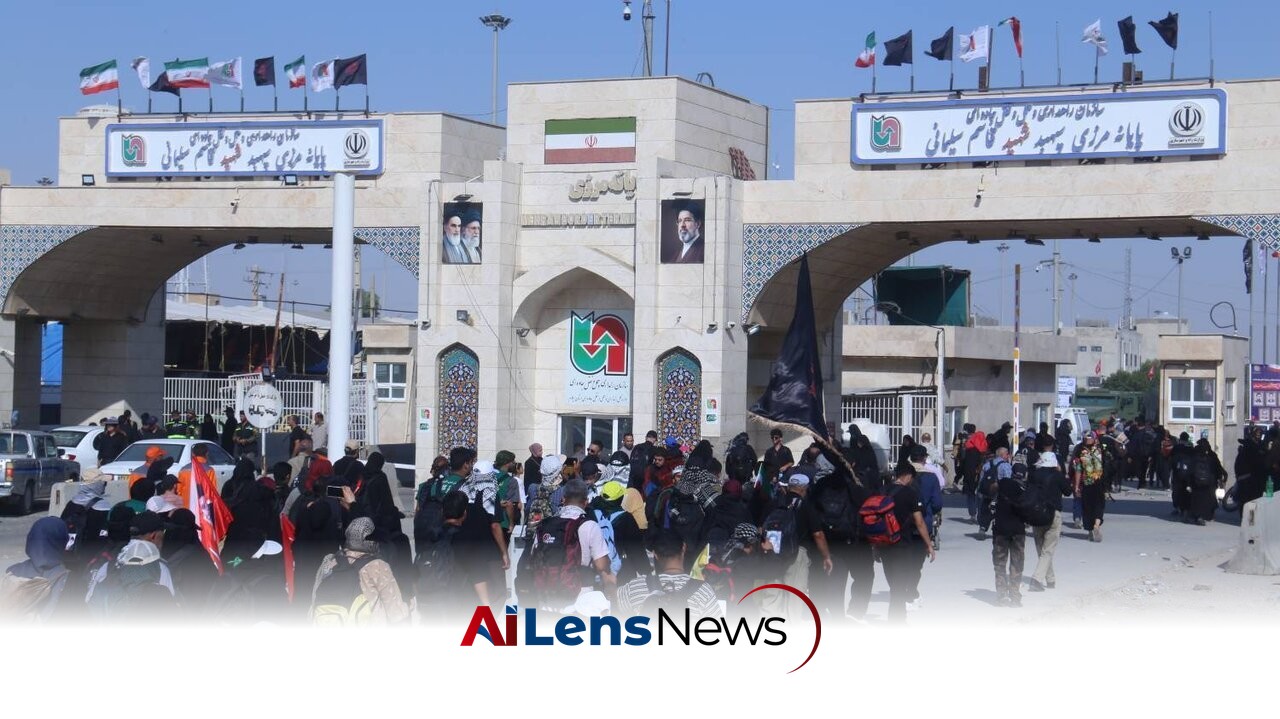


TEHRAN – More than two million individuals have registered on the 'Samah' platform for the Arbaeen pilgrimage, according to Interior Minister Eskandar Momeni.
Tehran, Iran Jul 27, 2026 ALN: More than two million individuals have so far been registered on ‘Samah’, an online platform developed to organize pilgrims for the Arbaeen pilgrimage, Interior Minister Eskandar Momeni has said. The Arbaeen pilgrimage is not only a significant religious event but also one of the largest religious gatherings in the world, drawing millions of participants annually from various parts of the globe.
The pilgrimage occurs 40 days after Ashura, which commemorates the martyrdom of Imam Hussein (AS), the third Imam of Shia Muslims and a key figure in Islamic history. Imam Hussein is revered for his stand against tyranny and injustice, and his martyrdom at the Battle of Karbala in 680 CE is a pivotal event that shapes Shia identity and religious practice. The Arbaeen pilgrimage serves as a profound expression of mourning and devotion, with participants engaging in various rituals, including processions, prayers, and acts of charity.
Each year, a huge crowd of people flocks to Karbala, where the holy shrine of Imam Hussein (AS) is located, to perform mourning rituals. The journey to Karbala is often seen as a spiritual pilgrimage, with many participants walking long distances, sometimes for days, to reach the sacred site. The atmosphere during this period is marked by deep emotional expressions of grief and solidarity among the pilgrims, as they remember the sacrifices made by Imam Hussein and his companions.
As of now, around 750,000 pilgrims have already traveled to Iraq through six borders, namely Mehran, Shalamcheh, Chazabeh, Khosravi, Tamarchin, and Bashmaq, to take part in this religious ceremony. The influx of pilgrims is expected to increase significantly as the date of the pilgrimage approaches. This year, preparations have intensified to ensure the safety and comfort of the pilgrims, with various governmental and non-governmental organizations working collaboratively to provide essential services.
In preparation for the pilgrimage, some 22 key governmental agencies have mobilized resources and facilities to provide services to the pilgrims. This includes logistical support, healthcare services, and security measures to ensure the safety of all participants. IRNA quoted Momeni as saying that over 3,500 mawkebs (volunteer service stations) have been set up both in Iran and Iraq to serve the people. These mawkebs offer food, water, medical assistance, and other forms of support to pilgrims, reflecting the spirit of community and solidarity that characterizes the Arbaeen pilgrimage.
In addition to the mawkebs, governmental agencies have provided appropriate vehicles to facilitate pilgrims’ transportation both into Iraq and back from that country. The two nations have also established a joint operation center on the two countries’ border to fully monitor the situation and plan ways to provide services to the mourners. This collaborative effort underscores the importance of international cooperation in managing large-scale religious events and ensuring the safety and well-being of participants.
In a broader context, Hossam Elsharkawi, the International Federation of Red Cross and Red Crescent Societies (IFRC) Regional Director for the Middle East and North Africa (MENA), has highlighted Iran’s experience in managing the Arbaeen pilgrimage. He stated that the country can serve as a regional hub to train other nations and share expertise with them. The shared mission of Red Cross and Red Crescent societies worldwide is to support people and provide humanitarian services, and Iran's valuable expertise in mass gathering management is seen as a resource that can benefit other countries.
Elsharkawi made these remarks while addressing the sixth International Congress on “Health in Arbaeen,” held in Tehran on July 19 to 20. The congress serves as a platform for discussing health-related issues associated with mass gatherings, emphasizing the importance of planning and preparedness in ensuring the health and safety of large crowds. “The international federation is striving to create a platform to transfer Iran’s knowledge, scientific documentation, and experience on mass gathering management to other countries, as this experience is truly golden and unparalleled globally,” he stressed.
This year, 515 articles were submitted to the congress, out of which 19 articles will be delivered as lectures, and 22 as posters. The congress is hosting 105 lecturers from various sectors, showcasing a diverse range of expertise and perspectives on health and safety in mass gatherings. The congress includes 25 scientific panels and eight training workshops, which highlight the idea that health in mass gatherings depends on interdisciplinary research and multi-center studies, analyzing data, and utilizing modern technologies—including artificial intelligence and modeling.
The implications of such gatherings extend beyond religious observance; they touch on public health, safety, logistics, and community engagement. The experience gained from managing the Arbaeen pilgrimage can provide valuable insights into how to effectively handle large crowds in other contexts, such as sporting events, concerts, and political demonstrations. As global events continue to attract larger audiences, the lessons learned from the Arbaeen pilgrimage could inform best practices in crowd management and emergency response strategies.
In summary, the Arbaeen pilgrimage is not only a significant religious event for millions of Shia Muslims but also a complex logistical undertaking that requires careful planning and coordination among various stakeholders. The ongoing preparations and the involvement of multiple agencies reflect a commitment to ensuring the safety and well-being of all participants, while also highlighting the potential for sharing knowledge and expertise on mass gathering management on a global scale. As the date of the pilgrimage approaches, the anticipation and dedication of the pilgrims and organizers alike serve as a testament to the enduring legacy of Imam Hussein and the profound impact of his message on contemporary society.
To learn more about the latest developments in Religious Events, stay updated with our exclusive reports and analyses on AiLensNews.

