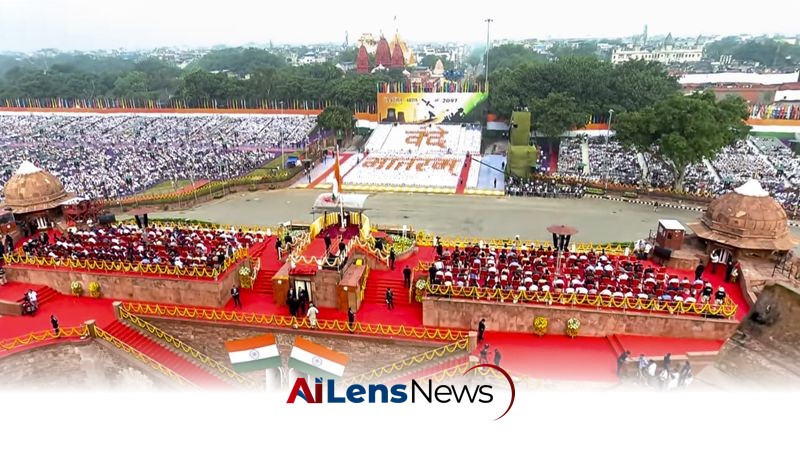


For the first time, 'Vande Mataram' was sung at the Red Fort during the 80th Independence Day celebrations, marking a significant moment in India's history.
New Delhi, India Aug 15, 2026 ALN: This year’s Independence Day celebrations at the Red Fort witnessed a historic first: the rendition of 'Vande Mataram'. This iconic song, which holds a special place in India's cultural and political history, was performed during the 80th anniversary of India's independence on August 15. The inclusion of this song, which has been a rallying cry for freedom and a symbol of national pride, marks a significant moment in the evolution of Independence Day celebrations in India.
The event was marked by a grand gathering, with thousands of attendees present to witness the celebrations. Following the performance of 'Vande Mataram', the national anthem was recited, further enhancing the patriotic fervor of the occasion. The atmosphere was charged with emotion as citizens from various walks of life came together to celebrate the sacrifices made by countless individuals during the struggle for independence. This year’s celebration was particularly poignant, as it not only commemorated the past but also sought to instill a sense of unity and national identity among the people.
'Vande Mataram', composed by Bankim Chandra Chatterjee in the late 19th century, is more than just a song; it is a profound expression of love for the motherland. The song, which was first featured in Chatterjee's novel 'Anandamath', became an anthem for the Indian independence movement. Its lyrics invoke the spirit of the nation and call for unity among its people. Over the years, 'Vande Mataram' has transcended its literary origins to become a symbol of India's struggle for freedom and a source of inspiration for many generations. The decision to include it in the Independence Day celebrations reflects a renewed emphasis on cultural heritage and national pride, reinforcing the idea that the fight for freedom was not just political but also deeply rooted in cultural identity.
The Red Fort has been the focal point of India's Independence Day celebrations since 1947. Each year, the Prime Minister hoists the national flag and addresses the nation from its ramparts, a tradition that has become synonymous with the celebration of India's sovereignty. The fort itself is a UNESCO World Heritage Site and a symbol of India’s rich history, having served as the main residence of the Mughal emperors for nearly 200 years. This year’s inclusion of 'Vande Mataram' adds a new chapter to this long-standing tradition, highlighting the importance of cultural elements in the narrative of national identity. The performance of this song at such a significant venue underscores the ongoing relevance of historical narratives in contemporary India, particularly as the country reflects on its journey over the past eight decades since independence.
The performance was met with enthusiasm from the crowd, many of whom sang along, showcasing their love for the nation and its heritage. The emotional resonance of 'Vande Mataram' was palpable, as individuals of all ages joined in the rendition, creating a sense of collective identity and belonging. Social media platforms were abuzz with reactions, with many praising the government for this initiative. The decision to include 'Vande Mataram' was viewed as a positive step towards reinforcing national pride, with many commentators noting that it reflects a growing recognition of the importance of cultural symbols in fostering unity among the diverse population of India.
The inclusion of 'Vande Mataram' in the Independence Day celebrations may have broader implications for how national events are conducted in the future. It suggests a potential shift towards incorporating more cultural elements that resonate with the populace, moving beyond mere political rhetoric to engage citizens on a deeper emotional level. As India continues to evolve, the government may seek to further integrate its rich cultural heritage into national celebrations, fostering a sense of pride and unity among its citizens.
Moreover, the performance of 'Vande Mataram' can be seen as part of a larger trend towards reviving historical narratives that celebrate India's diverse cultural heritage. This revival is crucial in a country where regional identities and languages coexist alongside a national identity. By embracing songs and symbols that resonate widely, the government could strengthen the fabric of national unity while respecting the plurality that defines India.
The rendition of 'Vande Mataram' during the 80th Independence Day celebrations at the Red Fort not only honors India's past but also inspires future generations to cherish and uphold the values of freedom and unity. It serves as a reminder of the sacrifices made by those who fought for independence and the ongoing journey towards a more inclusive and united nation. As India moves forward, the continued celebration of its cultural heritage will play a vital role in shaping the future of national identity and unity.
The significance of 'Vande Mataram' extends beyond its historical context; it also reflects contemporary societal values and the ongoing discourse surrounding nationalism in India. In recent years, there has been a resurgence of interest in national symbols and cultural expressions that resonate with the public. This trend is indicative of a broader movement towards embracing the rich tapestry of India's cultural heritage, which includes music, art, literature, and folklore that have shaped the nation's identity.
Incorporating 'Vande Mataram' into the Independence Day celebrations can be seen as a strategic move to foster a sense of belonging among citizens, particularly in a nation characterized by its diversity. The song's universal themes of love for the motherland and the call for unity resonate with people across different regions, languages, and communities, thereby reinforcing the idea of a collective national identity. This is particularly important in a country where regional identities often compete with national sentiments, and where the challenge of maintaining unity in diversity remains a pressing concern.
While the inclusion of 'Vande Mataram' has been largely well-received, it is also important to acknowledge that there are challenges and criticisms associated with the song and its historical connotations. Some critics argue that the song's origins in the context of the Bengali renaissance may not resonate with all regions of India, and there are concerns about its interpretation as a symbol of exclusive nationalism. This discourse highlights the need for a nuanced understanding of national symbols and their implications for various communities within India.
Furthermore, the performance of 'Vande Mataram' raises questions about the balance between promoting a unified national identity and recognizing the diverse cultural expressions that exist within the country. It is crucial for future celebrations to be inclusive and representative of all Indian voices, ensuring that no community feels marginalized in the narrative of national pride. The government and organizers of such events must navigate these complexities with sensitivity, fostering an environment where all citizens feel valued and included.
As India approaches its centenary of independence in 2047, the challenge will be to maintain the spirit of unity and pride that events like this year’s celebrations aim to instill. The successful integration of cultural elements like 'Vande Mataram' into national events could serve as a model for future celebrations, encouraging a deeper connection between citizens and their heritage.
Moreover, as India continues to grapple with issues of identity, inclusion, and representation, the role of cultural symbols in fostering dialogue and understanding among diverse communities will be paramount. The government may consider initiatives that promote cultural exchange and appreciation, further enriching the national narrative and ensuring that the journey towards a united India remains a collaborative effort.
In conclusion, the performance of 'Vande Mataram' at the Red Fort during the 80th Independence Day celebrations is a significant milestone in India's ongoing journey of nation-building. It not only honors the sacrifices of the past but also serves as a catalyst for fostering unity and pride in the present and future, ensuring that the ideals of freedom and inclusivity continue to resonate across generations.
To learn more about the latest developments in Religious Events, stay updated with our exclusive reports and analyses on AiLensNews.

