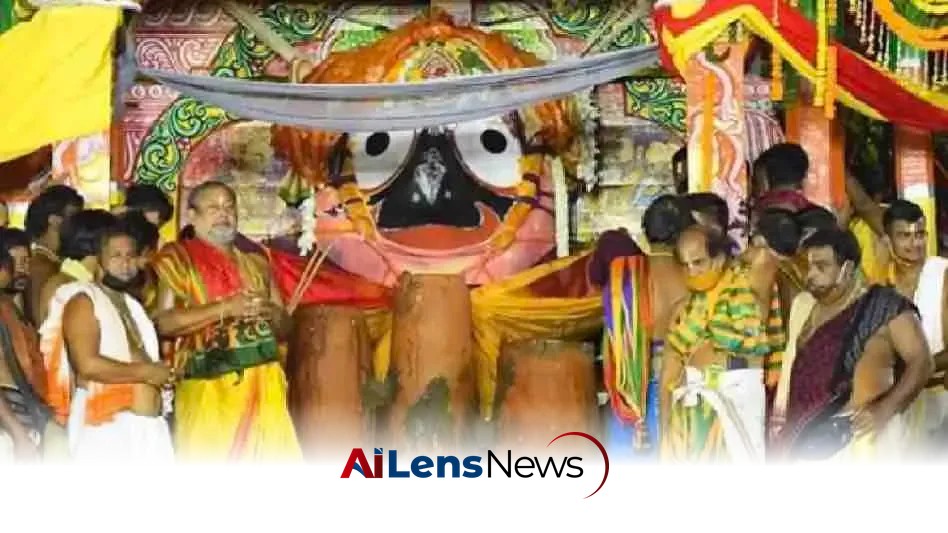


The Adhara Pana ritual, celebrated in Puri, Odisha, involves offering a sweet beverage to deities on chariots, marking a significant cultural event.
Bhubaneswar, India Jul 26, 2026 ALN: Puri, a coastal city located in the eastern Indian state of Odisha, is renowned for its rich cultural heritage and religious significance, particularly in relation to the worship of Lord Jagannath. This city is not only a pilgrimage site but also a hub of art, culture, and tradition, drawing millions of visitors each year. The Jagannath temple, a prominent landmark of Puri, is dedicated to Lord Jagannath, an incarnation of Lord Krishna, and is one of the four sacred Char Dham pilgrimage sites in India. Among the many rituals and festivals celebrated here, one of the most significant events in the Jagannath temple calendar is the sacred Adhara Pana ritual, which takes place shortly after the Suna Besha, a ceremonial dressing of the deities in elaborate golden attire. This year, the ritual is scheduled to occur on a Sunday evening, following the Suna Besha festivities, and will be conducted on the three grand chariots known as Nandighosa, Taladhwaja, and Darpadalana, which are stationed along the Grand Road adjacent to the Shree Jagannath Temple.
The term "Adhara Pana" translates literally to "lip juice," with "adhara" referring to lips and "pana" meaning a sweet beverage. The ritual takes place on Asadha Sukla Pakhya Dwadashi, a day that holds particular significance in the Hindu lunar calendar. This timing is not arbitrary; it is deeply intertwined with the agricultural calendar and the monsoon season, which is crucial for the agrarian communities in Odisha. The preparation and offering of Adhara Pana symbolize the gratitude of the devotees for the bountiful harvest and the blessings of the deities. The ingredients used in this ritual reflect the deep-rooted traditions and beliefs that characterize the worship of Lord Jagannath and his siblings, Balabhadra and Subhadra.
During the Adhara Pana ceremony, large terracotta pots are filled with a fragrant mixture that includes milk cream (or chhena), cheese, sugar, ripe bananas, and a variety of aromatic spices, such as camphor, nutmeg, and black pepper. This mixture, which totals approximately 100 litres per pot, is carefully prepared to ensure it meets the ritual's strict standards of purity and taste. The pots are then hoisted onto the three massive chariots, positioned strategically so that the mixture is accessible to the lips of the deities. This act symbolizes the offering of a refreshing drink to the divine figures, enhancing the spiritual connection between the devotees and the deities. The use of natural ingredients not only signifies purity but also reflects the local agricultural practices and the availability of seasonal produce.
Water used in the preparation of Adhara Pana is traditionally sourced by the Pania Apata Sevakas, who draw it from a sacred well located near Chhauni Matha, a site of historical and religious importance. The significance of this well is rooted in local legends that attribute healing properties to its water, making it a fitting choice for such a sacred offering. The preparation of the Adhara Pana is a meticulous process, carried out by skilled Supakaras, or cooks, who adhere to strict rituals and guidelines to maintain purity. The offering is typically made following the Madhyahna Dhupa, or noon offering, and the Sodasha Upachara Puja, which involves 16 different forms of worship, ensuring that the deities receive the utmost respect and devotion. This attention to detail underscores the importance of ritual purity in Hindu worship, where every element of the offering is considered sacred.
Interestingly, unlike typical temple prasad, which devotees often consume, the Adhara Pana is not meant for human consumption. Instead, once the ritual offering is completed, the servitors take the extraordinary step of shattering the giant earthenware pots directly on the chariots. This act is steeped in symbolic meaning; it is believed to quench the thirst of the ‘Rath Rakhyak,’ or guardian deities, as well as the Parswa Devatas, who are considered to be invisible celestial attendants accompanying the divine siblings on their journey. This ritualistic destruction of the pots serves to honor these spiritual entities and is thought to bestow blessings and liberation upon them. The shattering of the pots also signifies the impermanence of material offerings, reinforcing the spiritual message that true devotion transcends physical forms.
The terracotta pots used in the Adhara Pana ritual are crafted with great care by skilled potters from the Kumbharpada community, which is known for its traditional pottery-making techniques. The Shree Jagannath Temple Administration collaborates with local artisans from Raghab Das Mutt and Bada Odia Mutt to source these pots. The preparation process takes a significant amount of time, often beginning well in advance of the ritual itself. It involves the use of three sacks of finely filtered soil and one sack of sand, which are combined to create the clay for the pots. The artisans meticulously clean, shape, sun-dry, and bake the pots to achieve the desired height and circumference, typically around four feet. Throughout this process, potters adhere to strict hygiene standards and dietary restrictions, with particular cultural taboos in place, such as the prohibition of women touching the pots, to ensure the sanctity of the ritual materials. This tradition not only highlights the craftsmanship involved but also the community's commitment to preserving their cultural heritage.
In the past, the Adhara Pana ritual involved the use of twelve pots; however, in contemporary practice, this has been reduced to nine, reflecting a shift in ritualistic customs over time. This change may be attributed to various factors, including logistical challenges and evolving interpretations of tradition. The significance of the Adhara Pana ritual extends beyond the immediate offering, serving as a precursor to the final Niladri Bije ceremony. This concluding ritual marks the return of the deities to the sanctum sanctorum of the 12th-century Jagannath temple, symbolizing the end of the nine-day annual sojourn known as Rath Yatra. The return of the deities to their sacred abode is a moment of great joy and reverence for the devotees, encapsulating the essence of the entire festival. It is a time when the spiritual and temporal worlds converge, allowing devotees to express their devotion and seek blessings.
The Adhara Pana ritual, therefore, stands as a testament to the rich traditions and cultural practices that define the worship of Lord Jagannath. It is a vivid illustration of how rituals serve to reinforce the connection between the divine and the devotees, while also highlighting the importance of community involvement in preserving these age-old customs. As the city of Puri prepares for this sacred event, it is a reminder of the enduring legacy of faith, tradition, and devotion that continues to thrive in this historic coastal town. The Adhara Pana ritual not only enriches the religious landscape of Puri but also serves as an important cultural marker that fosters unity among the local population and visitors alike, promoting a sense of belonging and shared identity. In an era where globalization often threatens local traditions, the Adhara Pana ritual exemplifies the resilience of cultural practices that continue to be cherished and celebrated by generations.
To learn more about the latest developments in Hinduism, stay updated with our exclusive reports and analyses on AiLensNews.

