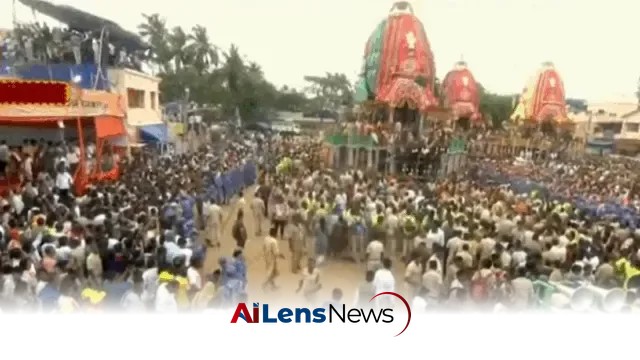


The annual Bahuda Yatra in Puri sees Lord Jagannath and his siblings return to their temple amid chants and celebrations, marking the end of their stay at Gundicha Temple.
New Delhi, India Jul 24, 2026 ALN: Puri: Concluding their annual stay at Gundicha Temple, the Trinity embarked upon their return journey to Shree Jagannath Temple in Odisha’s pilgrim town of Puri amid chants of ‘Haribol’. This event, known as Bahuda Yatra, marks the end of the annual Rath Yatra, where the deities Lord Jagannath, Lord Balabhadra, and Devi Subhadra return to their original abode after spending nine days at their garden retreat, Gundicha Temple. The festival draws millions of devotees from across the globe, highlighting the cultural and spiritual significance of the Jagannath cult in Hinduism.
The return journey, or Bahuda Yatra, is characterized by its vibrant atmosphere and deep-rooted traditions. As the chariot pulling commenced for the return journey amid tight security, Lord Balabhadra’s Taladhwaja led the way on the Bada Danda (Grand Road), where lakhs of devotees converged to witness the grand event. The presence of such a vast number of devotees underscores the enduring devotion to Lord Jagannath and the communal spirit that permeates this festival. The streets of Puri are often filled with colorful decorations, music, and the sounds of joyous chanting, creating an atmosphere of celebration.
During the nine-day sojourn at Gundicha Temple, the deities are believed to enjoy a respite from the daily rituals of the Jagannath Temple. Gundicha Temple is regarded as the birthplace of Lord Jagannath, and its significance is deeply embedded in the lore surrounding the deity. The temple was decked up with flowers to bid adieu to the sibling deities, showcasing the dedication and love of the devotees who come to pay their respects. The floral decorations symbolize the reverence and festivity associated with the event, as devotees express their gratitude for the deities' visit.
Before the pulling of the three majestic and colorfully decorated chariots, a number of special rituals were performed by the servitors inside the Gundicha Temple and near the raths. These rituals are integral to the festivities, as they are believed to purify the space and prepare the deities for their journey back. The ceremonial procession called ‘Pahandi’ of Lord Sudarshan, Lord Balabhadra, Devi Subhadra, and Lord Jagannath was performed. The deities were carried in grand procession and taken atop their respective chariots from the inner sanctum of Gundicha Temple, concluding ahead of the schedule. This early completion signifies the auspiciousness of the event, as it is believed that timely rituals please the deities.
In addition to the main deities, Bije Pratimas of Ramakrushna and Madan Mohan graced Taladhwaja and Nandighosha respectively. The presence of these additional idols highlights the inclusivity of the rituals and the acknowledgment of other deities within the Jagannath tradition. The pulling of the chariots began in the evening amid chants of ‘Jai Jagannath’ and ‘Hari Bol’, blowing of conch shells, and beating of cymbals after Puri Gajapati Maharaja Dibyasingha Deb performed Chhera Panhara, the ceremonial sweeping of the three chariot floors with a golden broom. This ritual, performed by the Gajapati Maharaja, symbolizes humility and the importance of cleanliness in the worship of the deities.
After completion of ‘Chhera Panhara’ ritual by Gajapati Maharaja, the Charamalas were removed from the chariots by Bhoi Sevakas. The Charamala, or sacred coverings, are removed to signify the readiness of the chariots for their journey. Following this, ‘Ghodas’ (horses) were mounted on the chariots, preparing them for the pull. The sight of the horses being harnessed is a significant part of the ritual, as it represents the readiness of the deities to return to their temple.
As the procession began, Lord Balabhadra’s Taladhwaja chariot first rolled towards the 12th-century shrine, followed closely by Devi Subhadra’s Darpadalan. This order of movement is steeped in tradition, as it reflects the hierarchy among the deities. Finally, the devotees pulled Nandighosha, the chariot of Lord Jagannath, with great devotion and enthusiasm. The crowd on the Bada Danda burst into ecstasy as the three majestic chariots proceeded towards the 12th-century shrine. The pulling of the chariots is not just a physical act; it is a spiritual endeavor that symbolizes the connection between the devotees and the divine.
The Bahuda Yatra is not merely a return journey but a culmination of a series of rituals and festivities that span over several days. The event reflects the deep cultural heritage of Odisha and the significance of the Jagannath cult in the socio-religious fabric of the region. The participation of lakhs of devotees from across the country and abroad highlights the universal appeal of Lord Jagannath, transcending regional and cultural boundaries.
Moreover, the Bahuda Yatra has implications beyond the religious sphere. It serves as a major economic booster for the region, attracting tourists and pilgrims alike. Local businesses thrive during this period, with vendors selling various items, from religious artifacts to food, thus contributing to the local economy. The influx of visitors also fosters a sense of community and shared experience among the residents of Puri, who take pride in hosting such a significant event.
The significance of the Bahuda Yatra extends beyond the immediate festivities. It is a time for reflection and renewal for many devotees, who see the return of the deities as a metaphor for the cyclical nature of life and the continuous journey of the soul. The rituals associated with the event serve to reinforce cultural values and community bonds, as families and friends gather to witness the procession and partake in the celebrations.
In the context of Hindu philosophy, the Jagannath cult emphasizes the importance of inclusivity and acceptance. The deities are often depicted as embodying the essence of all living beings, regardless of caste, creed, or social status. This message of unity resonates with many attendees, who find solace and hope in the teachings of Lord Jagannath. The Bahuda Yatra thus becomes not only a religious observance but also a platform for social cohesion and harmony.
The festival also garners attention from scholars and researchers interested in the anthropology of religion, as it provides insights into the ways in which faith and community intersect. The rituals, the architecture of the chariots, and the elaborate decorations offer a glimpse into the rich tapestry of Odisha's cultural heritage. Researchers often engage with the local populace to understand the significance of these traditions, thus contributing to the preservation of this vibrant cultural legacy.
In conclusion, the Bahuda Yatra is a profound expression of faith and devotion, encapsulating the essence of the Jagannath tradition. The return of the deities to Shree Jagannath Temple is a moment of joy and celebration for millions, marking the end of a significant chapter in the annual pilgrimage calendar. As the chariots make their way back to the temple, the chants of ‘Haribol’ and ‘Jai Jagannath’ echo through the streets of Puri, signifying the enduring bond between the divine and the devotees, a bond that continues to inspire and uplift the spirits of those who partake in this grand spectacle. The Bahuda Yatra thus remains a testament to the rich spiritual and cultural heritage of Odisha, offering a unique blend of devotion, community, and celebration.
To learn more about the latest developments in Hinduism, stay updated with our exclusive reports and analyses on AiLensNews.

