

More
Checking your session
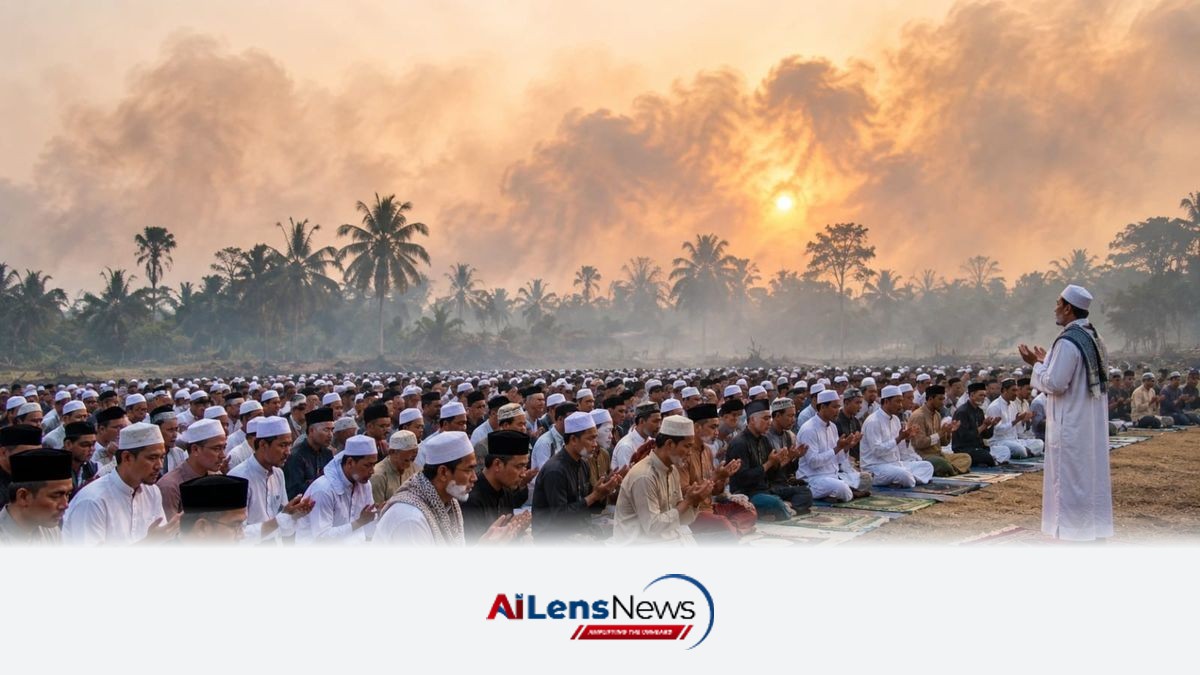



In South Sumatra, Indonesia, thousands gathered for a special Islamic rain prayer as wildfires create hazardous conditions. Governor Herman Deru emphasizes unity and faith in combating the crisis.
Leh, India Aug 25, 2026 ALN: Authorities in Indonesia's South Sumatra, the province with the highest number of wildfire hot spots, turned to spiritual measures on Tuesday as huge blazes in central and western regions scorched wide areas of forests and peatland, creating a choking haze that blanketed some cities in the world's most populous Muslim-majority country.
The prayer gathering initiative comes as the province faces prolonged dry weather that has heightened the risk of forest and peatland fires. This situation is not new to Indonesia, particularly in regions like South Sumatra, where the combination of dry conditions and human activities has led to recurring wildfire crises. The phenomenon is exacerbated by climate change, which has increased the severity and frequency of droughts in the region.
The latest satellite data from the Environment Ministry showed South Sumatra recorded the highest number of hot spots nationwide with 1,429, followed by West Kalimantan with 1,226 and Central Kalimantan with 811. Forestry Ministry data indicated that nearly 940 square kilometres (363 square miles) were burned in July alone, including over 20 square kilometres (8 square miles) in South Sumatra province. These figures highlight the scale of the problem, as vast areas of forest and peatland are lost, contributing to significant environmental degradation and greenhouse gas emissions.
About 3,000 residents gathered in Palembang, the capital of South Sumatra province, to perform a special Islamic prayer for rain, known as “salat istisqa.” They prayed shoulder to shoulder in the courtyard of the governor's office as thick smoke shrouded roads, buildings and public facilities, reducing visibility and forcing motorists to drive with their headlights on during the day. This communal act of prayer underscores the deep connection between the local population's cultural practices and their response to environmental crises. It reflects a collective sense of urgency and the belief that spiritual intervention can complement physical efforts to mitigate the impact of the wildfires.
“We have done everything we can and worked closely with all relevant parties,” South Sumatra Gov. Herman Deru said before the prayer. “As people of faith, we are also praying to God to send rain so that life can return to normal.” His comments highlight the interplay between governance and spirituality in Indonesia, where religious practices often intersect with public policy and community action. He also said the public prayer would complement ongoing firefighting and drought-mitigation measures and serve as a moment for residents to unite in confronting the environmental challenges facing the province.
Emergency services have been battling fires driven by an intensifying El Nino pattern and a prolonged dry season, generating dense smoke that crossed into Malaysia and Brunei, according to the National Disaster Management Agency. The El Nino phenomenon, characterized by warmer ocean temperatures in the central and eastern Pacific, has significant impacts on weather patterns across Southeast Asia, often leading to drier conditions and increased susceptibility to wildfires.
Indonesia is actively intensifying weather-modification operations to help firefighters combat wildfires by inducing rainfall through the dispersal of salt particles into suitable clouds, with 30 aircraft for cloud-seeding and water-bombing operations over Kalimantan, and another 22 helicopters covering Sumatra. These efforts are part of a broader strategy to manage and mitigate the impact of wildfires, which have become an annual crisis in the region. While cloud seeding can provide temporary relief, it is not a comprehensive solution to the underlying issues that lead to these fires.
Indonesian police have arrested 72 people suspected of starting some of the forest and peatland fires, while four companies are under investigation for allegedly using fire to clear land at low cost. This highlights the ongoing struggle between agricultural practices and environmental conservation. Plantation owners and traditional farmers often start fires to clear land for farming, triggering hazardous haze that reduces visibility, disrupts land and air transportation, and threatens public health. The economic pressures on farmers to clear land quickly and cheaply often lead to practices that have devastating environmental consequences.
Fires are a regular problem during the dry season in Indonesia, and the haze they generate has periodically drawn diplomatic complaints from neighbouring countries in Southeast Asia. The transboundary haze pollution has led to strained relations between Indonesia and its neighbors, particularly Malaysia and Singapore, which experience poor air quality as a result of the smoke. This issue has sparked calls for stronger enforcement of regulations against illegal land clearing and greater cooperation among Southeast Asian nations to address the root causes of forest fires.
The situation in South Sumatra serves as a reminder of the complex interplay between environmental management, economic development, and cultural practices. As the province grapples with the immediate crisis of wildfires and haze, it also faces the larger challenge of sustainable land use and climate resilience. The communal prayers for rain reflect a deep-seated cultural response to environmental challenges, while the government's firefighting efforts and legal actions against perpetrators of illegal land clearing demonstrate the multifaceted approach needed to tackle this ongoing crisis.
To learn more about the latest developments in Islam, stay updated with our exclusive reports and analyses on AILensNews.