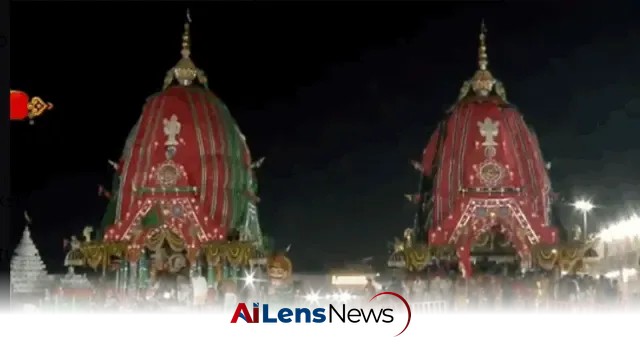


The majestic return of Lord Jagannath and his siblings to the Lions’ Gate marks the culmination of the Bahuda Yatra, with Suna Besha scheduled for tomorrow.
New Delhi, India Jul 24, 2026 ALN: Bhubaneswar: Completing their journey from Gundigha Temple, Lord Jagannath and his siblings Lord Balabhadra and Devi Subhadra returned to the Lions’ Gate of the 12th century shrine in Odisha’s Puri on the occasion of Bahuda Yatra on Friday. This event marks a significant moment in the annual Rath Yatra, a festival that attracts millions of devotees and tourists from across India and around the world.
The Bahuda Yatra, or the return journey of the deities, is an integral part of the Rath Yatra festivities, which typically lasts for about 15 days. The deities are believed to return to their original abode in the Jagannath Temple after spending a week in the Gundicha Temple, where they are worshipped by devotees. This journey symbolizes the return of the deities to their home after visiting their garden, which is a metaphor for the earthly experience of devotees.
On this auspicious occasion, lakhs of devotees converged on the Grand Road, Bada Danda, in the seaside pilgrim town. The atmosphere was charged with devotion as the sibling deities travelled to Shree Jagannath Temple riding three majestic chariots from Gundicha Temple, considered their birthplace. The chariots, known as Rathas, are massive wooden structures adorned with vibrant fabrics and decorations, each representing a different deity. The sheer scale and artistry of these chariots are a testament to the rich cultural heritage of Odisha.
Pulled by security personnel, devotees, and volunteers, the three chariots were parked in front of the Lion’s Gate of the 12th century shrine after a 2.6-km journey. The process of pulling the chariots is a communal effort, with individuals from various backgrounds coming together to participate in this sacred ritual. It is believed that pulling the chariots brings immense blessings and spiritual merit to the devotees.
First to reach the Singhadwara of Shree Jagannath Temple was the Taladhwaja chariot of Lord Balabhadra. This chariot is characterized by its green color and is traditionally pulled by the devotees. It was followed closely by the Darpadalan chariot of Devi Subhadra, which is known for its red and yellow hues. Finally, the Nandighosa chariot of Lord Jagannath, the largest and most elaborately decorated of the three, was the last to reach the destination. Each chariot has its own unique design and significance, reflecting the individual identities of the deities they carry.
During their return journey, the deities were offered Poda Pitha (traditional cake) on their chariots near the Mausi Maa temple as part of an age-old tradition. This offering is a gesture of love and devotion from the devotees, symbolizing the hospitality extended to the deities during their sojourn away from their temple. Poda Pitha, a delicacy made from rice and lentils, is a traditional sweet that holds cultural significance in Odisha.
Earlier in the day, the sibling deities were escorted to their chariots at Saradhabali from the Adapa Mandap of Srigundicha temple through the traditional Pahandi procession. The Pahandi is a ceremonial procession where the deities are carried in a grand manner, accompanied by chanting and music, highlighting the reverence and devotion of the devotees.
The deities began their return journey soon after Gajapati King Dibyasingha Deb performed the ceremonial Chhera Panhara (sweeping ritual) on the chariots in the afternoon. This ritual, performed by the king, symbolizes the humility and service that is central to the Jagannath tradition. The Gajapati King, considered the earthly representative of Lord Jagannath, sweeps the chariot with a broom made of sacred grass, an act that signifies the importance of cleanliness and respect for the divine.
Lord Jagannath and his siblings had embarked on their journey to Srigundicha temple for a nine-day sojourn by riding their chariots on the Grand Road on the occasion of Rath Yatra on July 16. The Rath Yatra is one of the most famous festivals in India, attracting millions of visitors to Puri each year. It is characterized by the grand procession of the deities on their chariots, which are pulled by thousands of devotees and onlookers.
After making a night halt midway, the deities reached Saradhabali near Srigundicha temple on July 17. The deities were escorted to the Adapa Mandap of Srigundicha temple from their chariots on July 18, where they were worshipped in a series of rituals that are part of the elaborate festivities. The rituals performed during this period are steeped in tradition and are aimed at ensuring the well-being and happiness of the devotees.
According to the schedule, the sibling deities will be adorned with Suna Besha (Golden Attire) on their chariots on July 25 (Saturday). This adornment is a highly anticipated event, where the deities are dressed in golden garments and jewelry, symbolizing their grandeur and divinity. It is a moment of great joy for the devotees, who gather in large numbers to witness this spectacle.
They will be offered Adhara Pana (a delicious drink) on their chariots on July 26 (Sunday). This offering is another traditional ritual that signifies the love and devotion of the devotees towards the deities. The drink is prepared with a blend of various ingredients, including fruits, and is considered sacred.
The sibling deities will be taken back to the sanctum sanctorum of the 12th century shrine from their respective chariots in a Pahandi procession on the occasion of Niladri Bije on July 27 (Monday), marking the conclusion of the annual car festival. This event is steeped in significance, as it signifies the end of the Rath Yatra and the return of the deities to their home, where they will remain until the next year’s festival. The Niladri Bije is a poignant moment for many devotees, as it represents the culmination of their prayers and hopes for the year.
The Rath Yatra and its associated rituals, including the Bahuda Yatra, are not just religious events but also cultural phenomena that bring together people from diverse backgrounds. They foster a sense of community and shared identity among devotees, reinforcing the values of devotion, humility, and service that are central to the Jagannath tradition. The festival has also become a platform for showcasing the rich cultural heritage of Odisha, including its music, dance, and traditional crafts, further enhancing its significance.
In conclusion, the Bahuda Yatra is a momentous occasion in the annual calendar of the Jagannath Temple, symbolizing the return of the deities to their abode after a period of joyous celebration. It encapsulates the essence of devotion and community spirit, drawing together millions in a shared experience of faith and cultural pride.
To learn more about the latest developments in Religious Events, stay updated with our exclusive reports and analyses on AiLensNews.

