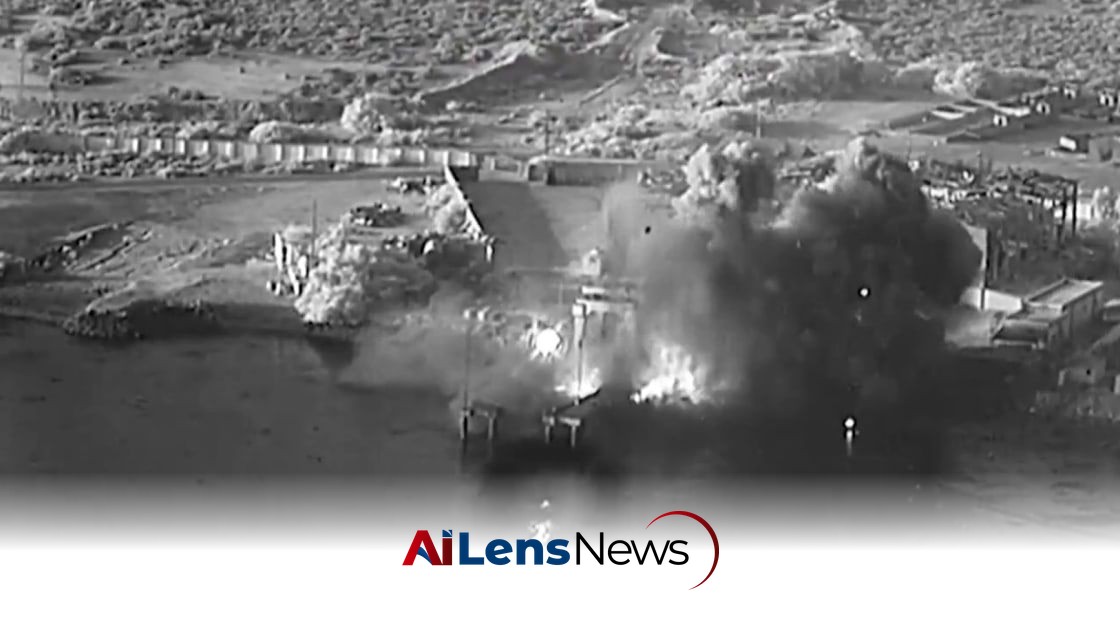


The U.S. has escalated military operations against Iran, blockading the Strait of Hormuz and imposing a 20% fee on ships for safe passage.
Washington DC, United States Jul 14, 2026 ALN: In a significant escalation of military tensions, President Trump announced that the United States will implement a blockade on Iran in the strategically vital Strait of Hormuz. This move comes as the U.S. Central Command confirmed that airstrikes against Iranian targets have been carried out for the third consecutive night. The decision to increase military action reflects a broader strategy aimed at curtailing Iranian influence in the region and ensuring the security of maritime navigation.
The Strait of Hormuz is a critical waterway through which a significant portion of the world's oil supply is transported. It is estimated that approximately 20% of the world’s oil passes through this narrow passage, making it one of the most important chokepoints in global trade. The U.S. government has stated that it will charge ships a 20% fee for safe passage through this route, a decision that is likely to provoke further tensions in the region. This fee is unprecedented and raises questions about the legality and feasibility of such a measure, as it may be viewed as an act of piracy or economic warfare by Iran and its allies.
The U.S. and Iran have been at odds for several years, with tensions escalating following the U.S. withdrawal from the Iran nuclear deal in 2018. The Joint Comprehensive Plan of Action (JCPOA), which was designed to limit Iran's nuclear capabilities in exchange for the lifting of economic sanctions, was abandoned by the Trump administration. This withdrawal led to a re-imposition of sanctions on Iran, severely impacting its economy and leading to increased hostility from Tehran.
Since then, incidents involving Iranian vessels and U.S. military assets have increased, leading to a series of confrontations. These incidents have included the seizure of oil tankers, drone strikes on oil facilities, and attacks on military installations. Iran has consistently denied any wrongdoing, claiming that its actions are defensive in nature and aimed at protecting its sovereignty.
Central Command's announcement of ongoing strikes marks a significant shift in U.S. military strategy in the region. These strikes are aimed at deterring Iranian aggression and safeguarding maritime navigation in the Strait of Hormuz. The U.S. military has stated that these operations are necessary to protect American interests and allies in the region, particularly in light of recent threats from Iranian leaders regarding the safety of shipping lanes.
In addition to airstrikes, the U.S. has increased its naval presence in the Gulf, deploying additional aircraft carriers and warships to the area. This military buildup is intended to send a clear message to Iran that any aggressive actions will be met with a decisive response. However, this escalation also raises the risk of miscalculations that could lead to unintended confrontations.
The international community has expressed concern over the potential for a wider conflict. Several countries have called for restraint and dialogue to resolve the ongoing tensions peacefully. The United Nations has urged both parties to engage in diplomatic discussions to de-escalate the situation. European nations, which were part of the JCPOA, have been particularly vocal in advocating for a return to negotiations, fearing that military action could destabilize the entire region.
Furthermore, countries that rely heavily on oil imports are closely monitoring the situation, as any disruption in the Strait of Hormuz could have far-reaching consequences for global energy markets. Nations such as Japan, South Korea, and several European countries have expressed their concerns over the potential impact on their economies.
The blockade and military actions raise alarms about the stability of global oil markets. Analysts warn that any disruption in the Strait of Hormuz could lead to significant increases in oil prices, affecting economies worldwide. Historically, any military conflict or perceived threat in this region has led to spikes in oil prices, which can have a cascading effect on global inflation and economic growth.
For instance, during the Iran-Iraq War in the 1980s, oil prices surged dramatically due to fears of supply interruptions. Similarly, recent attacks on oil facilities in Saudi Arabia led to a temporary spike in prices, highlighting the vulnerability of oil supply chains in the region. Economists are concerned that prolonged military engagement could result in sustained high oil prices, which would impact consumer spending and economic recovery in many countries still grappling with the fallout from the COVID-19 pandemic.
The U.S. decision to escalate military operations against Iran signals a new phase in the ongoing conflict. As tensions rise, the potential for miscalculation and further military engagement looms large, prompting calls for diplomatic efforts to de-escalate the situation. The stakes are high, not only for the U.S. and Iran but for the entire international community, which has a vested interest in maintaining stability in one of the world's most critical maritime corridors.
As the situation develops, it will be crucial for global leaders to engage in dialogue and seek peaceful resolutions to avoid a conflict that could have dire consequences for regional and global security. The coming weeks will likely be pivotal in determining the trajectory of U.S.-Iran relations and the broader geopolitical landscape in the Middle East.
In recent years, the geopolitical landscape surrounding the Strait of Hormuz has been characterized by a complex interplay of national interests, historical grievances, and regional power dynamics. Iran's strategic position along the strait has made it a focal point for both U.S. military operations and Iranian defense strategies. The Iranian government views the Strait of Hormuz as a vital artery for its economy, particularly in light of the crippling sanctions imposed by the U.S. and its allies. Consequently, Iran's military posture in the region has evolved to include asymmetric warfare tactics, such as the use of fast attack boats and missile systems to deter perceived threats.
Moreover, the U.S. has historically maintained a strong military presence in the Gulf, conducting freedom of navigation operations and joint exercises with regional allies to reinforce its commitment to maritime security. The recent escalation in military action reflects a broader trend of increasing militarization in the region, where both nations are prepared to assert their interests through military means.
As military operations intensify, the potential for unintended consequences increases. Analysts warn that a miscalculation by either side could trigger a wider conflict, drawing in other regional players and complicating an already volatile situation. The implications of such a conflict would not only affect the immediate region but could also have global ramifications, particularly in terms of energy security and international trade.
In light of these developments, it is essential for policymakers to consider the long-term implications of military actions in the Strait of Hormuz. Engaging in diplomatic efforts, fostering dialogue, and seeking multilateral solutions may provide a pathway to de-escalation and stability in the region. The international community's role in facilitating negotiations and addressing the underlying issues contributing to the conflict will be crucial in preventing further escalation and ensuring the safety of one of the world's most vital maritime corridors.
To learn more about the latest developments in Political Controversies, stay updated with our exclusive reports and analyses on AiLensNews.

