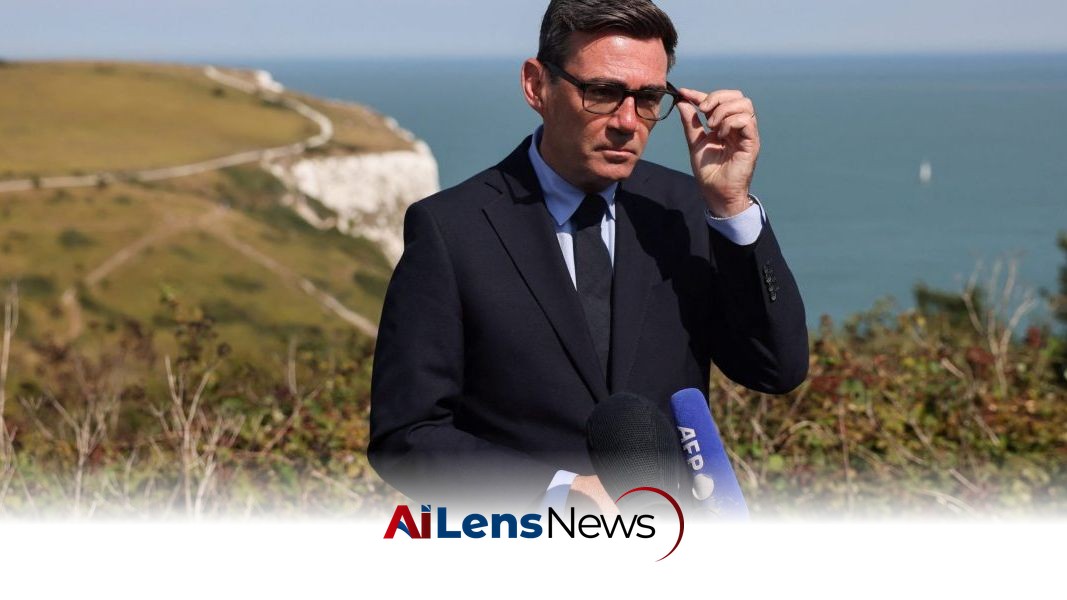


Prime Minister Andy Burnham pledges a strong focus on illegal migration, emphasizing control at the borders while offering support for genuine asylum seekers.
Washington DC, United States Aug 3, 2026 ALN: In recent months, the issue of illegal migration has emerged as a significant concern in the United Kingdom, prompting a robust response from the government. Prime Minister Andy Burnham has taken a strong stance on the matter, vowing to tackle illegal migration with an unwavering commitment. His administration has implemented measures to increase the number of crime agency officers dedicated to combating human smuggling, reflecting a broader strategy to address the challenges posed by illegal crossings, particularly those occurring via small boats across the Channel.
Over the past 18 months, the UK government has more than doubled the number of officers from the National Crime Agency (NCA) assigned to this critical task, raising their numbers from 376 to nearly 800. This substantial increase underscores the government's intention to enhance its enforcement capabilities against organized crime networks that facilitate illegal migration. Prime Minister Burnham emphasized the importance of restoring control over the borders, stating, "The public don’t like the idea that the border looks like it’s not controlled. We need to bring back that control, but also we need to offer support for people who genuinely need it. So we’re just going to be relentless."
Illegal migration has emerged as a contentious political issue in the UK, often serving as a rallying point for various political factions. The rise of Nigel Farage’s Reform UK party, which has gained traction by adopting an uncompromising stance on immigration, highlights the public's heightened concerns regarding border security. Farage's characterization of small boat crossings as an "invasion" has resonated with a segment of the electorate, leading to increased support for his party in opinion polls. This political dynamic has prompted the government to respond more vigorously to public sentiment regarding illegal migration.
During his visit to the port of Dover, Burnham acknowledged the pressing need to address illegal migration while also highlighting the importance of providing safe routes for those in genuine need. He stated, "People want to see this issue addressed. I heard that on the doorsteps in Makerfield. But we also need to build a system that offers safe routes for people as well, because that also takes away the selling point of the gangs." This dual approach aims to balance the enforcement of immigration laws with humanitarian considerations, reflecting a nuanced understanding of the complexities surrounding migration.
Despite the government's intensified efforts, the number of small-boat crossings has shown a notable decline compared to previous years. As of the time of Burnham's remarks, approximately 2,000 individuals had crossed the Channel since he assumed the role of Prime Minister on July 20. The provisional estimate for illegal crossings for the year stands at 14,526, which represents a 43% decrease from the previous year and a 14% decline compared to the equivalent period in 2024. This reduction in crossings may indicate that government efforts are beginning to yield positive results, although challenges remain.
In addition to the increased presence of NCA officers, the government has reported significant progress in deportations. Home Secretary Shabana Mahmood revealed that more than 70,000 deportations have occurred since Labour took power in 2024, marking a 41% increase. Mahmood expressed her commitment to securing the border, stating, "I am doing whatever it takes to secure the border." Her remarks reflect a broader consensus within the government regarding the need to address public concerns about illegal migration, particularly in light of the visual impact of crossings across the Channel.
The NCA has played a crucial role in the government's response to illegal migration, with involvement in nearly 300 arrests in the previous year. The agency has also been instrumental in seizing over 1,109 small boats and engines intended for use by people smugglers since the 2024 election. According to the Home Office, these seizures could have facilitated approximately 72,000 migrant crossings, underscoring the scale of the challenge posed by organized crime in this area.
Burnham and Mahmood's comments come at a time when the issue of illegal migration is gaining renewed attention across Europe, particularly following a recent crisis in Ceuta, a Spanish enclave located in North Africa. Reports indicate that as many as 60,000 Moroccan migrants crossed into Ceuta within a short period, raising alarms among European Union nations. In response, several countries have threatened to implement border checks and even suspended Spain from the EU's Schengen agreement, which typically allows for travel without border checks among member states. This situation illustrates the interconnected nature of migration issues across Europe and the potential for political ramifications that extend beyond national borders.
The implications of the government's approach to illegal migration are significant, not only for the individuals seeking asylum or better opportunities but also for the political landscape in the UK. As Burnham's administration seeks to balance enforcement with humanitarian considerations, the ongoing discourse around migration will likely shape public opinion and influence future electoral outcomes. The government's commitment to addressing illegal migration reflects a broader trend in many Western democracies, where migration has become a central issue in political debates.
Looking ahead, the effectiveness of the government's strategies will be closely monitored by both supporters and critics. While the reduction in small-boat crossings may indicate some success, the complexities of migration patterns, the role of organized crime, and the humanitarian aspects of asylum-seeking will continue to challenge policymakers. The government's ability to navigate these challenges while maintaining public trust and addressing the concerns of its constituents will be crucial as it moves forward in its efforts to tackle illegal migration.
To learn more about the latest developments in Elections, stay updated with our exclusive reports and analyses on AiLensNews.

