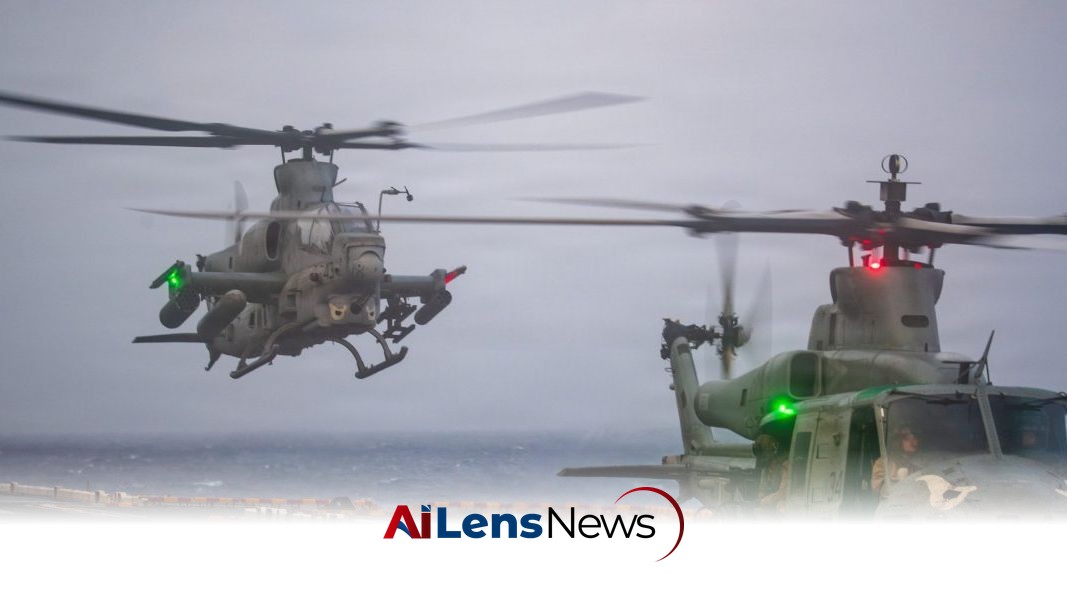


President Trump announces a naval blockade on Iran, demanding tolls on cargo through the Strait of Hormuz, echoing Iran's tactics in the region.
Washington DC, United States Jul 13, 2026 ALN: The Strait of Hormuz, a narrow waterway that connects the Persian Gulf to the Gulf of Oman, is one of the most strategically significant maritime chokepoints in the world. Approximately 20% of the global oil supply transits through this strait, making it a vital artery for international trade and energy security. The current geopolitical landscape surrounding the strait has been drastically altered due to the ongoing tensions between the United States, Israel, and Iran, transforming it from a zone of relatively free navigation into a highly militarized environment where the safety of commercial shipping is contingent upon military power.
The recent escalation of hostilities began with Iran's aggressive military posture, which included the deployment of missiles and drones aimed at asserting control over the strait. This military strategy effectively closed off the waterway at the outset of the conflict, with Tehran demanding that any vessel wishing to traverse the strait must obtain prior permission and pay a toll to use a designated corridor close to the Iranian coast. This move not only highlights Iran's strategic capabilities but also its willingness to leverage its geographical advantages to exert influence over maritime traffic.
In response to these developments, the United States has taken a firm stance, insisting on the restoration of free navigation in the Strait of Hormuz. Historically, the U.S. Navy has played a crucial role in safeguarding commercial shipping, guiding vessels through the strait and defending the Omani corridor from Iranian threats without charging for its protective services. This longstanding commitment to ensuring maritime security has been pivotal in maintaining a semblance of order in a region fraught with tension.
However, President Donald Trump's recent announcement marks a significant shift in U.S. policy. He declared the reimposition of a naval blockade on Iran, coupled with a demand for reimbursement for all cargo transiting through the strait. This new approach is framed as a means of ensuring that the U.S. military's role as the guardian of the strait is recognized and compensated. Trump’s announcement included a specific levy of 20% on all cargo shipped through this vital waterway, a move that could have far-reaching implications for global trade and energy markets.
Trump's assertion that the U.S. will henceforth be known as "THE GUARDIAN OF THE HORMUZ STRAIT" underscores a desire to project strength and assert U.S. dominance in the region. The U.S. military's capability to create a safe passage for commercial vessels is unmatched, and since early May, U.S. forces have reportedly assisted over 800 commercial vessels and facilitated the transit of approximately 400 million barrels of crude oil through the strait. This logistical prowess positions the U.S. as a critical player in maintaining a flow of commerce in a region otherwise dominated by Iranian military threats.
The announcement had an immediate impact on global markets, as oil prices surged by 6% in response to the heightened tensions and the prospect of increased costs for shipping through the strait. The volatility in the Persian Gulf, characterized by skirmishes between U.S. and Iranian forces, has already created an atmosphere of uncertainty that affects not only oil prices but also the broader economic landscape. With neither side willing to back down, the prospect of restoring completely free navigation appears increasingly dim, leading mediators to explore compromise solutions.
In this context, Oman has emerged as a potential mediator, reportedly drafting a proposal that would establish two distinct routes for managing traffic in the strait: a southern corridor through Omani territorial waters and a northern corridor through Iranian waters. This dual-route approach aims to alleviate some of the pressures and risks associated with passing through the strait, though it remains to be seen whether Iran would agree to such an arrangement. The effectiveness of such a proposal hinges on the willingness of all parties to engage in constructive dialogue, which has been lacking in recent months.
Despite the U.S. military's efforts to protect commercial shipping, there have been instances where Iranian projectiles have targeted vessels navigating the strait. This ongoing threat has led to a significant decrease in traffic through the Omani channel, as many ships have opted for routes that are less visible and more clandestine. Reports indicate that some vessels are now traversing the strait with their transponders turned off and under the cover of darkness to evade Iranian detection. This shift in navigation patterns reflects the heightened risks associated with maritime operations in the region.
Moreover, the introduction of Trump's 20% levy on cargo creates an additional layer of complexity for shipping companies. The already precarious situation, exacerbated by the threat of Iranian attacks, now requires vessels to conduct a thorough cost-benefit analysis before deciding on their routes. The financial implications of the toll, combined with the risks of navigating through a conflict zone, could lead to significant changes in shipping practices and routes, ultimately affecting global supply chains.
As the U.S. maintains its stance that the strait remains open while Iran continues to assert its control, the reality for commercial fleets and insurance companies is likely to diverge sharply from the official narratives. The decisions made by shipping companies in light of these developments will be critical in determining the future of maritime operations in the Strait of Hormuz. Insurance premiums may rise, and shipping routes may be re-evaluated, leading to longer transit times and increased costs for consumers worldwide.
In conclusion, the situation in the Strait of Hormuz represents a complex interplay of military power, economic interests, and geopolitical strategy. As the U.S. implements its new naval blockade and seeks to enforce a toll on shipping, the implications for international trade and energy markets could be profound. The ongoing conflict between the U.S. and Iran, coupled with the strategic significance of the strait, ensures that this maritime corridor will remain a focal point of global attention in the foreseeable future.
To learn more about the latest developments in Political Controversies, stay updated with our exclusive reports and analyses on AiLensNews.

