

More
Checking your session
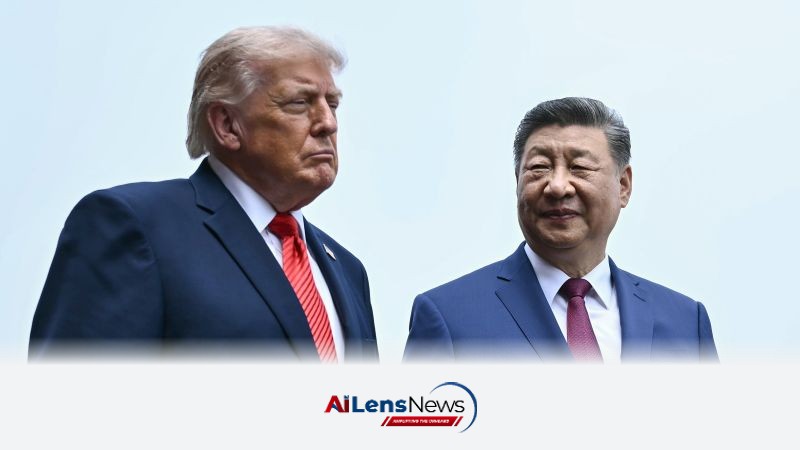



As the U.S. intensifies economic pressure on Iran, China's pivotal role complicates the situation, with Beijing prioritizing its own interests over U.S. demands.
Washington DC, United States Aug 26, 2026 ALN: When US Treasury Secretary Scott Bessent unveiled "Operation Economic Outcast," threatening damaging new sanctions on countries that refuse to stop doing business with Iran, he didn’t name the one country that could decide its success or failure: China.
The world’s second-largest economy has long been a critical economic lifeline for Tehran, buying up the vast majority of its oil exports – worth an estimated tens of billions in US dollars last year – in addition to other trade. This relationship has been cultivated over many years, as China has positioned itself as a key ally for Iran, particularly in the face of Western sanctions that have isolated Tehran from much of the global economy.
Bringing China on board with the White House’s latest effort to subdue an Iranian leadership that has remained stubbornly defiant after almost six months of war is, however, an extremely tall order. China's economic ties with Iran are deeply entrenched, and the country views its relationship with Iran through the lens of strategic partnership, energy security, and counterbalancing US influence in the region.
Beijing flatly rejects what it calls “unilateral” US sanctions and has long defended its right to regular trade with partners like Iran and Russia. This stance is not merely a matter of principle; it is also tied to China's broader geopolitical strategy. China seeks to assert its influence in the Middle East and maintain access to vital energy resources, and it views US sanctions as a threat to its economic interests and sovereignty.
Moreover, China surmises that Washington would be wary of triggering a broader economic confrontation that could hurt both countries, particularly in a sensitive political climate ahead of the US midterms. The implications of a severe economic rift could resonate through global markets, potentially destabilizing not just the economies of the involved nations but also those of their trading partners.
On Tuesday, following Bessent’s press conference, China’s Foreign Ministry vowed to “take all necessary measures” to safeguard its “own legitimate rights and interests” in the face of US sanction threats. This statement reflects a broader sentiment in Beijing that any US attempt to dictate the terms of trade with Iran is an infringement on China's sovereignty and economic autonomy.
“Economic warfare and maximum pressure will not help resolve the issue; they will only further intensify tensions and conflicts, create spillover risks, disrupt the global economic and financial order,” ministry spokesperson Lin Jian said. This assertion highlights China's criticism of US foreign policy tactics, which it views as aggressive and counterproductive.
Bessent’s threat also comes ahead of a highly anticipated visit by Chinese leader Xi Jinping to the US next month, where the two sides could make progress on extending a critical trade truce set to expire later this fall. This timing is significant, as it creates a complex diplomatic landscape where both nations must navigate their competing interests. The outcome of Xi's visit could have profound implications for US-China relations, particularly in the context of trade and economic cooperation.
US President Donald Trump earlier stated that he did not ask Xi “for any favors” on Iran during a May meeting between the two – a statement which, if accurate, may signal to Beijing a certain level of American desperation to end the conflict. This perception could embolden China to maintain its current course of action, reinforcing its support for Iran as a counterbalance to US pressure.
What’s left now is a careful calculus for both countries in how they navigate what Bessent has described as a period of “quiet diplomacy.” This approach may involve privately issuing ultimatums to Iran’s economic partners, which the Treasury chief did not specifically name during his press conference. The challenge lies in the fact that Iran is not only a significant oil supplier for China but also a strategic partner in various regional initiatives.
Chinese analysts suggest there is limited space for Washington’s demands. “China is unlikely to accept a situation in which Washington determines what Chinese companies can legally trade with third countries,” said Zhao Long, director of the Institute for International Strategic and Security Studies at the Shanghai Institutes for International Studies. This underscores a critical point: the potential for US secondary sanctions to dictate the terms of trade for non-American entities is a contentious issue that China is unwilling to accept.
China imports Iranian oil using a shadowy system that is by design insulated from the US dollar system – and sanctions. This system has evolved as a response to previous rounds of sanctions, and it allows Chinese firms to continue trading with Iran without direct exposure to US financial systems. Private, so-called teapot refineries purchase and process US-sanctioned Iranian crude, relying on a network of ports, financial institutions, and tankers that are often similarly firewalled from international exposure.
China hasn’t recorded these purchases officially in years, since the US re-imposed sanctions on Iran when the first Trump administration backed out of the Obama-era Iranian nuclear deal. This lack of transparency complicates efforts by the US to track and apply pressure on Chinese entities engaged in this trade. However, analysts believe that pressure points do exist, and Washington could explore various strategies to influence China's behavior.
One potential avenue for the US could involve leveraging its relationships with other nations that have economic ties to China. By coordinating with these countries, the US could create a more unified front against Iran, potentially swaying China's calculations. Additionally, the US could enhance its diplomatic efforts to engage with China directly, seeking to address mutual concerns while emphasizing the risks associated with continued trade with Iran.
Ultimately, the interplay between US sanctions, China's economic interests, and Iran's defiance creates a complex and evolving geopolitical landscape. The outcomes of these interactions will not only shape the future of US-Iran relations but also have lasting implications for US-China relations, the global oil market, and the broader geopolitical balance in the Middle East. As both nations navigate their respective interests, the potential for conflict and cooperation remains a delicate balance that will require careful diplomacy and strategic foresight.
To learn more about the latest developments in Political Controversies, stay updated with our exclusive reports and analyses on AILensNews.