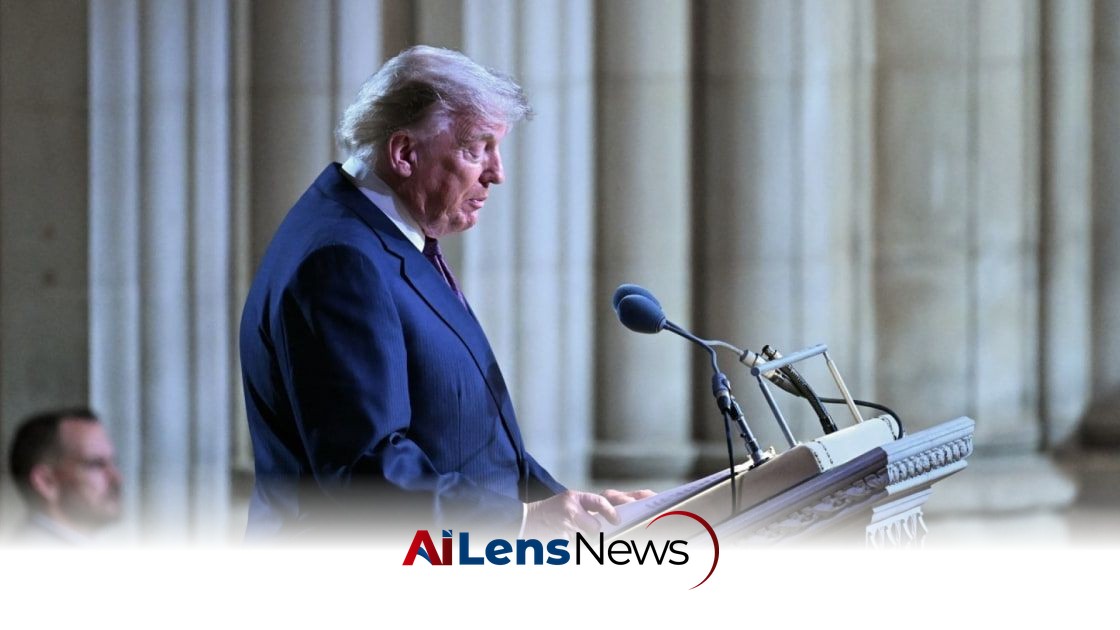


During a heartfelt tribute at Washington National Cathedral, President Trump reflected on his relationship with Sen. Lindsey Graham, highlighting their past collaborations and rivalry from 2016.
Washington DC, United States Jul 29, 2026 ALN: During a heartfelt tribute at Washington National Cathedral, President Trump reflected on his relationship with Sen. Lindsey Graham, highlighting their past collaborations and rivalry from 2016. This occasion marked not only a moment of remembrance for the late senator but also an opportunity for Trump to underscore the significance of their political partnership and the evolution of their friendship over the years. The service drew a wide array of attendees, including political figures, family, friends, and constituents, all gathered to honor Graham's legacy.
Senator Lindsey Graham, who served South Carolina for over two decades, was a prominent figure in the Republican Party. His political career began in the U.S. House of Representatives, where he served from 1995 to 2003, before moving on to the Senate. Graham was known for his strong stances on national security, military issues, and judicial appointments. His role as a leading voice on foreign policy within the Republican caucus was particularly noteworthy, as he often advocated for a robust American presence on the global stage. His relationships with various administrations, including that of President Trump, were often characterized by both support and criticism, reflecting the complexities of party dynamics and the shifting political landscape.
The relationship between Trump and Graham has been particularly notable since the 2016 presidential election. Initially, Graham was a vocal critic of Trump, famously referring to him as a "jackass" and expressing concerns over Trump's temperament and suitability for the presidency. This initial criticism was not uncommon among establishment Republicans, who were wary of Trump's unconventional approach and populist messaging. However, as the election cycle progressed and Trump secured the Republican nomination, Graham's stance shifted dramatically. He became one of Trump's most ardent supporters, recognizing the importance of party unity in the face of a contentious election against Hillary Clinton. This shift was emblematic of a broader trend within the GOP, where many establishment figures recalibrated their positions in response to Trump's rising influence.
During the tribute, Trump recounted specific instances of their collaboration, emphasizing how Graham's support was crucial during significant legislative battles, including tax reform and judicial appointments. Graham played a pivotal role in advocating for the confirmation of conservative judges, a priority that resonated deeply with Trump's base and was a central theme of his presidency. The successful appointment of judges who aligned with conservative values was seen as a major achievement of the Trump administration, and Graham's efforts in this area underscored his commitment to shaping the judiciary for years to come.
In addition to their political alignment, Trump also touched on the personal bond they developed over the years. The two men often traveled together, attended various events, and participated in numerous political rallies. Their camaraderie was evident during campaign events, where Graham's enthusiastic support helped energize Trump's base. This friendship, however, was not without its ups and downs, as both men occasionally found themselves at odds over policy decisions and political strategies. Such instances highlighted the complexities of their relationship, where personal loyalty sometimes clashed with political pragmatism.
The funeral service at Washington National Cathedral served as a poignant reminder of the complexities of political relationships. It highlighted how individuals can evolve from rivals to allies, and how personal bonds can transcend political differences. Trump's tribute was not only a reflection of his respect for Graham but also an acknowledgment of the broader implications of their partnership for the Republican Party. It illustrated how personal relationships can influence political dynamics, shaping the course of legislation and party strategy.
Graham's passing leaves a significant void in the Senate, where he was known for his ability to reach across the aisle on certain issues, despite being a staunch conservative. He was often involved in bipartisan efforts, particularly in areas such as immigration reform and veterans' affairs. His legacy includes efforts to reform immigration, bolster military spending, and advocate for veterans' rights. The impact of his work can be seen in various legislative achievements and ongoing debates within Congress. Graham's approach to governance reflected a belief in the importance of collaboration, even in a polarized political environment.
In the wake of Graham's death, the Republican Party faces a critical juncture. The dynamics within the party have shifted significantly since Trump's presidency, with ongoing debates about the direction of the GOP. Graham's passing raises questions about who will fill his role as a bridge-builder within the party and how his absence will affect future legislative efforts. As younger and more populist elements within the party gain prominence, the challenge will be to maintain the balance between traditional conservative principles and the evolving demands of the party base.
As the Republican Party continues to navigate its identity in the post-Trump era, Graham's legacy will likely serve as a point of reference for those who seek to balance traditional conservative values with the populist sentiments that have gained traction in recent years. The challenges ahead include addressing issues such as healthcare, immigration reform, and climate change, all of which require bipartisan cooperation to achieve meaningful progress. Graham's ability to engage with colleagues across the aisle may serve as a model for future leaders who aim to foster collaboration and find common ground.
Trump's tribute to Graham also serves as a reminder of the importance of personal relationships in politics. While policy disagreements are inevitable, the ability to maintain friendships and alliances can be crucial for achieving legislative goals. As lawmakers reflect on Graham's contributions, they may also consider how to foster a more collaborative environment in an increasingly polarized political landscape. The tribute underscored the notion that personal connections can often facilitate political negotiations and pave the way for compromise.
In conclusion, the tribute at the Washington National Cathedral not only honored the life and career of Senator Lindsey Graham but also highlighted the intricate web of relationships that define political life in Washington. President Trump's reflections on their journey together encapsulated the highs and lows of their partnership, serving as a testament to the enduring power of friendship and collaboration in the realm of politics. As the nation mourns the loss of a dedicated public servant, it also contemplates the future of the Republican Party and the challenges that lie ahead in the pursuit of governance and unity. Graham's legacy will likely continue to influence discussions on key issues, shaping the trajectory of the party and its approach to governance in the years to come.
To learn more about the latest developments in Political Controversies, stay updated with our exclusive reports and analyses on AiLensNews.

