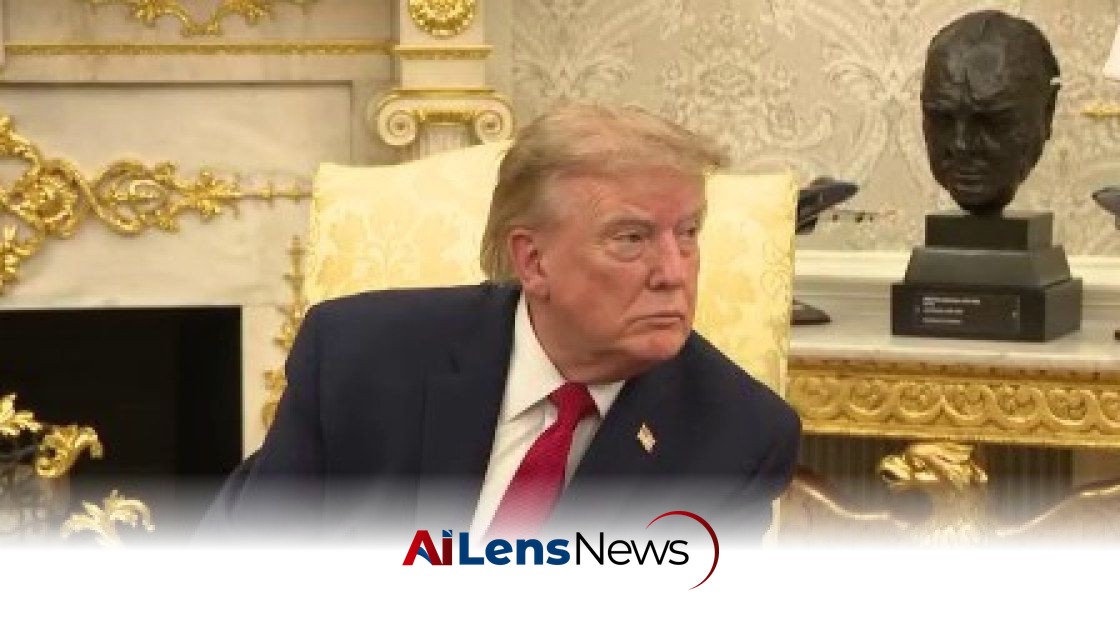


President Trump has warned Oman of potential military action if it disrupts negotiations regarding the Strait of Hormuz, while also scaling back military exercises with South Korea.
Washington DC, United States Aug 18, 2026 ALN: In a surprising escalation of rhetoric, President Donald Trump has threatened to strike Oman if the nation interferes with ongoing negotiations concerning the control of the strategically vital Strait of Hormuz. This warning underscores the heightened tensions in the region, particularly in light of the ongoing discussions surrounding Iran's influence and maritime security.
The Strait of Hormuz is a narrow waterway that connects the Persian Gulf with the Gulf of Oman and the Arabian Sea. It is one of the world's most crucial maritime chokepoints, through which approximately 20% of the global oil supply passes. Given its significance, any assertion of control or influence over the strait has far-reaching implications not just for regional players but also for global economies reliant on oil imports. The ongoing negotiations about the control of this strait are therefore of paramount importance, and any perceived interference by Oman could be viewed as a direct challenge to U.S. interests in the region.
During a recent briefing, Trump expressed his frustration over Oman’s role in the negotiations, suggesting that any interference would not be tolerated. This statement indicates a shift in U.S. policy, reflecting a more aggressive posture in dealing with nations perceived as obstructing American diplomatic efforts. Oman has historically maintained a neutral stance in regional conflicts, often acting as a mediator between the U.S. and Iran, making the current situation particularly complex.
In addition to his comments on Oman, Trump has directed the U.S. military to reduce joint exercises with South Korea. This decision comes after South Korea's decision to remain neutral in the ongoing conflict involving Iran, further complicating the dynamics in the region. The reduction of military exercises with South Korea, a key ally in Asia, signals a potential reevaluation of U.S. military commitments abroad, which could have implications for U.S. alliances and security partnerships in the Asia-Pacific region.
Trump's administration has been vocal about its stance on Iran, particularly following the U.S. withdrawal from the Joint Comprehensive Plan of Action (JCPOA) in 2018. The re-imposition of sanctions on Iran has led to increased tensions, with Iran responding by expanding its nuclear program and engaging in aggressive actions in the Persian Gulf. The potential for military action against Oman raises concerns about further escalation in an already volatile area. The President's comments seem to signal a willingness to take a hardline approach to ensure that U.S. interests are protected, which could lead to unintended consequences.
The implications of Trump's threats extend beyond U.S.-Oman relations. Oman has traditionally enjoyed a reputation for neutrality and diplomacy in the region, often acting as a facilitator for dialogue between conflicting parties, including the U.S. and Iran. If Oman were to be perceived as siding against U.S. interests, it could jeopardize its diplomatic standing and lead to increased isolation. Additionally, such threats may provoke a defensive response from Oman, which could further destabilize the region.
Moreover, the broader geopolitical landscape in the Middle East is already fraught with tension. The ongoing conflicts in Syria and Yemen, the Israeli-Palestinian issue, and Iran's regional ambitions contribute to an environment where diplomatic miscalculations can quickly escalate into military confrontations. Analysts are closely monitoring how Trump's threats will affect U.S. relations not only with Oman but also with other Gulf states that may be watching closely to gauge U.S. commitment to their security in light of Iranian provocations.
As the situation develops, the international community is likely to respond with caution, given the potential for conflict in a region that has seen significant military engagement in recent decades. The U.S. has a vested interest in maintaining stability in the Persian Gulf to ensure the uninterrupted flow of oil and to support its allies in the region. However, a hardline approach may alienate potential partners and hinder diplomatic solutions that could address the underlying issues at play.
In conclusion, the President's remarks highlight the precarious nature of international diplomacy in the region, where a single misstep could lead to significant military conflict. The future of U.S.-Oman relations and the overall stability of the Middle East will depend on how both sides navigate these tensions and whether diplomatic avenues can be pursued to mitigate the risks of escalation. The world watches closely, as the implications of these developments could reverberate far beyond the immediate region, impacting global energy markets and international security dynamics.
To learn more about the latest developments in Political Controversies, stay updated with our exclusive reports and analyses on AiLensNews.

