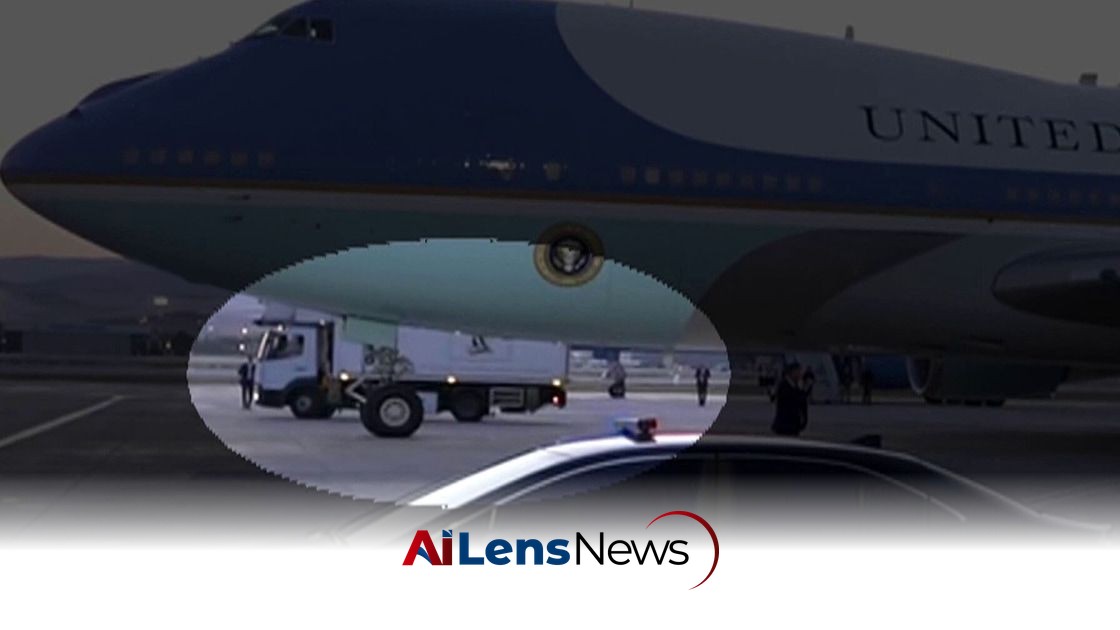


After the NATO summit in Turkey, President Trump was discreetly transferred to a different aircraft due to a reported assassination threat from Iran.
Washington DC, United States Aug 11, 2026 ALN: Following the NATO summit in Turkey in July, President Donald Trump was seen boarding a decoy Air Force One. The Washington Post reports that after boarding the plane, he was whisked away to a nearby aircraft using a catering truck. The ruse was reportedly used to conceal his whereabouts amid an ongoing assassination threat from Iran. This covert operation highlights the heightened security measures taken by the U.S. government to protect the President, especially during international engagements. The use of a decoy aircraft is not unprecedented, but it underscores the seriousness of the threats faced by high-profile leaders.
Details surrounding the threat have not been fully disclosed, but the incident raises questions about the security protocols in place during such significant events. As tensions with Iran remain high, the safety of the President and other officials is paramount. The potential for violence against political figures is a reality that has been faced by leaders throughout history, and the implications of such threats can resonate far beyond the immediate danger.
The threat of assassination against political leaders is not a new phenomenon. Historically, world leaders have faced risks from various groups and individuals who oppose their policies or actions. The assassination of Archduke Franz Ferdinand in 1914, which precipitated World War I, is one of the most notable examples of how such threats can have far-reaching consequences. In modern times, leaders have been targeted for a variety of reasons, including ideological opposition, political grievances, or as part of larger geopolitical conflicts. For instance, the assassination of U.S. President John F. Kennedy in 1963 not only shocked the nation but also led to significant changes in security protocols for future leaders.
The United States, particularly in the context of its foreign relations with countries like Iran, has been vigilant against threats to its leaders. The strained relationship between the U.S. and Iran has been marked by a series of conflicts, sanctions, and military engagements, particularly since the 1979 Iranian Revolution, which saw the overthrow of the U.S.-backed Shah and the establishment of an Islamic Republic. The subsequent hostage crisis and ongoing tensions over Iran's nuclear program have only exacerbated these hostilities. In recent years, the rhetoric between the two nations has intensified, particularly during Trump's presidency, which saw the U.S. withdrawing from the Joint Comprehensive Plan of Action (JCPOA) in 2018. This decision, along with the re-imposition of sanctions, led to a significant escalation in tensions. Iran's response included threats against American interests in the region, which have raised concerns about the safety of U.S. officials abroad.
Security protocols for the President of the United States are among the most stringent in the world. The U.S. Secret Service is tasked with ensuring the safety of the President and has developed a range of measures to mitigate risks during domestic and international travel. These measures include advance planning of travel routes, coordination with local law enforcement, and the use of specialized vehicles and aircraft. The decision to employ a decoy aircraft is one such tactic that reflects the evolving nature of security threats. This strategy is not only a precautionary measure but also a critical component of operational security, which seeks to protect sensitive information about the movements and locations of high-profile individuals.
The use of decoy aircraft is part of a broader strategy known as operational security, which aims to protect sensitive information about the movements and locations of high-profile individuals. By creating a diversion, security teams can better manage the risks associated with potential threats. This strategy is not only used for the President but also for other high-ranking officials, including members of Congress and foreign dignitaries visiting the U.S. The complexity of modern threats necessitates a multifaceted approach to security that adapts to the changing landscape of international relations and the motivations of those who may seek to do harm.
The incident in Turkey raises important questions about the adequacy of current security measures in the face of evolving threats. As global political dynamics shift and new threats emerge, the U.S. government must continuously evaluate and adapt its security protocols. The potential need for enhancements may involve increased funding for security measures, improved intelligence-sharing among agencies, and the development of new technologies to detect and neutralize threats. The implications of such threats extend beyond the immediate safety of the President. They can affect diplomatic relations, influence policy decisions, and shape public perception of national security. The visibility of threats can also lead to heightened anxiety among the public and can impact the political landscape by affecting voter sentiment and trust in government institutions.
The complexities of international diplomacy mean that leaders must navigate not only the political landscape but also the security challenges that accompany it. The assassination threat against Trump during the NATO summit in Turkey serves as a stark reminder of the precarious balance that must be maintained between engaging with other nations and ensuring the safety of national leaders. As the world becomes increasingly interconnected, the implications of such threats will continue to resonate across borders, affecting not only the leaders directly involved but also the broader geopolitical environment. The actions taken by governments in response to threats against their leaders can have ripple effects that influence international relations, trade agreements, and military alliances.
In conclusion, the covert operation to switch President Trump's aircraft during his visit to Turkey underscores the serious nature of security threats that high-profile leaders face in ’s geopolitical climate. As discussions around the effectiveness of current security measures unfold, it is crucial for the U.S. government to remain vigilant and proactive in protecting its leaders while navigating the complexities of international diplomacy. The balance between ensuring security and fostering diplomatic relationships is delicate, and the need for effective communication and coordination among various security agencies is paramount in maintaining that balance. The evolution of threats will require ongoing adaptation and innovation in security practices to safeguard not just the President, but the integrity of the nation's leadership and its diplomatic efforts on the global stage.
To learn more about the latest developments in Political Controversies, stay updated with our exclusive reports and analyses on AiLensNews.

