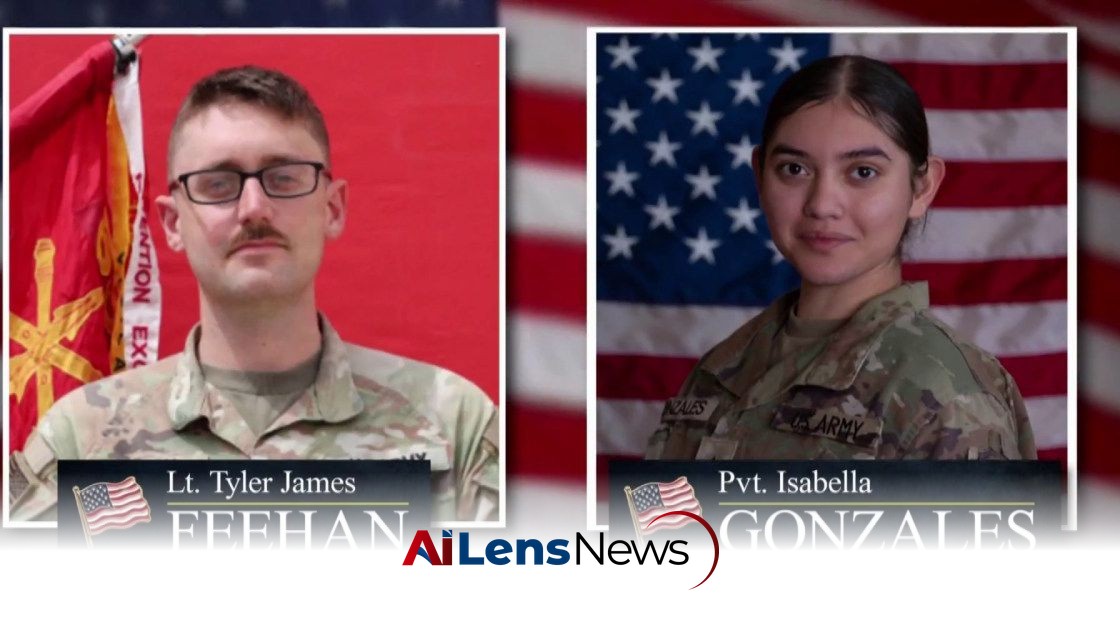


In response to recent Iranian attacks that resulted in U.S. military casualties, President Trump has vowed to take action against Iran. The Pentagon has identified the fallen service members, including Lt. Tyler James Feehan and Pvt. Isabella Gonzales.
Washington DC, United States Jul 21, 2026 ALN: In a strong response to the recent deadly attacks attributed to Iran, President Donald Trump has pledged to take decisive action against the nation. This comes after the Pentagon released the identities of the U.S. service members who lost their lives in these attacks over the weekend. The deaths of these service members have not only raised questions about the safety of U.S. forces stationed abroad but have also reignited a longstanding debate about America's military engagement in the Middle East.
Among the fallen are 1st Lt. Tyler James Feehan from Hawaii and Pvt. Isabella Gonzales from Texas. Their deaths have sparked outrage and calls for accountability from the U.S. government. The loss of these individuals, who were serving their country, has resonated deeply within their communities and across the nation. As the families of the deceased mourn their loss, many Americans are left grappling with the implications of such sacrifices in the ongoing conflict.
Trump's administration has emphasized the need for a robust response to ensure the safety of American troops and to deter further aggression from Iran. The President stated, "We will not stand idly by while our service members are targeted. There will be consequences for these actions." This statement underscores the administration's commitment to protecting U.S. interests abroad, particularly in a region that has been fraught with conflict for decades. The U.S. has had a complex relationship with Iran, characterized by periods of tension and attempts at diplomacy, but recent events have pushed the two nations to a critical juncture.
The Pentagon's identification of the service members has brought the human cost of the conflict into sharp focus, with many Americans mourning the loss of their fellow citizens. The military community is rallying around the families of the deceased, offering support during this difficult time. Organizations dedicated to assisting military families are mobilizing resources to provide emotional and financial support, recognizing the profound impact such losses have on loved ones left behind.
As tensions escalate, the international community is closely monitoring the situation, with potential implications for U.S.-Iran relations and broader regional stability. Analysts suggest that any military response could further complicate an already volatile situation in the Middle East. The region has been a hotspot for geopolitical rivalries, with Iran playing a significant role in various conflicts, including those in Syria, Iraq, and Yemen. Any escalation in military action could lead to a broader conflict, drawing in regional powers and potentially destabilizing neighboring countries.
In the wake of these events, discussions are ongoing regarding the U.S. military presence in the region and the strategies employed to counter threats from Iran. The administration faces pressure to formulate a clear and effective plan that addresses both immediate security concerns and long-term diplomatic solutions. Critics argue that a purely military response could exacerbate tensions, while proponents of a stronger military stance believe it is necessary to deter further aggression. This divide reflects a broader debate in U.S. foreign policy regarding the balance between military intervention and diplomatic engagement.
The implications of this situation extend beyond the immediate military response. The U.S. has a network of alliances in the Middle East, including partnerships with countries such as Saudi Arabia and Israel, which could be affected by any shift in U.S. policy towards Iran. Furthermore, the potential for retaliatory actions by Iran in response to U.S. military strikes raises concerns about a cycle of violence that could impact civilian populations and lead to further instability in the region.
Moreover, the domestic political landscape in the U.S. may also influence the administration's response. With an upcoming election cycle, the Trump administration is likely aware of the political ramifications of its foreign policy decisions. Public opinion regarding military engagement in the Middle East has evolved over the years, with many Americans expressing wariness about prolonged military involvement. This sentiment could impact the administration's approach as it seeks to balance national security interests with public sentiment.
As the situation develops, updates will continue to emerge regarding the U.S. response and the broader implications for international relations. The administration's next steps will be crucial in shaping the future of U.S.-Iran relations and determining the course of military operations in the region. Observers will be watching closely to see if the U.S. opts for a measured response aimed at de-escalation or if it chooses a more aggressive military strategy that could lead to further conflict.
The deaths of 1st Lt. Tyler James Feehan and Pvt. Isabella Gonzales serve as a stark reminder of the human cost of military engagement. As the nation reflects on their sacrifice, the dialogue surrounding U.S. military involvement in the Middle East is likely to intensify. The challenge for policymakers will be to navigate a path that honors their memory while ensuring the safety and security of American service members in a region fraught with danger.
The historical context of U.S.-Iran relations is essential to understanding the current tensions. Since the 1979 Iranian Revolution, which led to the overthrow of the U.S.-backed Shah, relations between the two nations have been characterized by mutual distrust and hostility. The U.S. has imposed various sanctions on Iran, particularly targeting its nuclear program, while Iran has been accused of supporting militant groups in the region that oppose U.S. interests.
In recent years, the situation has been further complicated by the U.S. withdrawal from the Joint Comprehensive Plan of Action (JCPOA) in 2018, an agreement aimed at curbing Iran's nuclear ambitions. This withdrawal led to a series of escalating tensions, including military confrontations, cyberattacks, and diplomatic standoffs. The Trump administration's strategy of maximum pressure against Iran has drawn criticism for potentially provoking further aggression rather than fostering a pathway to peace.
As the U.S. contemplates its next moves, it must also consider the perspectives of its allies in the region. Countries like Israel and Saudi Arabia view Iran as a significant threat and have called for stronger U.S. military action. However, any military engagement must be weighed against the potential for unintended consequences, including civilian casualties and the risk of a wider conflict that could embroil the entire region.
Furthermore, the economic implications of military actions cannot be overlooked. The Middle East is a critical region for global oil supplies, and any escalation in hostilities could disrupt oil markets, leading to increased prices and economic instability worldwide. The interconnectedness of the global economy means that actions taken by the U.S. in response to Iranian aggression could have far-reaching effects beyond the immediate conflict.
In conclusion, the deaths of U.S. service members in the recent attacks attributed to Iran have not only reignited discussions around military engagement in the Middle East but have also highlighted the complex web of geopolitical, economic, and social factors at play. As the Trump administration navigates this precarious situation, the choices made will have lasting implications for U.S. foreign policy, regional stability, and the lives of service members and their families. The ongoing dialogue surrounding military intervention versus diplomatic solutions will continue to shape the narrative as the U.S. seeks a path forward in its relationship with Iran.
To learn more about the latest developments in Political Controversies, stay updated with our exclusive reports and analyses on AiLensNews.

