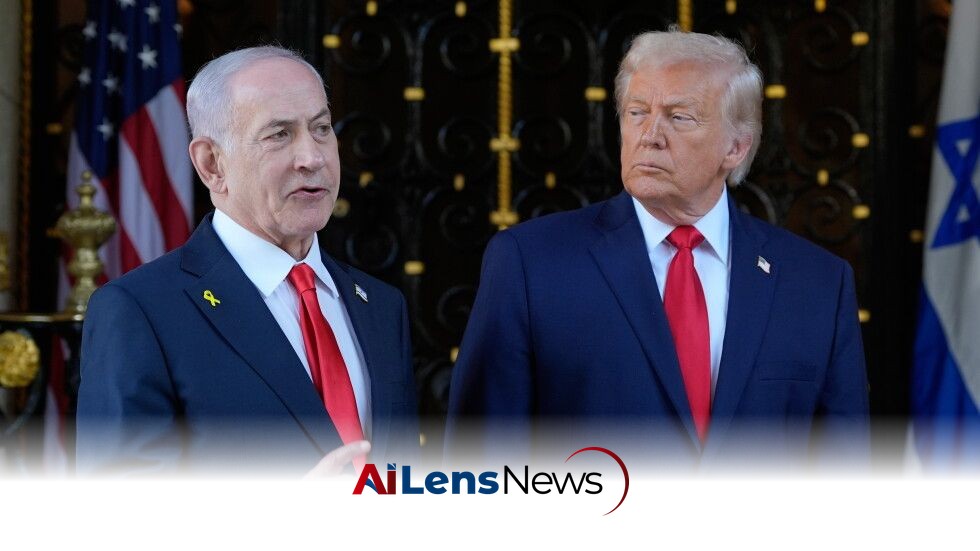


Israeli Prime Minister Benjamin Netanyahu and President Donald Trump met at the White House, marking their first discussion since launching a joint military operation against Iran.
Washington DC, United States Jul 29, 2026 ALN: In a significant diplomatic engagement, Israeli Prime Minister Benjamin Netanyahu and U.S. President Donald Trump convened at the White House on Tuesday. This meeting is notable as it marks their first face-to-face discussion since the commencement of a joint military operation against Iran.
The meeting provided an opportunity for both leaders to address and potentially mend any strains in their relationship that may have arisen during the ongoing conflict. As tensions escalate in the region, the collaboration between the United States and Israel remains crucial for both nations' strategic interests.
The backdrop of this meeting is the recent military actions initiated against Iran, which have raised concerns globally. The operation aims to counter perceived threats from Iran, particularly regarding its nuclear ambitions and regional influence. Over the years, Iran has been viewed by both the U.S. and Israel as a destabilizing force in the Middle East, with its support for various militant groups and its controversial nuclear program drawing international scrutiny.
Netanyahu's visit to Washington is seen as an effort to reinforce the alliance between Israel and the United States, especially in light of the complex geopolitical landscape. The two leaders discussed various strategies to enhance their cooperation in military and intelligence operations. The U.S. has long been a key ally of Israel, providing military aid and diplomatic support, and this meeting underscores the importance of maintaining that relationship amid rising tensions.
Historically, U.S.-Israel relations have been characterized by a strong partnership, particularly in defense matters. The two countries have collaborated on numerous military operations and intelligence-sharing initiatives, which have been pivotal in addressing threats from hostile nations and terrorist organizations in the region. This meeting is expected to further solidify that partnership, especially as both nations face the evolving challenges posed by Iran's actions.
Following the meeting, both leaders expressed optimism about their collaboration. Trump emphasized the importance of a strong alliance with Israel, stating, "Together, we will ensure that Iran does not pose a threat to our interests or our allies." This statement reflects the U.S. commitment to supporting Israel in its defensive measures against perceived Iranian aggression. Meanwhile, Netanyahu reiterated his commitment to working closely with the U.S. to achieve mutual goals, highlighting the shared interests that bind the two nations.
The implications of this meeting extend beyond immediate military strategies. As the U.S. and Israel navigate the complexities of the Iranian threat, their collaboration may also influence broader geopolitical dynamics in the Middle East. Other nations in the region are closely monitoring the developments, as Iran's actions could provoke responses from neighboring countries, potentially leading to a wider conflict.
Moreover, the meeting may impact the ongoing discussions about Iran's nuclear program. The Joint Comprehensive Plan of Action (JCPOA), which was designed to limit Iran's nuclear capabilities in exchange for sanctions relief, has been a contentious issue. The U.S. withdrawal from the agreement in 2018 under Trump's administration marked a significant shift in U.S. policy towards Iran, and the current military operations may be seen as a continuation of that hardline stance.
In the wake of the meeting, analysts are debating the potential outcomes of the joint military operation. Some suggest that a decisive action against Iranian targets could deter future aggression, while others warn that it may escalate tensions further, leading to retaliation from Iran or its proxies in the region. The situation remains fluid, and the international community is keenly aware of the potential for conflict.
As the situation continues to evolve, further discussions between the two leaders are anticipated. The outcome of this meeting may influence future military strategies and diplomatic efforts aimed at stabilizing the region. Both leaders are expected to remain in close contact as they assess the effectiveness of their current military operations and consider their next steps.
Additionally, the implications of the meeting may resonate within domestic politics in both countries. In Israel, Netanyahu faces pressures from various political factions, including those advocating for a more aggressive stance against Iran. In the U.S., Trump’s administration is also under scrutiny, with some lawmakers questioning the long-term strategy regarding Iran and its potential consequences for U.S. interests in the region.
In conclusion, the meeting between Trump and Netanyahu underscores the ongoing commitment of both nations to collaborate against common threats, particularly in the context of Iran's military ambitions. The strategic partnership between the U.S. and Israel is poised to play a pivotal role in shaping the future of Middle Eastern geopolitics as both nations navigate the complexities of their shared security concerns. As they move forward, the outcomes of their discussions and the decisions made in the coming weeks will likely have lasting implications for regional stability and international relations.
The relationship between the United States and Israel has deep historical roots, dating back to the establishment of Israel in 1948. The U.S. was one of the first countries to recognize Israel, and since then, the two nations have developed a close partnership based on shared democratic values and mutual interests. Over the decades, this relationship has been characterized by extensive military cooperation, economic aid, and diplomatic collaboration.
One of the cornerstones of U.S.-Israel relations has been military assistance. The United States provides Israel with significant military aid, which has enabled the Israeli Defense Forces to maintain a qualitative edge over its adversaries in the region. This support has been critical in various conflicts, including the wars in Lebanon and Gaza, where Israel faced threats from Hezbollah and Hamas, respectively.
In addition to military aid, the U.S. has played a crucial role in diplomatic efforts aimed at resolving the Israeli-Palestinian conflict. Various administrations have attempted to broker peace agreements, with mixed results. The U.S. has often positioned itself as a mediator in negotiations, advocating for a two-state solution that would allow both Israelis and Palestinians to coexist peacefully.
Iran's influence in the Middle East has been a significant factor in shaping the geopolitical landscape of the region. Since the Islamic Revolution in 1979, Iran has pursued a foreign policy aimed at expanding its influence, often through support for proxy groups and militant organizations across the region. This has included backing Hezbollah in Lebanon, supporting the Assad regime in Syria, and providing assistance to various factions in Iraq and Yemen.
Iran's nuclear program has been a particular point of contention, leading to international concern and negotiations aimed at curbing its ambitions. The JCPOA was a landmark agreement that sought to limit Iran's nuclear capabilities, but its collapse following the U.S. withdrawal has reignited fears of a nuclear-armed Iran. The military operations currently underway are, in part, a response to these longstanding concerns, as both Israel and the U.S. view a nuclear-armed Iran as an existential threat.
The joint military operations against Iran may have far-reaching consequences, not only for U.S.-Israel relations but also for the broader Middle East. An escalation of military actions could provoke Iran to retaliate, potentially leading to a wider regional conflict. Such a scenario could involve Iran mobilizing its proxies to attack U.S. and Israeli interests, further destabilizing the region.
Moreover, the military operations may impact the global oil market, as Iran is a significant player in oil production. Any disruptions caused by conflict could lead to spikes in oil prices, affecting economies worldwide. The international community, particularly nations dependent on Middle Eastern oil, will be closely monitoring the situation.
Additionally, the military operations could influence diplomatic relations with other countries in the region. Nations such as Saudi Arabia, the United Arab Emirates, and Egypt may reassess their positions regarding Iran and their alliances with the U.S. and Israel based on the outcomes of these operations.
The meeting between Trump and Netanyahu serves as a critical juncture in U.S.-Israel relations amid rising tensions with Iran. As both nations navigate the complexities of military operations and regional dynamics, their collaboration will be essential in addressing the challenges posed by Iran's actions. The outcomes of their discussions will likely shape the future of not only their bilateral relationship but also the broader geopolitical landscape of the Middle East.
To learn more about the latest developments in Elections, stay updated with our exclusive reports and analyses on AiLensNews.

