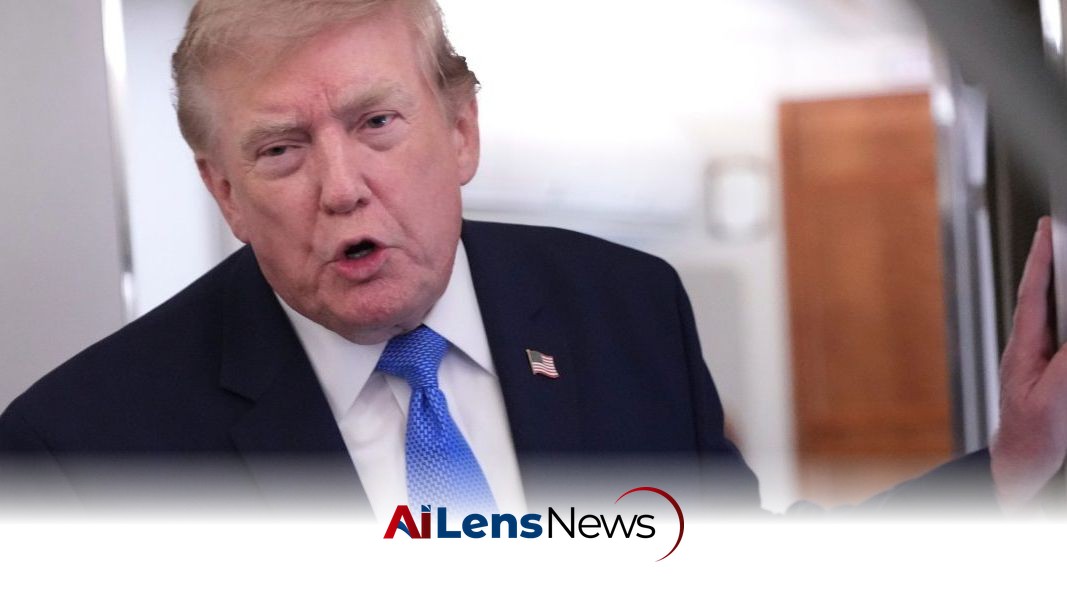


President Trump announced a pause on military action against Iran, opting for diplomatic negotiations after discussions with Gulf allies.
Washington DC, United States Aug 3, 2026 ALN: U.S. President Donald Trump announced on Sunday that he would postpone military strikes against Iran, a decision influenced by the concerns expressed by Gulf allies, including Qatar, Saudi Arabia, and the United Arab Emirates. This announcement marks a significant moment in the ongoing tensions between the U.S. and Iran, which have escalated dramatically in recent months following the outbreak of hostilities that began on February 28, when U.S. and Israeli forces launched attacks against Iran.
Trump revealed that a comprehensive military operation was planned, described as potentially the largest since World War II. However, after consultations with key leaders in the Gulf region, particularly Saudi Crown Prince Mohammed bin Salman, the President chose to prioritize diplomatic efforts over military action. During his flight back to Washington, Trump recounted his conversation with the crown prince, stating, "I said to the crown prince, ‘What would you rather do? Would you rather us do this or not?’ They said we would much prefer a deal as opposed to an attack, because you don’t know where these attacks lead." This illustrates the delicate balance of power and the interconnectedness of regional security and U.S. foreign policy in the Middle East.
Prior to this announcement, Trump had expressed skepticism regarding the potential for successful negotiations with Iran, indicating that he was “losing faith” in the diplomatic process. His rhetoric had shifted dramatically, as he had warned of significant military action against Iran, stating that the U.S. military “will be hitting them very hard.” This fluctuation in tone underscores the complexities of U.S.-Iran relations, where threats of military action often coexist with attempts at diplomatic resolution.
Trump's latest proposal aims to facilitate a return to negotiations, with the expectation that discussions would resume as early as the following afternoon. The emerging diplomatic framework reportedly includes provisions for reopening the Strait of Hormuz, a crucial maritime route through which approximately one-fifth of the world’s oil supply is transported. This waterway has become a focal point in the conflict, as Iran has previously threatened shipping operations in response to U.S. sanctions and military actions.
Iran's Foreign Ministry spokesperson, Esmail Baghaei, responded to the developments by asserting that the Strait of Hormuz would not revert to its pre-war status, suggesting that Iran remains resolute in its stance against U.S. actions in the region. Baghaei also mentioned ongoing discussions with Oman regarding shipping routes, indicating that Iran is exploring alternatives amidst the current geopolitical climate.
The backdrop of this situation is characterized by a series of military escalations and retaliatory actions between the U.S. and Iran. The conflict has seen Iran engaging in aggressive actions against vessels in the Strait of Hormuz, which have been interpreted as both a demonstration of military capability and a strategic response to U.S. sanctions. The Iranian leadership appears unified in its approach to resist U.S. pressure; however, internal divisions may exist regarding the strategy for negotiations. Some factions advocate for a hardline stance against the U.S., while others may view military pressure as a means to gain leverage in negotiations.
In the context of these negotiations, the proposal outlined by Trump seeks to address several longstanding issues that have hindered progress in previous talks. The plan reportedly includes halting attacks by Iranian-backed militias across the region, particularly in Iraq, which have targeted U.S. allies. In exchange, the U.S. would end its naval blockade on Iran and allow the country to export oil, a critical economic lifeline for Tehran. However, as of now, no formal agreement has been reached, and mediation efforts are ongoing.
Trump's decision to hold off on military action was also influenced by concerns raised by Gulf allies about the potential ramifications of escalating the conflict. Prince Mohammed bin Salman reportedly conveyed to Trump that further U.S. military action could have dire consequences for the global economy, particularly if Iran retaliated against U.S. allies in the region. The concerns articulated by Saudi officials highlight the precarious security environment in the Gulf, where Kuwait is viewed as particularly vulnerable to Iranian-backed militia attacks.
The dynamics of U.S.-Iran relations are further complicated by the involvement of Israel, which has historically viewed Iran as a significant threat. Trump indicated that Israel is supportive of efforts to implement a ceasefire deal reached in June, although there has been no public commentary from Israeli officials regarding the recent developments. The Israeli perspective on the negotiations is critical, as the country has a vested interest in the outcome of any agreement that may affect its security and regional standing.
As the situation continues to evolve, the implications of Trump's decision to delay military action and pursue diplomatic avenues are significant. A successful negotiation could potentially ease tensions in the region, leading to a more stable security environment and a reduction in the risk of military confrontation. Conversely, if negotiations falter or if hostilities resume, the consequences could be severe, not only for U.S.-Iran relations but also for the broader geopolitical landscape in the Middle East.
In conclusion, the recent developments surrounding U.S. military action against Iran reflect the intricate interplay of diplomacy, military strategy, and regional politics. The Gulf allies' influence on Trump's decision underscores the importance of collaboration among nations in navigating the complexities of international relations. As both sides prepare to re-engage in negotiations, the global community will be closely watching for signs of progress or further escalation in this critical geopolitical theater.
To learn more about the latest developments in Elections, stay updated with our exclusive reports and analyses on AiLensNews.

