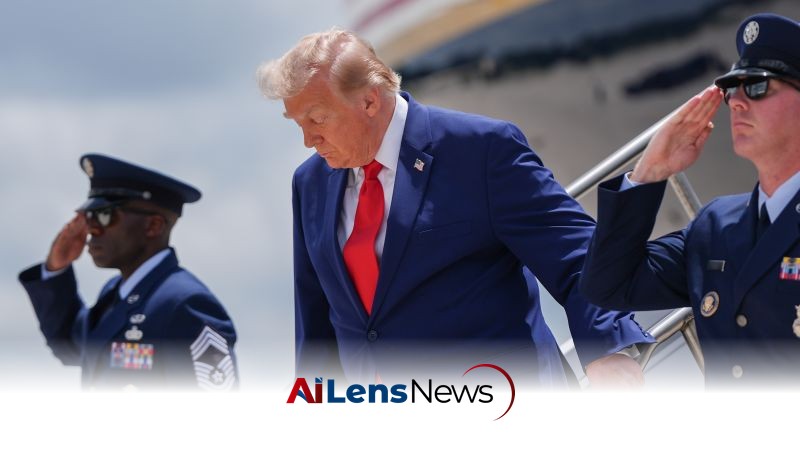


As President Trump navigates the complex landscape of U.S.-Iran relations, his choices narrow and the stakes escalate, raising questions about future strategies.
Washington DC, United States Jul 27, 2026 ALN: President Donald Trump finds himself at a critical juncture regarding the ongoing conflict with Iran, a situation that has been developing for several months and is marked by increasing tension and complexity. Each time he reaches such a pivotal moment, his options seem to shrink, and the potential consequences of any decision grow more severe.
The Trump administration has recently indicated that a pause in airstrikes, which has now extended into its third night after 13 consecutive nights of military action, is intended to create an opportunity for diplomatic engagement. However, officials have also made it clear that the U.S. military remains prepared for further escalation, stating they are "locked and loaded" should the need arise. This dual approach reflects the administration's struggle to balance military action with diplomatic efforts, a challenge that has become increasingly pronounced as the conflict drags on.
Diplomatic efforts are reportedly underway, with Iran hosting discussions with Oman at the deputy foreign minister level in recent days. Yet, there has been no indication that Iran is willing to compromise on its fundamental demand: the right to control shipping through the strategically vital Strait of Hormuz. This demand has been a central issue fueling the recent tensions and military engagements between the U.S. and Iran.
Trump is no stranger to this predicament. His administration has consistently attempted to extract concessions from Iran through a strategy of intensified military pressure. However, this approach has yielded limited success, mirroring previous attempts to alter Iran's behavior through similar means. The option of deploying ground troops remains on the table, potentially leveraging the U.S. military's technological advantages. However, such a move would likely lead to significant American casualties and further complicate an already unpopular military engagement.
As the conflict continues, the political ramifications for Trump are becoming increasingly pronounced. A recent surge in oil prices has raised concerns about higher gasoline costs for American consumers, which could exacerbate public discontent regarding the war. This is particularly significant given that a majority of Americans have expressed opposition to the ongoing military actions. Although Brent crude prices fell by more than 5% on a recent Sunday, the overall trend of rising oil costs, coupled with threats to alternative shipping routes through the Red Sea from Yemen's Iran-backed Houthi rebels, is creating a precarious situation. Global crude inventories are nearing critically low levels, raising fears of an energy crisis that could have far-reaching impacts on both the economy and the political landscape, especially with the midterm elections approaching.
As the situation evolves, Trump’s options appear increasingly unattractive. This may explain his fluctuating rhetoric in recent weeks, oscillating between threats of significant military action and claims that Iran is eager to negotiate. Given the lack of substantial changes in the geopolitical dynamics of the conflict, this rhetoric seems more tailored to address domestic political concerns than to influence Tehran's stance.
Trump could potentially follow through on his aggressive rhetoric by broadening the scope of military targets in Iran, including critical infrastructure such as transport networks and power plants. However, such actions would likely inflict severe hardship on the Iranian civilian population, contradicting Trump’s earlier claims of wanting to support the Iranian people. Moreover, there is skepticism even among his closest advisors regarding the effectiveness of such a strategy in compelling the Iranian leadership to alter its course.
Reports indicate that during a recent White House meeting, Vice President JD Vance and Chairman of the Joint Chiefs of Staff Dan Caine expressed concerns about escalating the conflict. Caine specifically noted the potential impact on U.S. munitions stockpiles, highlighting the logistical challenges of sustained military engagement. Additionally, assessments from both the CIA and the Defense Intelligence Agency suggest that the recent bombing campaigns are unlikely to shift Iran's negotiating position, according to sources familiar with the situation.
Another possible course of action could involve extending the U.S. economic blockade on Iranian shipping and ports, aiming to suffocate the Iranian economy and cut off funding for the Islamic Revolutionary Guard Corps (IRGC). However, this strategy would likely take weeks or even months to implement and might not lead to a change in Tehran's policies. Furthermore, it is uncertain whether Trump possesses the patience or the political capital to pursue such a long-term strategy. Iran is expected to retaliate by resuming attacks on commercial vessels in the Strait of Hormuz, which could further destabilize the global economy and intensify political pressure on the U.S. administration.
A third option would involve attempting to revive the memorandum of understanding (MOU) that previously facilitated a temporary ceasefire. However, Iran is unlikely to agree to such terms unless it is granted the right to regulate and monetize shipping traffic through the Strait, a concession that would represent a significant diplomatic defeat for the U.S. Given that the Strait was open prior to the conflict, agreeing to this demand would draw criticism from foreign policy hawks within the U.S. who may view it as a capitulation to Iranian demands.
The search for a viable new approach continues, with various voices within the political sphere calling for a reevaluation of U.S. strategy. Republican Senator Bill Cassidy, for instance, suggested during a recent interview that Trump should engage in a "national dialogue" with the American people and Congress to explore alternative pathways forward. Cassidy expressed a desire for a resolution that prevents Iran from controlling the Strait while avoiding further financial expenditures on military operations that have not yielded tangible results thus far.
“We need something different,” Cassidy emphasized, encapsulating the frustration felt by many regarding the current state of affairs. Yet, the reality is that after five months of military engagement, a consensus on what that "something different" might entail remains elusive. The Trump administration is left grappling with a complex and evolving situation, where every potential course of action carries significant risk and the stakes continue to rise.
To learn more about the latest developments in Elections, stay updated with our exclusive reports and analyses on AiLensNews.

