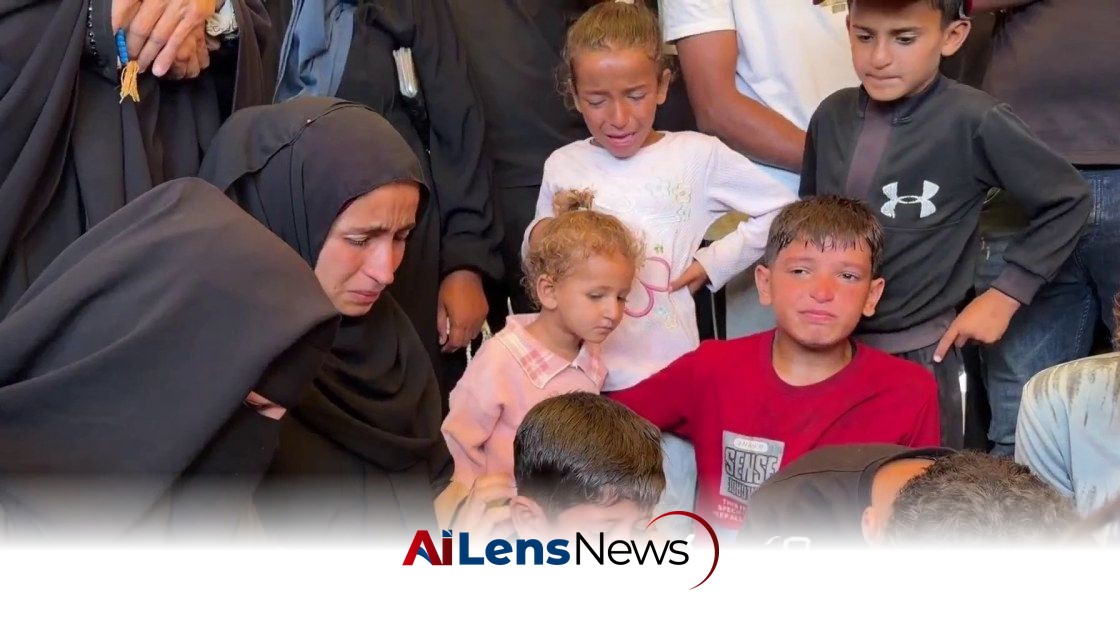


President Trump's announcement of a deal requiring Hamas to disarm in exchange for Israel's troop withdrawal from Gaza has sparked significant concerns about the region's future.
Washington DC, United States Aug 2, 2026 ALN: There are growing questions about Gaza’s future after President Trump announced a potential breakthrough deal that would require Hamas to disarm, in exchange for Israel pulling back troops from the enclave. NBC News’ Keir Simmons reports on what life has been like for people living there.
The proposed deal has stirred a mix of hope and skepticism among residents of Gaza. Many are uncertain about the implications of disarmament for Hamas and how it might affect the fragile peace in the region. The announcement comes amid ongoing tensions and violence, raising concerns about the feasibility of such an agreement.
Residents of Gaza have expressed a range of emotions, from cautious optimism to deep skepticism. Some believe that disarming Hamas could lead to a more peaceful existence, while others fear it may leave them vulnerable to further aggression.
“We want peace, but we also want security,” said a local shopkeeper. “Disarming Hamas might help, but what guarantees do we have?” This sentiment reflects a broader concern among Gaza's populace, who have lived through multiple conflicts and have witnessed the devastating impact of war on their communities. The fear of losing a protective force, even one as controversial as Hamas, is palpable among many residents.
In addition to security concerns, there is also a deep-seated skepticism regarding the intentions behind the proposed deal. Many residents question whether the disarmament of Hamas would lead to a genuine peace process or if it would simply serve to further entrench Israeli control over the region. The historical context of the Israeli-Palestinian conflict plays a significant role in shaping these perceptions. Gaza has been under blockade since 2007, and the humanitarian situation has deteriorated significantly, with high levels of poverty, unemployment, and limited access to essential services.
International observers are closely monitoring the situation, with many questioning the viability of the proposed deal. Analysts suggest that while disarmament could be a step toward stability, it must be accompanied by comprehensive measures to address the underlying issues that have fueled the conflict. The political landscape in the region is complex, with various factions and interests at play, making any agreement challenging to implement.
“This is not just about disarming a militant group; it’s about addressing the humanitarian crisis and the political realities on the ground,” said a Middle East expert. The expert emphasized that any effective peace process must involve dialogue between all relevant parties, including the Palestinian Authority, Hamas, and Israel, as well as support from the international community. Without addressing the root causes of the conflict, any agreement is likely to be short-lived.
The international community has long been involved in efforts to broker peace in the region, with varying degrees of success. Previous attempts at peace negotiations have often faltered due to a lack of trust, differing objectives, and external influences. The role of regional powers, such as Egypt and Qatar, as well as global powers like the United States, is crucial in facilitating dialogue and ensuring that any agreement is upheld.
As discussions continue, the future of Gaza remains uncertain. The proposed deal has opened a dialogue about potential paths to peace, but the complexities of the situation cannot be overlooked. The potential for violence remains high, particularly if disarmament is perceived as a threat by Hamas or if there are no guarantees for the safety of Gaza's residents.
In the meantime, residents continue to navigate their daily lives amidst the uncertainty, hoping for a resolution that will bring lasting peace to their homeland. The humanitarian situation in Gaza is dire, with many families struggling to meet basic needs. Access to clean water, healthcare, and education remains limited, exacerbating the already tense atmosphere.
Moreover, the economic situation in Gaza has been severely impacted by the ongoing conflict and blockade, leading to high unemployment rates and widespread poverty. Many families depend on international aid for survival, and any disruption in that aid could have catastrophic consequences. The potential for increased violence or instability could further hinder humanitarian efforts and exacerbate the suffering of the population.
The implications of the proposed deal extend beyond Gaza and Israel; they resonate throughout the broader Middle East. The stability of the region is intertwined with the Israeli-Palestinian conflict, and any significant developments in Gaza could have repercussions in neighboring countries. For instance, the situation in Gaza often influences public sentiment in countries like Egypt and Jordan, where there are significant Palestinian populations and where the conflict is closely watched.
As the world looks on, the path to peace remains fraught with challenges. While the proposed deal may represent a glimmer of hope, it is essential to approach it with caution and a recognition of the complexities involved. The voices of Gaza's residents, their hopes, fears, and aspirations, must be at the forefront of any dialogue aimed at achieving a lasting resolution to the conflict.
In conclusion, the announcement of a potential deal to disarm Hamas raises significant questions about Gaza's future. The mixed reactions from residents, the international community's skepticism, and the urgent need for a comprehensive approach to peace highlight the complexities of the situation. Moving forward, it will be crucial to prioritize dialogue, address humanitarian needs, and work towards a sustainable resolution that considers the aspirations of all parties involved.
To understand the broader implications of this proposed deal, one must delve into the historical context of the Israeli-Palestinian conflict. The roots of this conflict date back to the early 20th century and have been marked by a series of wars, uprisings, and failed peace attempts. The establishment of Israel in 1948, the subsequent displacement of Palestinians, and the ongoing occupation of Palestinian territories have created deep-seated grievances that continue to fuel animosity and violence.
Hamas, which rose to prominence in the late 1980s, has been a significant player in the Palestinian political landscape. Originally founded as an Islamist resistance movement, Hamas has engaged in both armed struggle against Israeli forces and political participation. Its control over Gaza since 2007 has added another layer of complexity to the peace process, as it is often viewed by Israel and some international actors as a terrorist organization, while many Palestinians see it as a legitimate resistance movement.
The proposed deal's requirement for Hamas to disarm raises critical questions about the organization's future and its role in Palestinian society. If Hamas were to disarm, it would not only have to navigate its political identity but also address the expectations of its supporters, many of whom view its military capabilities as essential for resistance against Israeli aggression. The internal dynamics within Palestinian politics, particularly the relationship between Hamas and the Palestinian Authority, will also play a vital role in shaping the outcome of any agreement.
Furthermore, the humanitarian crisis in Gaza cannot be overlooked in discussions about disarmament and peace agreements. The blockade imposed by Israel and Egypt has severely restricted the flow of goods and people, leading to a dire humanitarian situation. According to various reports, the majority of Gaza's population lives below the poverty line, and access to essential services such as healthcare, education, and clean water is alarmingly inadequate. Any peace deal must prioritize humanitarian considerations and ensure that the needs of the civilian population are addressed.
In addition, the involvement of international actors in the peace process is crucial. The United States has historically played a significant role in mediating Israeli-Palestinian relations, but its approach has often faced criticism for being biased towards Israel. The current administration's proposal to disarm Hamas may reflect a shift in strategy, but it remains to be seen whether it can garner the necessary support from both Israeli and Palestinian sides.
Regional powers, such as Egypt and Jordan, also have a vested interest in the stability of Gaza. Both countries host large Palestinian populations and have historically acted as mediators in the conflict. Their involvement will be essential in facilitating dialogue and ensuring that any agreement is respected and upheld. The role of the Arab League and other international organizations cannot be understated, as they can provide a platform for broader regional cooperation and support for peace efforts.
In summary, the proposed deal to disarm Hamas presents both opportunities and challenges. While it may open the door to a potential reduction in violence and a path towards peace, it also raises significant concerns about security, humanitarian needs, and the political landscape in the region. The voices of Gaza's residents, their aspirations for peace and security, and the complexities of the Israeli-Palestinian conflict must be central to any discussions moving forward. The road to peace is long and fraught with obstacles, but it is a journey that must be undertaken with careful consideration of all factors at play.
To learn more about the latest developments in Elections, stay updated with our exclusive reports and analyses on AiLensNews.

