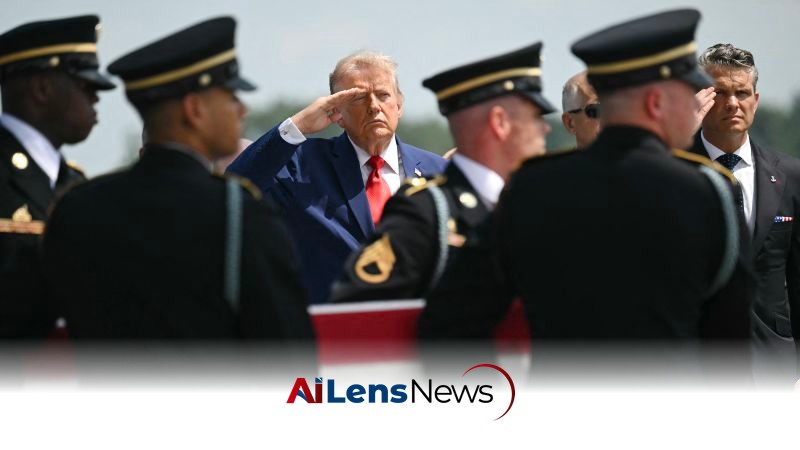


Several of President Donald Trump’s key claims about the war with Iran have been proven false, revealing discrepancies between his statements and the reality on the ground.
Washington DC, United States Jul 23, 2026 ALN: The ongoing conflict between the United States and Iran has been marked by a series of complex military engagements and political statements, particularly from former President Donald Trump. As the situation has evolved, many of Trump's claims regarding the war have come under scrutiny, revealing discrepancies between his assertions and the reality on the ground. This article aims to examine the collapse of several key claims made by Trump concerning the Iran war, providing context, implications, and a broader understanding of the situation.
Trump's presidency was characterized by a confrontational approach to Iran, which included withdrawing from the Joint Comprehensive Plan of Action (JCPOA) in 2018 and implementing a campaign of maximum pressure through sanctions. This policy shift escalated tensions between the two nations, culminating in military engagements that would become the backdrop for Trump's claims. As the conflict progressed, his assertions about the state of Iran's military, the expected duration of the war, control over the Strait of Hormuz, and oil prices have come into question.
Trump’s claims: Throughout the spring of 2025, Trump asserted that Iran's military capabilities had been entirely eradicated. He claimed in March that “everything they have is gone, including their leadership,” and continued to emphasize in subsequent statements that Iran could not fight back and that their military was “totally gone.” These bold declarations painted a picture of a defeated adversary, seemingly underestimating the resilience and capabilities of Iran's military forces.
How the claims fell apart: Contrary to Trump's assertions, Iran demonstrated its military capabilities through various attacks on U.S. forces and allies in the region. Reports from U.S. intelligence agencies indicated that Iran was not only maintaining significant military capabilities but was also actively working to rebuild and enhance its military infrastructure that had been diminished during the initial phases of the conflict. This misrepresentation of Iran's military strength reflects a broader trend in the administration's communication strategy, where optimistic proclamations often clashed with on-the-ground realities.
Trump’s claims: At the onset of the conflict, Trump projected an optimistic timeline for its resolution, suggesting that it would take just a few weeks. In interviews, he stated that the war would be a “four-week process” and expressed confidence that the U.S. military would achieve its objectives quickly. Such statements were indicative of a belief that the military engagement would not mirror the prolonged conflicts seen in Iraq and Afghanistan.
How the claims fell apart: As the conflict dragged on, it became evident that the situation was far more complex than Trump had anticipated. Nearly five months after the war began, hostilities continued, and Trump escalated threats against Iran, indicating a willingness to intensify military action. This development underscored the challenges of modern warfare, where political and military objectives often clash, leading to drawn-out engagements that defy initial expectations.
Trump’s claims: In July, Trump declared that the U.S. would be recognized as “THE GUARDIAN OF THE HORMUZ STRAIT,” asserting control over this critical maritime passage. He claimed that Iran had no influence over the strait and that the U.S. would ensure its openness regardless of Iranian actions.
How the claims fell apart: Despite Trump's declarations, Iran maintained significant control and influence over the Strait of Hormuz, a vital route for global oil shipments. Reports from U.S. Navy sources indicated that Iranian forces conducted attacks on commercial vessels, contributing to a decline in merchant traffic through the strait. The reality of Iran's capabilities in the region highlighted the complexities of maritime security and the limitations of U.S. military power in asserting control over such strategically important waterways.
Trump’s claims: In an effort to project a narrative of success, Trump frequently touted falling oil prices as a sign of victory. He claimed that prices were lower than they had been prior to the conflict and suggested that they would continue to decrease, despite the ongoing violence between the U.S. and Iran.
How the claims fell apart: While oil prices did temporarily dip in late June and early July, they subsequently spiked as hostilities resumed. The volatility of oil prices in response to geopolitical events illustrated the interconnectedness of global markets and the impact of conflict on economic stability. Trump's assertions about oil prices being on a downward trajectory were undermined by the reality of rising prices following renewed conflict, demonstrating the unpredictability of oil markets in times of crisis.
The implications of these collapsing claims extend beyond the immediate conflict. They reflect a broader pattern of communication strategies employed by the Trump administration, where optimistic narratives often clashed with complex realities. This disconnect has consequences for public trust, both domestically and internationally, as citizens and allies grapple with the accuracy of information being presented by their leaders.
Moreover, the evolving situation in Iran underscores the challenges facing U.S. foreign policy in the region. The reliance on military intervention as a tool of diplomacy has proven problematic, leading to prolonged engagements that strain resources and complicate relationships with allies. The mixed outcomes of Trump's claims serve as a reminder of the need for nuanced approaches to foreign policy that consider the multifaceted nature of international relations and the realities of modern warfare.
As the conflict continues to unfold, the lessons learned from Trump's assertions may inform future strategies and approaches to engaging with Iran and other nations. Acknowledging the complexities of military engagement and the limitations of unilateral action will be crucial in navigating the geopolitical landscape moving forward.
To learn more about the latest developments in Political Controversies, stay updated with our exclusive reports and analyses on AiLensNews.

