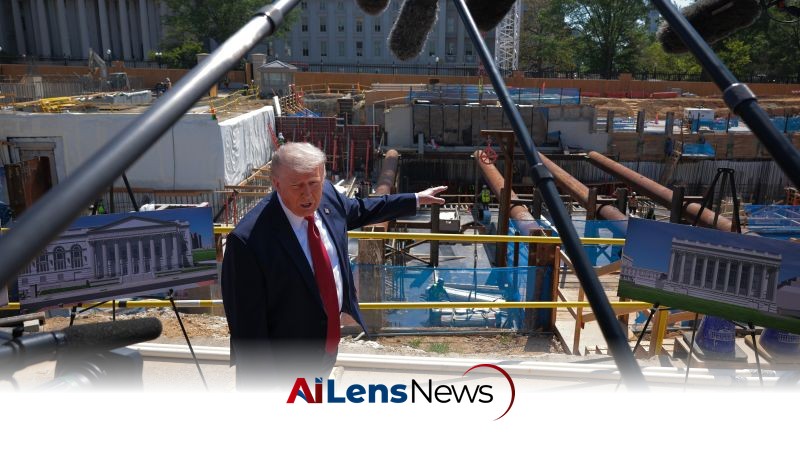


President Trump is seeking Supreme Court approval to build a ballroom at the White House, citing national security and architectural significance.
Washington DC, United States Aug 15, 2026 ALN: President Donald Trump is making a significant legal move by appealing to the Supreme Court for permission to construct a ballroom at the White House. This request is rooted in Trump’s assertions regarding threats to his life, the need for enhanced national security, and the architectural significance of the project. The appeal, filed on a Friday, comes after a series of rulings from lower courts that have determined that Trump must seek congressional approval before proceeding with the ambitious $400 million project.
The ballroom, which is intended to be a grand addition to the White House, has been a point of contention, especially given its projected cost and scale. New renderings included in the Supreme Court filing showcase stylistic changes to the design, such as the incorporation of at least two large gold presidential seals on the exterior of the building. This emphasis on aesthetics highlights the administration’s intent to create a space that not only serves functional purposes but also embodies the grandeur associated with the presidency.
The legal battle intensified when an appeals court in Washington, D.C., ruled against Trump, stating that he lacked the authority to unilaterally advance the ballroom construction without congressional authorization. This ruling was a setback for the administration, which has argued that the ballroom is crucial for the president's safety and the security of the White House. The court, however, did pause the implementation of its decision for 14 days, allowing Trump the opportunity to appeal to the Supreme Court, thereby keeping the door open for further legal maneuvering.
In the filing with the Supreme Court, U.S. Solicitor General John Sauer made the case that the construction of the ballroom is "absolutely required" for the president's safety, particularly in light of various threats against Trump's life that have surfaced in recent years. Sauer's argument underscores the administration's perspective that the physical security of the president is paramount, and the ballroom's design includes features intended to enhance this security. He articulated that the president should not be viewed as a mere tenant of the White House but rather as the elected head of the Executive Branch, empowered to undertake renovations and security improvements as previous presidents have done.
The Trump administration has positioned the ballroom project as a necessary enhancement to the security infrastructure of the White House. In the filing, Sauer noted that the entire ballroom structure is designed to protect a military installation located beneath it, emphasizing that halting the construction could compromise both Trump's safety and that of future presidents. This framing of the project as a security necessity rather than a mere luxury is a strategic move to garner support for the appeal.
Construction on the ballroom began in the spring and has reportedly made significant progress, with visible developments including concrete support columns and extensive construction equipment on-site. The administration has been keen to showcase the project's advancement, with images released by Trump illustrating the scale of the construction efforts. The ballroom is projected to cover approximately 89,000 square feet, dwarfing the primary White House structure, which is about 55,000 square feet. This size difference has raised eyebrows and added to the scrutiny surrounding the project.
Trump has taken a personal interest in the ballroom's design, overseeing details from floor plans to material selections, including marble choices. His hands-on involvement reflects a commitment to the project but also raises questions about the appropriateness of such expenditures during his presidency. Critics argue that the lavish nature of the ballroom is inconsistent with the public's expectation of fiscal responsibility from government leaders.
In the context of the ongoing legal battle, the administration contends that Congress has granted the president the authority to make alterations and improvements to the White House as deemed necessary. This assertion is central to Trump's argument that he should be allowed to continue the project without facing significant oversight or delay. The administration has also suggested that freezing construction at this juncture would create logistical challenges for the Secret Service, complicating security measures and potentially endangering the president.
Trump has projected an ambitious timeline for the ballroom's completion, stating it will be finished by the summer of 2028, which implies a rapid pace of construction that would need to be maintained even as he prepares to leave office. This timeline raises questions about the feasibility of completing such a large-scale project in a short period, especially given the legal hurdles that continue to emerge.
The ballroom project has also drawn the attention of preservationists and advocacy groups. The National Trust for Historic Preservation, a prominent organization focused on protecting historic sites, filed a lawsuit last year challenging the legality of Trump's plans. Their position underscores a broader concern regarding the preservation of the White House's historical integrity amidst significant renovations. The preservation group has been vocal about the need for careful consideration of any alterations to one of the most iconic buildings in the United States, and they have until noon on Tuesday to respond to Trump's petition to the Supreme Court.
As the Supreme Court deliberates on this case, it will not only address the specific legal issues surrounding the ballroom construction but also set a precedent regarding the extent of executive power in undertaking significant renovations to federal properties. The outcome may have long-lasting implications for how future administrations approach similar projects and the balance of power between the executive branch and Congress in matters of federal property management. The case also reflects broader tensions in American politics, particularly regarding the Trump administration's approach to governance and its frequent clashes with established norms and legal frameworks.
Ultimately, the decision by the Supreme Court will be closely watched, as it could reshape the landscape of executive authority and the relationship between the presidency and Congress. The implications of this case extend beyond the immediate concerns of the ballroom construction, touching on fundamental questions about governance, accountability, and the preservation of national landmarks.
To learn more about the latest developments in Political Controversies, stay updated with our exclusive reports and analyses on AiLensNews.

