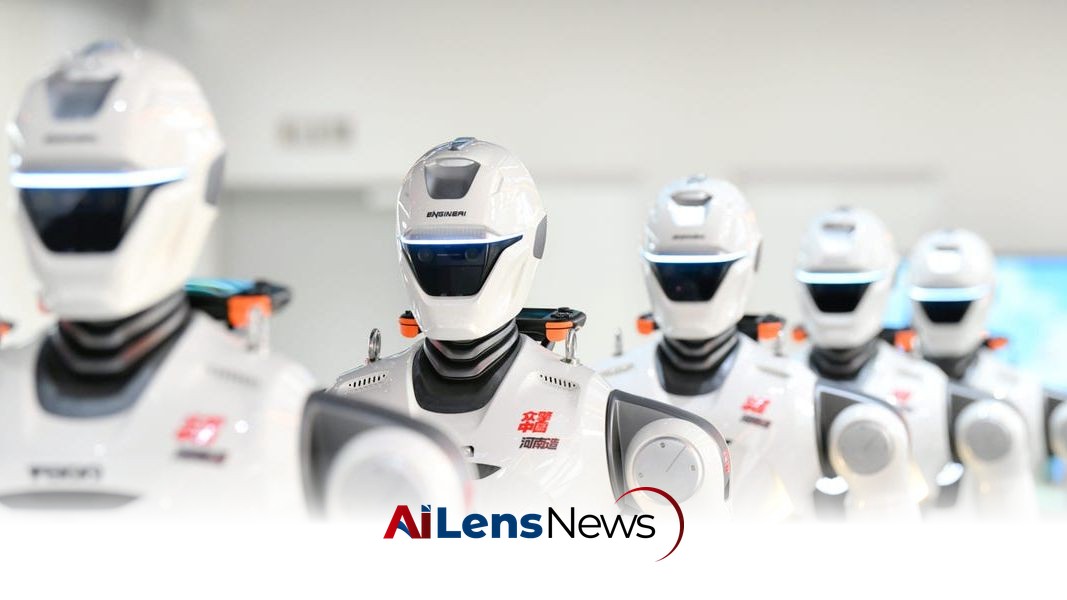


The Trump administration has announced a ban on new Chinese humanoid robots entering the US, citing national security risks. Reactions from experts vary, with some praising the move as a significant step for the US robotics ecosystem.
Washington DC, United States Jul 29, 2026 ALN: The Trump administration's recent decision to ban the import of new Chinese humanoid robots into the United States has sparked a significant debate among policymakers, industry experts, and technology enthusiasts. This ban, announced by the Federal Communications Commission (FCC), is part of a broader strategy aimed at addressing national security concerns related to advanced technology imports from China.
The FCC's announcement specifically targets a range of "advanced robotic devices" from China, including humanoid robots and quadruped robots, as well as power inverters utilized in batteries and data centers. The authorities cited the potential for these devices to pose "unacceptable safety risks" to national security as the primary reason for the ban. This move aligns with a growing trend of increasing scrutiny over foreign technology, particularly from China, which has been viewed as a strategic competitor by the U.S. government.
Importantly, the ban does not affect robots that have already been imported into the U.S. prior to the announcement. This stipulation allows existing technologies to remain operational while preventing new entries that could potentially compromise security. The decision underscores the administration's focus on safeguarding national interests while trying to balance the needs of existing consumers and industries that rely on robotic technologies.
The implications of this ban are multifaceted and have elicited a range of responses from various stakeholders. Many in the policy and technology sectors have expressed support for the ban, viewing it as a necessary step to protect U.S. interests and foster domestic innovation. The robotics industry has been a focal point of competition between the U.S. and China, with advancements in automation and artificial intelligence expected to play a crucial role in future economic growth.
Chris McGuire, a senior fellow at the Council on Foreign Relations, characterized the ban as a "very, very big deal," emphasizing its potential to incentivize the U.S. to strengthen its robotics supply chains. He noted that the ban would help prevent China from saturating the U.S. market with inexpensive robots that could carry hidden risks, similar to concerns raised about Chinese connected vehicles. McGuire's perspective highlights a broader concern about the implications of foreign technology on national security and the economy.
Rush Doshi, who leads the China Strategy Initiative at the Council on Foreign Relations, echoed McGuire's sentiments, calling the ban one of the most significant actions taken to support the U.S. robotics ecosystem. He drew parallels between this ban and previous FCC actions that restricted foreign-made drones, suggesting that such measures could bolster domestic industries. Doshi, who has held senior positions in the National Security Council, pointed to the potential for the ban to stimulate growth in the U.S. robotics sector, which has been increasingly recognized as crucial for maintaining economic competitiveness.
Peter Harrell, a visiting scholar at Georgetown Law School, also praised the ban as an important national security move. He highlighted the fact that advanced robots are capable of collecting vast amounts of data and are increasingly integrated into critical industries. Harrell believes that the ban will provide a significant advantage to U.S. and allied manufacturers of inverters and robots, allowing them to expand their market presence without the threat of competition from Chinese imports. This could lead to a more robust domestic robotics industry that is less reliant on foreign technology.
However, not all responses have been uniformly positive. Ramez Naam, a climate investor and founder of Planetary VC, described the ban as a "double-edged sword." He acknowledged the immediate disadvantage it could pose to U.S. consumers and industries, as they may miss out on superior and more affordable robotic technologies available elsewhere. Naam expressed concern that while the ban might ultimately benefit U.S. industry in the long term, China would continue to benefit from a larger market for robotics, which could hinder U.S. competitiveness. This perspective raises questions about how the ban could impact innovation and the availability of cutting-edge technologies for American consumers.
Naam also raised an interesting point regarding the utility of humanoid robots in warfare, suggesting that they may not be particularly effective in military applications. However, he cautioned that the ban on quadruped robots could have more significant implications for defense, as these animal-like robots are often viewed as more versatile and capable in various operational scenarios. The military applications of robotics are a critical area of focus, as the U.S. Department of Defense continues to explore how advanced technologies can enhance its capabilities.
Justin Lopas, founder of the home battery system provider Base Power, expressed his support for the ban, indicating that it represents a crucial shift in U.S. policy towards foreign technology. With a background in manufacturing and mechanical engineering from companies like SpaceX and Anduril, Lopas's endorsement of the ban underscores its importance in the eyes of industry insiders. His support highlights the belief among certain sectors that restricting foreign imports could catalyze domestic innovation and investment in robotics.
As the U.S. moves forward with this ban, it is essential to consider the broader context of U.S.-China relations, particularly in the realm of technology. The relationship between the two nations has been marked by increasing tensions, particularly regarding trade, technology transfer, and intellectual property rights. The U.S. government has taken several steps in recent years to limit Chinese access to critical technologies, viewing these measures as essential to maintaining a competitive edge in the global economy. The robotics industry, in particular, is a key area of focus, as advances in automation and artificial intelligence are expected to play a crucial role in the future economy.
By restricting imports of certain robotic technologies, the U.S. aims to protect its domestic markets while fostering innovation within its borders. This approach reflects a broader strategy of prioritizing national interests over global market integration, particularly with respect to technologies that could have implications for national security. As countries around the world continue to invest in robotics and AI, the U.S. faces the challenge of balancing security concerns with the need to remain competitive in a rapidly evolving technological landscape.
In conclusion, the Trump administration's ban on new imports of Chinese humanoid robots reflects a significant shift in U.S. policy towards technology imports from China. While the ban has garnered support from various sectors, it also raises questions about the potential impact on U.S. consumers and the global competitive landscape. As the situation evolves, stakeholders in the robotics and technology sectors will be closely monitoring the implications of this decision on both national security and economic growth. The ongoing discourse surrounding this ban will likely shape future policies regarding technology imports and the strategic direction of the robotics industry in the United States.
To learn more about the latest developments in Political Controversies, stay updated with our exclusive reports and analyses on AiLensNews.

