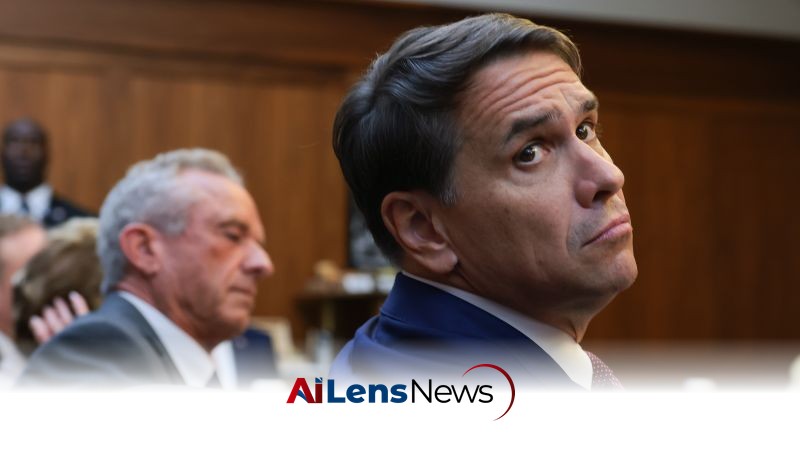


In a significant move, Todd Blanche has rescinded Trump's $1.8 billion anti-weaponization fund, easing concerns over his attorney general nomination amidst Senate resistance.
Washington DC, United States Aug 3, 2026 ALN: In a significant development concerning the nomination of Todd Blanche as attorney general, the nominee announced on Sunday that he is formally rescinding a contentious $1.8 billion fund aimed at addressing alleged weaponization of the federal government against individuals. This decision comes in the wake of mounting pressure from Senate Republicans, particularly Senators John Cornyn of Texas and Thom Tillis of North Carolina, who had indicated they would block his nomination unless the fund was abandoned.
The fund, known as the "anti-weaponization" fund, was established as part of a settlement agreement in a lawsuit filed by former President Donald Trump against the Internal Revenue Service (IRS). The lawsuit stemmed from allegations that the IRS had improperly targeted Trump and his associates for audits and investigations, which they claimed were politically motivated. The fund was intended to offer financial compensation to individuals who claimed to be victims of such government overreach, including participants in the January 6, 2021, Capitol riot.
The establishment of the anti-weaponization fund raised eyebrows among various political circles, as it was seen as an attempt to institutionalize a form of compensation for perceived political victimization. Critics of the fund argued that it could set a dangerous precedent, where government entities might be compelled to provide reparations based on subjective claims of political bias. This concern was particularly pronounced among Senate Republicans, who feared that the fund could be exploited for political gain, further exacerbating divisions within the party.
In his announcement on social media platform X, Blanche detailed the discussions he and his team had with Senate committee members over recent weeks. He stated, "My team and I have met with committee members and Senators over the past several weeks and addressed any concerns or outstanding questions. We have enjoyed good faith discussions, and as a result issue the following order and update with regard to the May IRS settlement." This statement reflects his attempt to reconcile the conflicting interests at play, particularly between the demands of Senate Republicans and the expectations from Trump and his supporters.
Blanche's order, which he attached to his social media post, explicitly rescinds the May 18, 2026, order that established the anti-weaponization fund. The document states that the fund is "rescinded and shall have no force or effect." This action is significant not only for Blanche's nomination but also for the broader implications it has for Trump's agenda and the Republican Party's internal dynamics. The decision to rescind the fund may be viewed as a strategic move to secure Blanche's nomination by aligning more closely with the priorities of Senate Republicans, who hold considerable sway in the confirmation process.
While Blanche had previously indicated that the fund was effectively "dead" and the Justice Department had communicated to courts that the program was abandoned, the lack of a formal written commitment had left ambiguity. The fund's establishment was contentious, and its potential implications raised concerns among some Republican senators who feared it could set a precedent for government compensation based on perceived political victimization. This uncertainty may have contributed to the hesitance of Senate Republicans to support Blanche's nomination, as they sought to clarify their stance on the fund and its implications.
Another contentious aspect of the agreement was an addendum that provided immunity to Trump and his family from tax investigations. Cornyn, in particular, had been vocal about wanting clarification that this immunity would only apply to past investigations and not extend to future inquiries. The Sunday order from Blanche clarifies that the immunity measure "applies by its terms only retroactively" and is limited to "the named parties in the lawsuit" referenced in the agreement. This clarification may help alleviate some concerns among Senate Republicans, but it also signals the complexity of navigating the political landscape surrounding this nomination. The interplay of legal ramifications and political maneuvering highlights the challenges faced by Blanche as he sought to balance the interests of various stakeholders involved in this process.
Blanche's decision to rescind the fund and clarify the immunity provisions comes after a week of uncertainty regarding his confirmation as attorney general. Trump had previously threatened to withdraw Blanche's nomination if he did not receive the necessary support in the Senate, with the possibility of renominating him after Cornyn and Tillis leave the Senate next year. This threat underscores the precarious position in which Blanche found himself, caught between the demands of the former president and the reservations of Senate Republicans. The dynamics of this situation illustrate the ongoing tensions within the Republican Party, where loyalty to Trump often clashes with the more traditional values espoused by some party members.
During a meeting with Blanche, Cornyn and Tillis reportedly made progress in their discussions, but they did not reach a definitive agreement. Cornyn's spokesperson indicated that an understanding had been reached with the Justice Department, though the specifics of this agreement remain unclear. The political backdrop is further complicated by personal dynamics; Cornyn recently lost his primary election to a Trump-backed challenger, Ken Paxton, while Tillis has been a frequent critic of Trump and chose not to seek reelection. This context adds layers of complexity to the negotiations surrounding Blanche's nomination, as the senators navigate their own political futures while also considering the implications of their decisions on the party as a whole.
Blanche's announcement also comes amid a backdrop of Trump's ongoing efforts to rally support for his policies and maintain influence within the Republican Party. On Saturday, Trump reiterated his commitment to the anti-weaponization fund, suggesting that if Blanche's nomination did not proceed smoothly, he would consider reviving the idea. Trump's comments indicate a willingness to leverage the fund as a political tool, appealing to his base by framing it as a means of compensating individuals who have faced government scrutiny due to their political affiliations. This strategy reflects Trump's continued focus on galvanizing his supporters and positioning himself as a champion for those he perceives to be victims of government overreach.
As the situation continues to evolve, the implications of Blanche's rescinding of the fund extend beyond his nomination. It raises questions about the future of similar initiatives that may seek to address perceived injustices by the government against individuals based on political grounds. The Republican Party is currently navigating a complex landscape, with factions that support Trump's agenda and those that are wary of its potential consequences. This internal conflict may shape the party's strategies and priorities in the coming years, as they grapple with the challenges of maintaining unity while addressing the diverse perspectives of their constituents.
In conclusion, Todd Blanche's decision to rescind the anti-weaponization fund represents a pivotal moment in his nomination process and reflects the broader tensions within the Republican Party. The outcome of this situation will likely influence not only Blanche's future as attorney general but also the trajectory of Trump's influence and the party's direction in the coming years. The interplay of personal ambitions, political allegiances, and public perceptions will continue to shape the narrative surrounding this unfolding story. As the Republican Party seeks to navigate its identity in a post-Trump landscape, the decisions made in this context will have lasting implications for its future and the political landscape as a whole.
To learn more about the latest developments in Elections, stay updated with our exclusive reports and analyses on AiLensNews.

