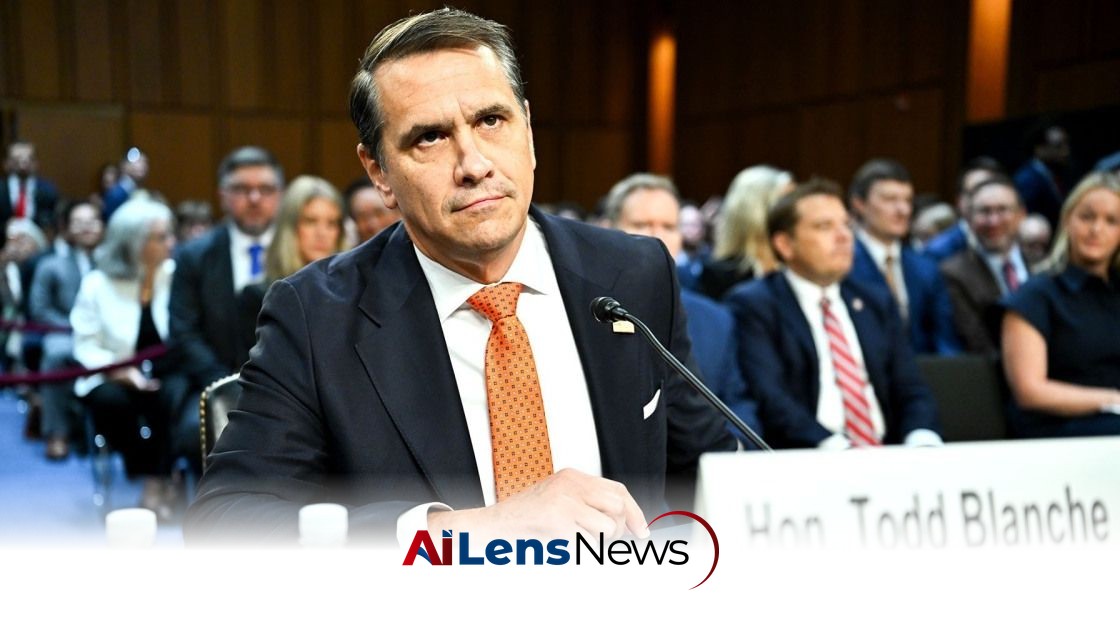


Acting Attorney General Todd Blanche's nomination gains momentum as he rescinds the controversial 'anti-weaponization' fund, addressing concerns from Senate Republicans.
Washington DC, United States Aug 3, 2026 ALN: Acting Attorney General Todd Blanche's nomination appears to be back on track after he announced a key decision to satisfy two Republican holdouts in the Senate. These senators had previously stated they could not support his confirmation until the controversial "anti-weaponization" fund was rescinded in writing. The fund, which had been a focal point of contention, raised alarms among some lawmakers who feared it could be weaponized against political adversaries.
In a significant move, Blanche posted an order establishing, "Beyond any doubt, there is no fund." This decisive action aims to alleviate the concerns raised by the Republican senators, paving the way for his nomination to proceed. By formally abolishing the fund, Blanche is attempting to quell fears that it could be used as a tool for political retribution, a concern that has been echoed by critics across the political spectrum.
The fund had been a contentious issue, with critics arguing that it could be used to target political opponents. The implications of such a fund could have extended beyond mere fiscal allocations; it could have set a precedent for the politicization of the Department of Justice. By formally rescinding it, Blanche hopes to demonstrate his commitment to impartiality and restore confidence among lawmakers. This step is crucial, especially in a time when trust in governmental institutions is waning, and accusations of partisanship are rampant.
As the Senate prepares for the upcoming confirmation hearings, Blanche's decision may prove pivotal in garnering the necessary support for his appointment. The political landscape surrounding his nomination remains dynamic, and further developments are anticipated as the hearings approach. The confirmation process for high-ranking officials in the Department of Justice often becomes a battleground for broader political disputes, and Blanche's case is no exception. The scrutiny will be intense, as both parties seek to leverage the hearings to advance their narratives.
Blanche's actions reflect a broader strategy to navigate the complexities of Senate confirmations, particularly in a polarized political environment. The outcome of his nomination could have significant implications for the Department of Justice and its direction under his leadership. A confirmed Attorney General has the power to influence key policies, including those related to civil rights, criminal justice reform, and the enforcement of federal laws. Therefore, the stakes are high not only for Blanche but also for the future trajectory of the department.
With the rescission of the fund, Blanche aims to solidify his position and move forward with the confirmation process, which has been closely watched by both supporters and detractors alike. His ability to assuage concerns from Senate Republicans may also signal a willingness to work across the aisle, a quality that could be beneficial in a highly divided Congress. This could potentially open doors for bipartisan cooperation on other pressing issues, such as law enforcement funding and criminal justice reform.
The political implications of Blanche's nomination extend beyond the immediate context of his confirmation. The Department of Justice has been at the center of numerous high-profile investigations and legal battles in recent years, particularly concerning issues of election integrity, civil rights, and the balance of power between state and federal authorities. A new Attorney General could shift the department's focus and priorities, which would resonate throughout the legal landscape of the United States.
Moreover, the public perception of the Department of Justice is crucial, especially as it relates to its independence from political influence. Blanche's commitment to impartiality, as demonstrated by the rescission of the fund, could be a critical factor in restoring faith in the institution. This is particularly important in light of recent controversies surrounding the department, including accusations of bias in investigations and prosecutions that have polarized public opinion.
As confirmation hearings draw nearer, the political dynamics will likely evolve further. Senators will scrutinize Blanche's past actions, qualifications, and vision for the Department of Justice. His response to questions regarding the fund and his broader stance on political interference will be pivotal. The hearings will not only assess his fitness for the role but will also serve as a platform for senators to express their views on the current state of justice in America.
In conclusion, Todd Blanche's decision to rescind the controversial "anti-weaponization" fund is a strategic move aimed at securing his nomination as Attorney General. This action reflects an understanding of the complexities of Senate confirmations in a polarized political environment and underscores the importance of maintaining the integrity of the Department of Justice. As the confirmation process unfolds, the implications of this decision will resonate well beyond the Senate chamber, influencing public trust and the future direction of justice policy in the United States.
To provide further context, the concept of weaponization in politics refers to the use of governmental powers or resources to target political opponents or dissenters. This notion has gained traction in recent years, particularly as political divisions have deepened. Concerns about the misuse of government funds or agencies for political gain have led to heightened scrutiny of actions taken by officials in positions of power.
The Department of Justice, as the primary federal agency responsible for enforcing the law and administering justice, is often at the forefront of these discussions. Its role in investigating and prosecuting cases related to civil rights, election integrity, and other politically sensitive issues places it in a unique position where perceptions of impartiality are paramount. Any indication that the department may be used as a political tool can undermine its credibility and the public's trust in its operations.
Blanche's decision to rescind the fund is indicative of the broader challenges faced by government officials in navigating a highly charged political environment. The implications of his actions extend beyond his own nomination; they reflect a need for transparency and accountability in governmental operations. By addressing the concerns raised by senators, Blanche is not only working to secure his position but also engaging in a larger conversation about the integrity of the Department of Justice.
Looking ahead, the confirmation hearings will likely delve into various aspects of Blanche's qualifications, including his legal background, previous positions within the justice system, and his vision for the department. Senators may probe into his views on key issues such as criminal justice reform, civil rights protections, and the need for an independent judiciary free from political influence. The outcomes of these discussions will be closely monitored, as they could set the tone for Blanche's tenure as Attorney General.
In summary, Todd Blanche's rescission of the "anti-weaponization" fund is a significant development in his nomination process, reflecting the intricate balance of political maneuvering and the necessity of maintaining institutional integrity. As the Senate prepares for confirmation hearings, the implications of this decision will reverberate through the halls of government and the broader legal landscape, shaping the future of justice policy in the United States.
To learn more about the latest developments in Elections, stay updated with our exclusive reports and analyses on AiLensNews.

