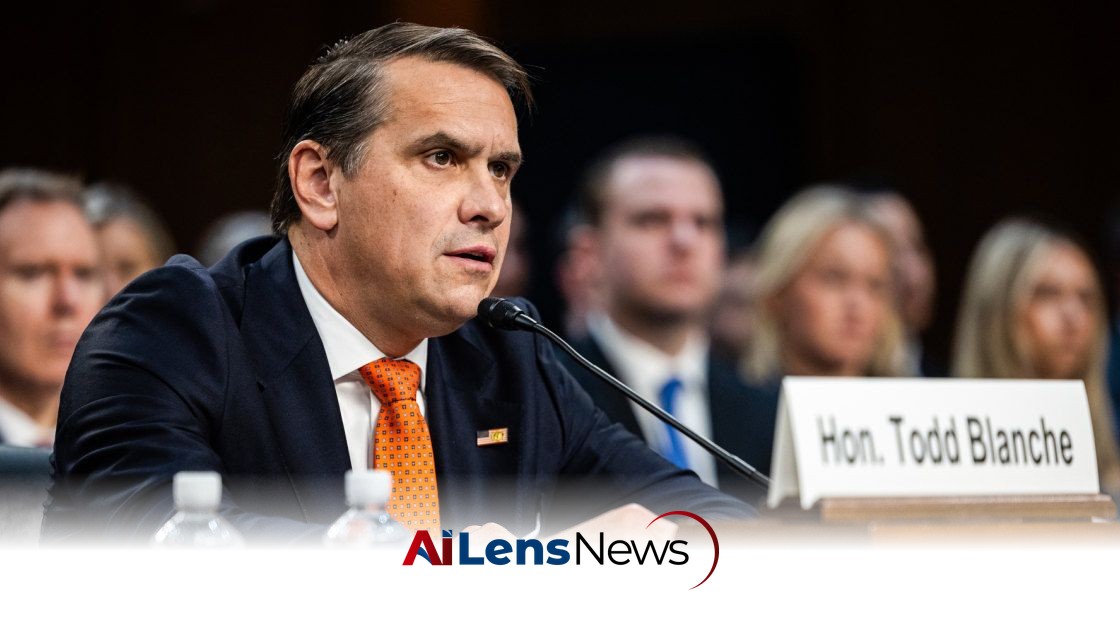


Acting Attorney General Todd Blanche has announced a deal with senators to rescind a $1.8 billion anti-weaponization fund, paving the way for his nomination vote.
Washington DC, United States Aug 3, 2026 ALN: In a significant development within the ongoing tensions between the Senate and the Trump administration, acting Attorney General Todd Blanche announced on Sunday night that a deal had been reached to eliminate the controversial $1.8 billion Anti-Weaponization Fund. This announcement followed a prolonged standoff that had raised concerns among various senators regarding the implications of the fund.
Blanche took to social media platform X to communicate the resolution, stating, "My team and I have met with committee members and Senators over the past several weeks and addressed any concerns or outstanding questions." He emphasized the importance of productive dialogue, noting that the discussions had been conducted in good faith. The announcement included a signed order that formally rescinded the establishment of the fund, stating, "The Attorney General’s May 18, 2026 Order establishing the Anti-Weaponization Fund (‘Fund’) is rescinded and shall have no force or effect." This decisive action was intended to clarify that the fund would no longer exist, a move that Blanche described as necessary to eliminate any lingering doubts about its status.
The timing of Blanche's announcement is particularly noteworthy, as it comes just two days before the Senate Judiciary Committee is scheduled to vote on his nomination to become attorney general on a permanent basis. The nomination process has been closely scrutinized, and the resolution regarding the fund was seen as a critical factor in gaining the support of key senators who had expressed reservations about Blanche's confirmation.
The Anti-Weaponization Fund was originally part of a settlement agreement that arose from a lawsuit filed by former President Donald Trump against the Internal Revenue Service (IRS). The lawsuit was notable not only for its legal implications but also for its political ramifications, as it included provisions that shielded the Trump family from certain tax audits. Critics of the fund raised alarms over the potential for payouts to be extended to individuals involved in the January 6, 2021, Capitol riot, which added a layer of controversy to the fund's existence.
Key Republican senators, including John Cornyn from Texas and Thom Tillis from North Carolina, had voiced strong opposition to the fund, making it clear that their support for Blanche's nomination was contingent upon the administration's decision to rescind the fund. Their concerns were indicative of a broader unease among some members of the GOP regarding the implications of the fund and its connection to the events of January 6. Notably, both senators have had a complicated relationship with Trump, with Tillis recently announcing he would not seek re-election and Cornyn facing a challenge from a Trump-endorsed primary opponent, Ken Paxton.
Despite their criticisms, Cornyn and Tillis did not serve on the Judiciary Committee and, therefore, could not directly vote on Blanche’s nomination until it reached the full Senate. This procedural nuance underscores the complexities of the nomination process and the interplay between different factions within the Republican Party. Blanche's prior testimony before Congress, in which he asserted that the fund was effectively dead, did little to assuage the concerns of senators like Cornyn and Tillis, who sought a more definitive resolution.
Trump's reaction to the unfolding situation added another layer of tension. Just a day before Blanche's announcement, Trump threatened to "push hard" for the revival of the fund, indicating that he remained committed to its establishment despite the pushback from senators. This statement highlighted the ongoing friction between the former president and certain members of the Senate, as well as the potential for continued political maneuvering surrounding the issue.
Senator John Kennedy, a Republican from Louisiana and a member of the Judiciary Committee, also weighed in on the matter, stating his intent to exclude participants in the January 6 riot from any future legislation related to the fund. This position reflects a broader sentiment among some lawmakers who are keen to distance themselves from the events of that day while still navigating the complex political landscape shaped by Trump's influence.
The elimination of the Anti-Weaponization Fund may have significant implications for the broader political environment as well as for Blanche's confirmation process. By addressing the concerns raised by key senators, Blanche may have bolstered his chances of securing the necessary votes for his nomination. However, the lingering effects of the fund's controversy and the ongoing divisions within the Republican Party could continue to shape discussions in the Senate as lawmakers grapple with the implications of the Trump administration's policies.
As the Senate Judiciary Committee prepares for its vote, the outcome remains uncertain. The dynamics surrounding Blanche's nomination and the contentious history of the Anti-Weaponization Fund serve as a reminder of the complexities and challenges faced by lawmakers in navigating the intersection of law, politics, and public sentiment. The resolution of this issue may not only impact Blanche's future as attorney general but also signal the extent to which the Senate is willing to confront the legacies of the Trump administration as it moves forward.
The Anti-Weaponization Fund was initially conceived as a means to bolster the government's ability to counter perceived threats, particularly in relation to domestic extremism and political violence. However, its association with the Trump administration and the controversial events surrounding January 6th created a perception that the fund could be misused or politicized. This perception led to a growing chorus of critics who argued that the fund could potentially benefit individuals who engaged in violent acts, thereby undermining the very rule of law it was intended to uphold.
The implications of the fund's elimination extend beyond the immediate political ramifications for Blanche's nomination. It also raises questions about how the Senate will address issues of accountability and transparency in future legislation. As lawmakers navigate the complexities of governance in a highly polarized environment, the ability to forge bipartisan agreements on sensitive issues will be crucial. The resolution of the Anti-Weaponization Fund controversy may serve as a litmus test for future cooperation among senators, particularly those who may be wary of aligning too closely with the Trump legacy.
Furthermore, the ongoing influence of Trump on the Republican Party remains a significant factor in shaping the political landscape. The tensions between traditional GOP values and the more populist, nationalist sentiments that Trump embodies pose challenges for party unity. Senators like Cornyn and Tillis, who are navigating their own political futures in a party increasingly defined by Trump's influence, must balance their own positions with the expectations of their constituents and party leadership.
As the Senate Judiciary Committee approaches its vote, the members will be weighing not only the qualifications of Blanche as a nominee but also the broader implications of his confirmation for the Biden administration and its ability to implement its agenda. The outcome of this nomination, particularly in light of the controversies surrounding the Anti-Weaponization Fund, could set the tone for future legislative battles and the overall direction of the administration's policies.
In conclusion, the resolution to eliminate the Anti-Weaponization Fund represents a critical juncture in the ongoing dialogue between the Senate and the Trump administration. It underscores the complexities of navigating political controversies while also attempting to uphold the rule of law and address the concerns of constituents. As Blanche's nomination moves forward, the implications of this decision will reverberate throughout the Senate and the broader political landscape, shaping the future of governance in an era marked by division and uncertainty.
To learn more about the latest developments in Elections, stay updated with our exclusive reports and analyses on AiLensNews.

