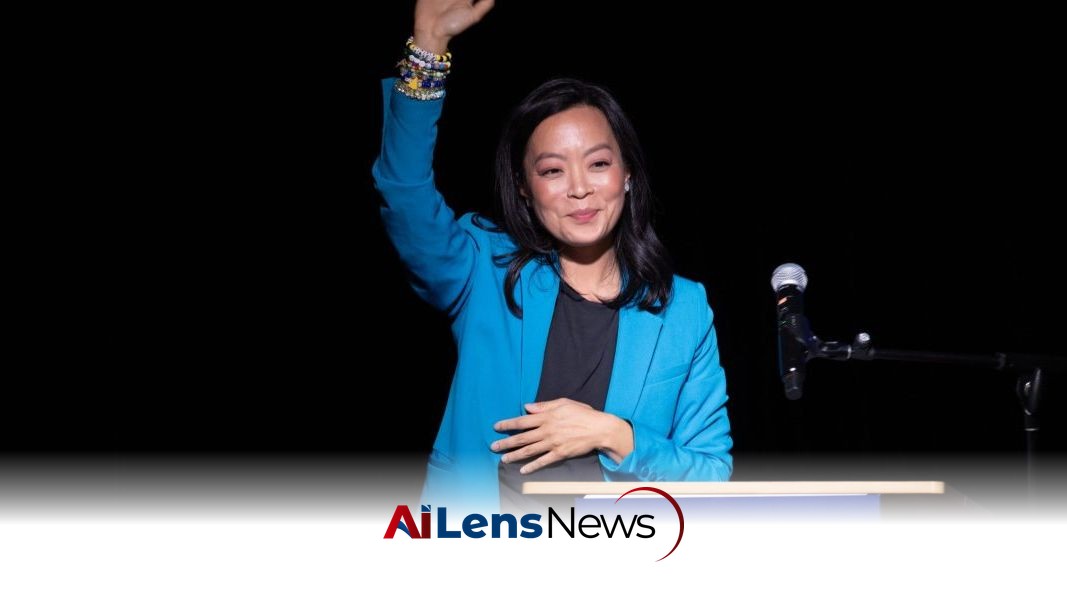


The recent Wisconsin primary results challenge the credibility of prediction markets like Kalshi and Polymarket, which had heavily favored Francesca Hong.
Washington DC, United States Aug 14, 2026 ALN: The recent Democratic primary in Wisconsin has sent ripples through the political landscape, particularly impacting the reputation of prediction markets, notably Polymarket and Kalshi. These platforms had previously established a strong track record for accurately forecasting electoral outcomes, including the highly contested 2024 presidential election. However, the unexpected defeat of progressive candidate Francesca Hong, who was heavily favored by these markets and traditional polling, has prompted a reevaluation of their reliability.
In the lead-up to the Wisconsin primary, Polymarket and Kalshi had assigned Francesca Hong an astounding 95% probability of winning against her opponent, David Crowley. This prediction was in line with the assessments made by various polling firms, which had also anticipated a straightforward victory for Hong. However, the election results revealed a different narrative, with Crowley emerging victorious by a narrow margin of less than half a percentage point. This outcome not only stunned political analysts but also raised questions regarding the accuracy of prediction markets.
In light of the surprising results, Polymarket took the unusual step of retracting a boastful tweet that claimed Hong had a 96% chance of winning. This deletion has been interpreted by many as an acknowledgment of the miscalculation and a desire to mitigate the backlash from users and critics who had relied on their data. Notably, despite the overwhelming odds in favor of Hong, she lacked endorsements from key figures within the Democratic socialist faction, such as Bernie Sanders and Alexandria Ocasio-Cortez, which may have contributed to her defeat. The absence of such endorsements could suggest a disconnect between the prediction market's analysis and the actual grassroots dynamics at play within the Democratic electorate.
Kalshi's response to the criticism was somewhat defensive. The founders argued that the outcome of a single election should not be viewed as definitive proof of the market's failure. Tarek Mansour, the CEO of Kalshi, emphasized that the 95% probability assigned to Hong still allowed for a 5% chance of an upset, a margin that, while small, is not negligible. Luana Lopes Lara, another founder of Kalshi, echoed this sentiment by stating, "5% is not 0%," thereby suggesting that the prediction market had accounted for the possibility of an unexpected turn of events. This highlights a crucial aspect of prediction markets: they operate on probabilities rather than certainties, and a small percentage can lead to significant outcomes in the political arena.
This incident comes at a time when prediction markets are increasingly being integrated into the broader conversation about electoral forecasting. Their credibility soared during the final stages of the 2024 presidential campaign, where they were perceived as offering insights that diverged from traditional polling methodologies. In particular, Polymarket and Kalshi gained recognition for suggesting that Donald Trump had a competitive edge in a race that many conventional polls characterized as too close to call. This newfound influence has led to partnerships with major media outlets, such as CNN, which designated Kalshi as its official prediction-markets partner. Furthermore, Dow Jones has plans to incorporate Polymarket data into its flagship publications, including The Wall Street Journal, Barron’s, and MarketWatch. Such partnerships underscore the growing acceptance of prediction markets as a legitimate tool for gauging electoral sentiment, even as they face scrutiny following this recent upset.
Despite this growing prominence, Crowley’s victory underscores the limitations of prediction markets. It is not the first instance where these platforms have misjudged electoral outcomes. Earlier in June, Polymarket and Kalshi had given reality-TV personality Spencer Pratt a 75% chance of advancing from the nonpartisan mayoral primary in Los Angeles, only for him to finish third. Similarly, in May, Kalshi assigned Rep. Thomas Massie a comparable probability of winning the Republican primary in Kentucky’s 4th Congressional District, but he ultimately lost to Trump-backed challenger Ed Gallrein. These instances highlight a pattern where prediction markets can miscalculate probabilities, especially in races that feature strong undercurrents of voter sentiment that may not be fully captured by polling data. Such misjudgments can lead to significant financial implications for users who invest based on these predictions, raising ethical concerns about the responsibility of these platforms in providing accurate information.
The implications of this week's results extend beyond just the reputations of Polymarket and Kalshi; they raise broader questions about the role of prediction markets in political forecasting. Many experts argue that while these platforms can provide valuable insights, they should not be seen as infallible. Statistician and political forecaster Nate Silver recently weighed in on the debate, stating, "I think prediction markets are cool. But people should stop treating them as magic, and I don’t think they’re a good substitute for polls, or belong in models." This statement reflects a growing sentiment among analysts who advocate for a more nuanced approach to understanding electoral dynamics. Silver's critique emphasizes the need to combine various forecasting methods to achieve a more comprehensive view of electoral outcomes.
As the political landscape continues to evolve, the recent Wisconsin primary serves as a cautionary tale for both prediction markets and their users. It emphasizes the importance of treating these platforms as tools that complement, rather than replace, traditional polling methodologies. While prediction markets can offer insights into public sentiment and potential outcomes, they are ultimately based on probabilities that can shift dramatically in response to real-world events. The challenge moving forward will be for these platforms to refine their methodologies and enhance their predictive capabilities, ensuring that they can provide accurate forecasts while maintaining transparency and accountability. This could involve integrating more qualitative data, such as voter sentiment and local political dynamics, into their algorithms.
In conclusion, the Wisconsin primary upset has not only impacted the progressive wing of the Democratic Party but has also cast a shadow over the credibility of prediction markets. As these platforms continue to grow in popularity and influence, it will be crucial for them to learn from their missteps and work towards improving their forecasting accuracy. The evolving relationship between prediction markets and traditional polling will likely shape the future of electoral analysis, requiring a collaborative approach that leverages the strengths of both methodologies. As political analysts and forecasters continue to navigate the complex landscape of electoral predictions, the lessons learned from this primary may serve as a pivotal moment in the ongoing discourse surrounding the efficacy and reliability of prediction markets in the political arena.
To learn more about the latest developments in Elections, stay updated with our exclusive reports and analyses on AiLensNews.

