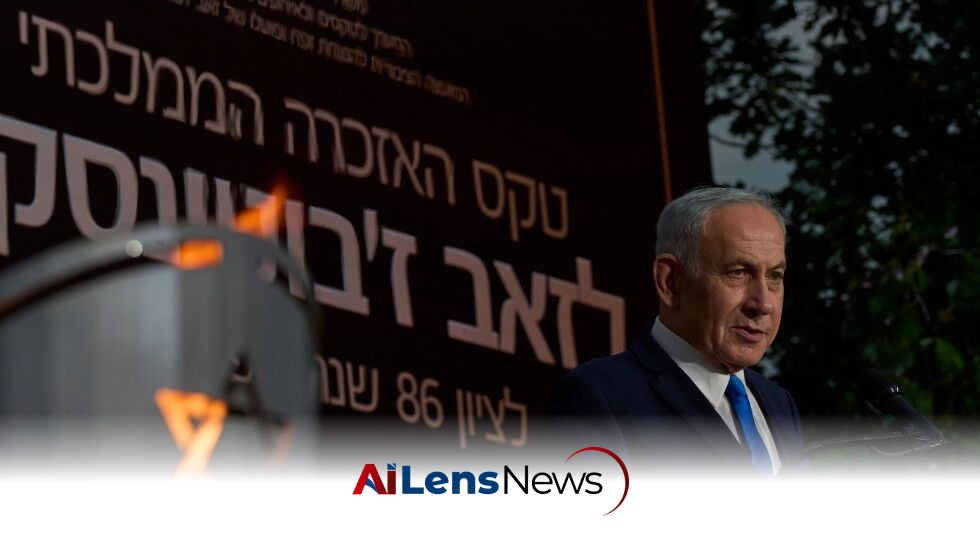


Israeli Prime Minister Benjamin Netanyahu has condemned New York Mayor Zohran Mamdani for labeling him a war criminal, calling the ICC charges 'bogus.'
Washington DC, United States Jul 27, 2026 ALN: Israeli Prime Minister Benjamin Netanyahu has recently accused New York Mayor Zohran Mamdani of "fomenting hate" after the mayor referred to him as a war criminal. Mamdani's comments came in light of the International Criminal Court (ICC) charges against Netanyahu, which he described as serious and deserving of attention. This exchange has not only intensified the ongoing debate around accountability in the Israeli-Palestinian conflict but has also drawn attention to the broader implications for international relations.
During a memorial event at Mount Herzl Military Cemetery in Jerusalem, Netanyahu responded to Mamdani's remarks, asserting that the accusations are unfounded and politically motivated. He emphasized that such statements only serve to incite division and hostility, further complicating an already fraught dialogue surrounding Israel's actions in the region. Netanyahu’s characterization of Mamdani's comments as hate-fueled rhetoric reflects a defensive posture that many political leaders adopt when their actions are scrutinized on the international stage.
The tensions between Israeli officials and various international leaders have escalated, particularly in the wake of the ICC's involvement. The ICC has been a focal point for discussions surrounding war crimes and human rights violations, especially in relation to the Israeli-Palestinian conflict. Netanyahu's government has faced scrutiny over its policies and actions in the ongoing conflict with Palestine, leading to calls for accountability from various global leaders. The ICC's decision to investigate alleged war crimes in the context of the Israel-Palestine conflict has added a layer of complexity to the situation, as it challenges the long-standing narratives and justifications for military actions taken by Israel.
In recent years, there has been an increasing emphasis on international law and human rights, with various international organizations and governments advocating for accountability in conflict situations. The ICC's charges against Netanyahu are part of this larger movement, which seeks to hold leaders accountable for actions that may violate international humanitarian laws. This has led to a polarized discourse, where any criticism of Israeli leadership can be perceived as anti-Semitic, while supporters of Palestinian rights argue that silence equates to complicity in ongoing injustices.
Mamdani, a prominent figure in New York's political landscape, has been vocal about his stance on Israel's actions, advocating for justice and accountability. His comments reflect a broader sentiment among some political leaders who are increasingly critical of Israel's policies. As a mayor representing a diverse city with a significant population of Palestinian and Arab Americans, Mamdani's remarks resonate with constituents who feel marginalized by the dominant narratives surrounding the Israeli-Palestinian conflict.
Mamdani's advocacy for justice is not just limited to rhetoric; it is part of a larger movement that seeks to address systemic inequalities and promote human rights. His position emphasizes the need for dialogue and accountability, suggesting that political leaders should not shy away from addressing uncomfortable truths about state actions. This approach has garnered both support and backlash, illustrating the contentious nature of discussions surrounding Israel's policies.
The exchange between Netanyahu and Mamdani has sparked a range of reactions from both supporters and critics of the two leaders. Supporters of Netanyahu argue that the mayor's comments are irresponsible and harmful, potentially inciting further division within communities. They contend that labeling a sitting prime minister as a war criminal undermines diplomatic efforts and could exacerbate tensions between Israel and its allies.
Conversely, critics believe that Mamdani is right to speak out against perceived injustices, viewing his comments as a necessary challenge to the status quo. They argue that accountability is essential for peace and that leaders should be held responsible for their actions, particularly in the context of ongoing violence and suffering in Palestine. This divide highlights the broader societal rift regarding how to approach the Israeli-Palestinian conflict, with differing opinions on the role of international law and human rights in shaping policy.
This incident highlights the ongoing complexities of international relations involving Israel and its leaders. As tensions continue to rise, the dialogue surrounding accountability and justice remains a contentious issue. The responses from both Netanyahu and Mamdani may reflect wider geopolitical dynamics, particularly as nations grapple with their relationships with Israel and the implications of supporting or opposing its policies.
The accusations made by Mamdani and the subsequent response from Netanyahu can be seen as indicative of a larger trend in which local leaders are increasingly engaging in international discourse. As cities like New York become more diverse, their leaders may feel compelled to represent the views of their constituents on global issues, including human rights and international law. This evolution in local political leadership could lead to a more pronounced role for cities in shaping foreign policy discussions, particularly in relation to contentious issues like the Israeli-Palestinian conflict.
Moreover, the ongoing discourse surrounding the ICC's role in investigating war crimes has the potential to affect diplomatic relations between Israel and other nations. Countries that support the ICC's actions may find themselves at odds with Israel, while those that oppose the ICC's jurisdiction over Israeli actions may align more closely with Netanyahu's government. This could lead to shifts in alliances and partnerships, impacting not only the Israeli-Palestinian conflict but also broader geopolitical dynamics in the Middle East.
In conclusion, Netanyahu's accusations against Mamdani underscore the fraught nature of political discourse surrounding the Israeli-Palestinian conflict, with both leaders standing firm in their respective positions. The incident serves as a reminder of the complexities involved in addressing issues of accountability and justice in international relations, as well as the potential for local leaders to influence global conversations. As the situation continues to evolve, the ramifications of this exchange may resonate beyond the immediate context, affecting future dialogues about peace, justice, and human rights in the region.
To learn more about the latest developments in Political Controversies, stay updated with our exclusive reports and analyses on AiLensNews.

