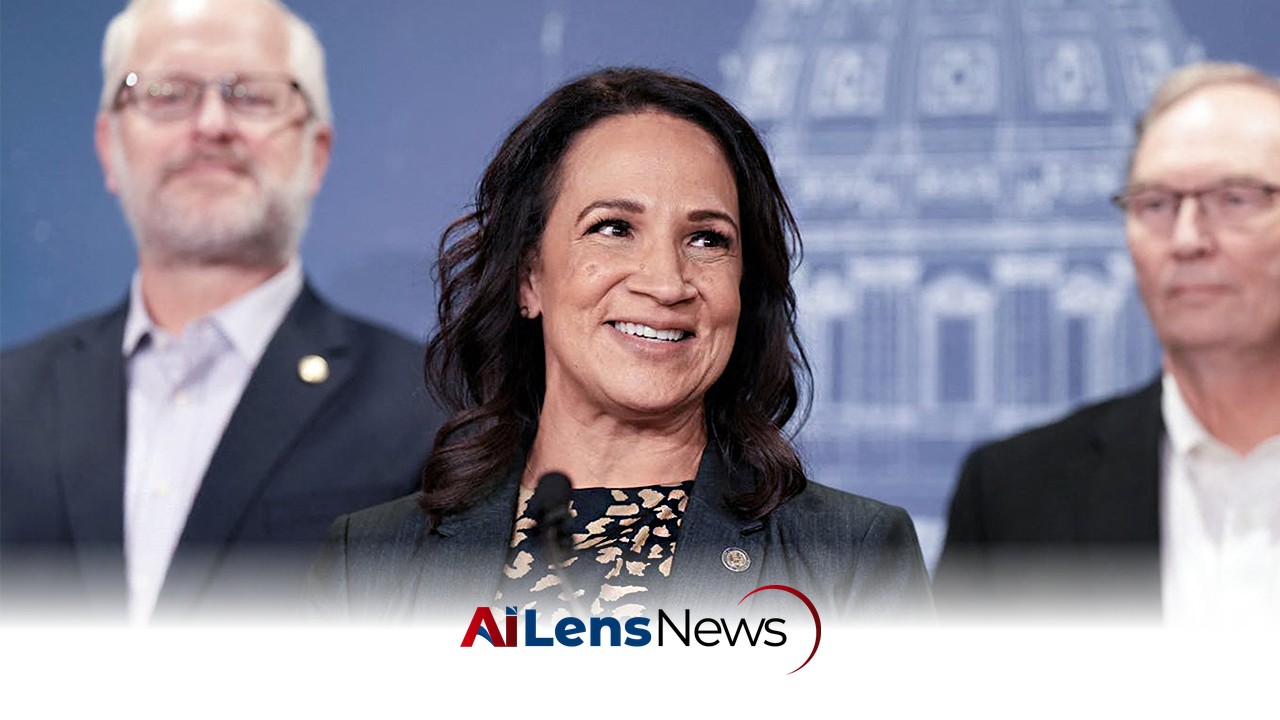


Minnesota House Speaker Lisa Demuth secures the Republican nomination to challenge Sen. Amy Klobuchar in the upcoming gubernatorial election.
Washington DC, United States Aug 12, 2026 ALN: Minnesota House Speaker Lisa Demuth has emerged victorious in the Republican gubernatorial primary, positioning her to face Democratic nominee Amy Klobuchar in the November election. This victory marks a significant achievement for Demuth, who remained in the race despite losing the Republican Party endorsement to Kendall Qualls at the state convention. Qualls secured the endorsement after a lengthy voting process, but Demuth maintained that her legislative experience and leadership of House Republicans made her the strongest candidate for the upcoming election.
Demuth's primary win is noteworthy in the context of Minnesota's political landscape, which has seen a notable shift in recent years. The Republican Party has faced challenges in Minnesota, as no Republican has won a statewide election since 2006, when Tim Pawlenty narrowly secured reelection. Since then, the party has lost 28 consecutive statewide contests, marking an 18-year drought— the longest in Minnesota's history. This prolonged period of defeats has raised questions about the party's viability in a state that has traditionally leaned Democratic in recent elections. The GOP's struggles in Minnesota are reflective of broader trends seen across the Midwest, where the party has lost ground in urban and suburban areas, which have increasingly favored Democratic candidates.
In a surprising turn, Demuth also defeated Mike Lindell, the founder of MyPillow, who had garnered the endorsement of former President Donald Trump and is known for his national recognition. Lindell's presence in the race added a unique dimension, as he brought a high profile and significant media attention, particularly due to his controversial statements and involvement in various political issues. However, Demuth's campaign strategy and her ability to connect with grassroots Republican voters ultimately proved more effective in the primary election. Her focus on local issues and her legislative accomplishments may have resonated more with the Republican base than Lindell's national profile and celebrity status.
The Republican primary race was marked by a range of issues that resonated with voters. Demuth expressed optimism about her campaign, stating, "There is hope for Minnesota, for the change that is so desperately needed." She emphasized the need to address issues such as fraud in state programs, tax reduction, and improving education. These topics are particularly pertinent in the current political climate, where voters are increasingly concerned about government efficiency and accountability. Demuth's focus on these issues may help her differentiate herself from Klobuchar, who has a long history in public service and a more established political presence. As the primary race unfolded, it became clear that Demuth's campaign was built on a platform of pragmatic conservatism, aimed at appealing to both traditional Republican voters and those disillusioned with the current administration.
The gubernatorial race was significantly altered when Governor Tim Walz announced he would not seek a third term, opting instead to focus on combating fraud in state programs during his final year in office. This decision came amid increasing scrutiny of fraud involving government-funded programs, which had become a political liability. Walz's exit from the race shifted the focus to Klobuchar as a potential successor, transforming the election into a contest against one of Minnesota's most established politicians. Klobuchar, who has served in the U.S. Senate since 2007, is known for her centrist approach and bipartisan efforts, which may appeal to a broader voter base. Her experience in the Senate has allowed her to cultivate relationships across the aisle, positioning her as a candidate who can bridge divides, which could be a significant advantage in a polarized political environment.
As the election approaches, Demuth's campaign will aim to capitalize on the frustrations of voters regarding state governance and the need for change. The political environment in Minnesota has been shaped by various factors, including economic concerns, public safety, and the ongoing impacts of the COVID-19 pandemic. These issues have heightened public scrutiny of the state's leadership and governance, providing an opportunity for Demuth to position herself as a fresh alternative to the status quo. Her campaign will likely focus on articulating a clear vision for Minnesota's future, addressing the needs of families and businesses affected by the pandemic and its aftermath.
Furthermore, Demuth's victory in the primary could signal a shift within the Republican Party in Minnesota, as she represents a more traditional conservative approach compared to some of her challengers. Her leadership experience in the House of Representatives and her focus on pragmatic solutions may resonate with voters who are looking for stability and effective governance. The Republican base in Minnesota has been increasingly fragmented, with some factions pushing for more extreme positions, while others seek a return to more moderate conservatism. Demuth's ability to navigate this landscape will be critical as she seeks to unify her party ahead of the general election.
In addition to her campaign themes, Demuth will likely need to address the challenges posed by Klobuchar's established political network and fundraising capabilities. Klobuchar's experience in national politics and her ability to connect with voters on a personal level will be significant factors in the general election. As a well-known figure, Klobuchar has the advantage of name recognition and a proven track record in public service, which could influence undecided voters. Her campaign will likely focus on her accomplishments in the Senate, including her work on healthcare, education, and infrastructure, which could resonate with voters looking for effective governance.
The implications of this gubernatorial race extend beyond Minnesota, as it serves as a reflection of broader national trends within the Republican Party and the Democratic Party. The outcome of the election may provide insights into voter sentiments regarding key issues such as healthcare, education, and economic recovery. Additionally, the race could influence the political landscape in Minnesota for years to come, shaping the strategies and priorities of both parties in future elections. A victory for Demuth could signal a resurgence of Republican influence in a state that has been predominantly Democratic in recent years, while a win for Klobuchar could further solidify the Democratic Party's hold on Minnesota.
As the campaign unfolds, both candidates will likely engage in debates and public forums to discuss their visions for Minnesota's future. Voter turnout will be crucial in determining the outcome, as both parties aim to mobilize their bases while also appealing to independent voters who may hold the key to victory. The stakes are high, with both candidates aware that the gubernatorial election could serve as a bellwether for the political climate in Minnesota and beyond. The outcome may also reflect broader national trends, as voters across the country grapple with issues such as inflation, public safety, and the ongoing impact of the pandemic.
In conclusion, Lisa Demuth's victory in the Republican gubernatorial primary sets the stage for a competitive race against Amy Klobuchar. With a focus on addressing pressing issues and a desire for change, Demuth aims to galvanize support among voters who are seeking a new direction for Minnesota. The general election will undoubtedly be a critical moment for both candidates, as they seek to connect with voters and articulate their visions for the state in a rapidly changing political landscape. As both candidates prepare for the upcoming election, their respective strategies will likely evolve in response to the shifting dynamics of the race, ultimately shaping the future of Minnesota's political landscape.
To learn more about the latest developments in Elections, stay updated with our exclusive reports and analyses on AiLensNews.

