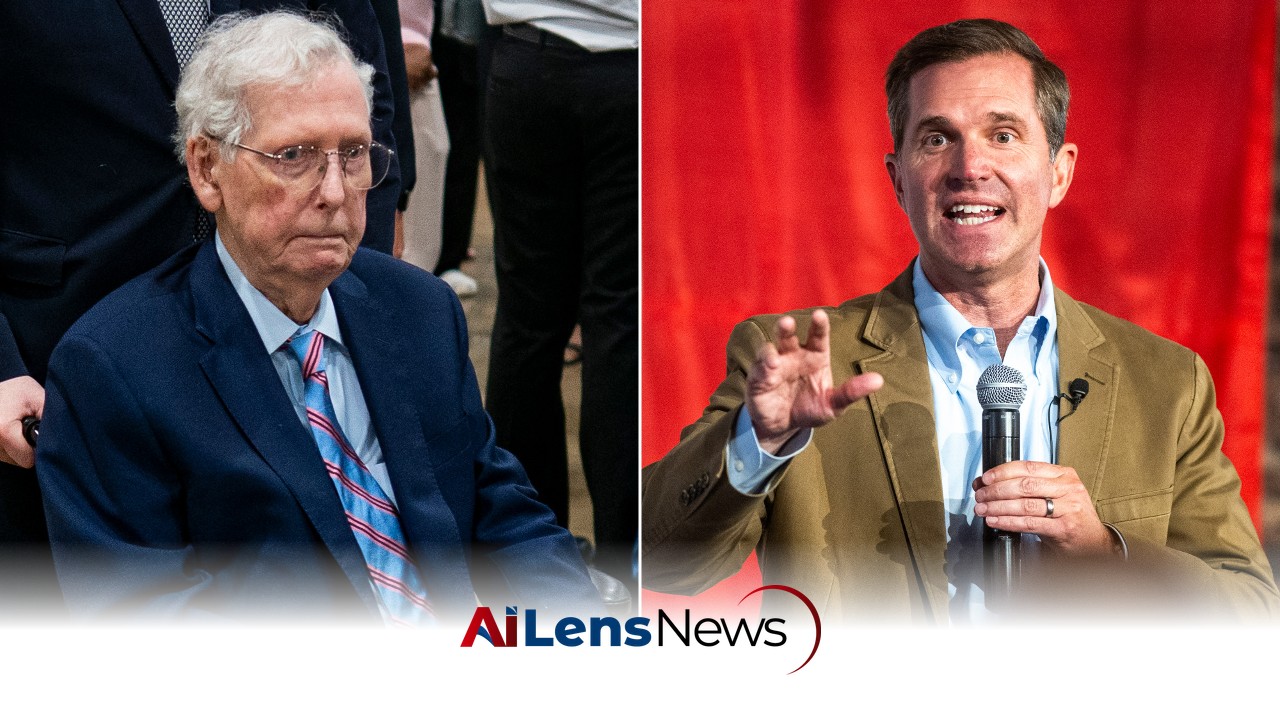


Governor Andy Beshear calls on Senator Mitch McConnell to prove his fitness for office following a hospital discharge, urging transparency about his health.
Frankfort, United States Jul 29, 2026 ALN: Kentucky Governor Andy Beshear, a Democrat, has issued a public demand for Senator Mitch McConnell, a Republican representing Kentucky, to demonstrate his fitness to continue serving in Congress. This demand follows McConnell's recent discharge from a hospital where he spent a significant amount of time recovering from health issues, including a fall at his home. Beshear's call for transparency comes amid growing concerns about the health of aging politicians and the implications their health can have on governance.
In a letter addressed to McConnell, Beshear specifically urged the 84-year-old senator to communicate directly with the residents of Kentucky regarding his ability to fulfill his duties. The governor's demand reflects a broader concern among constituents about the health and effectiveness of their elected officials. "I am calling on you to directly and verbally address the people of Kentucky and provide proof of your capacity to serve, or resign," Beshear wrote. This statement underscores the importance of accountability and transparency in public office, particularly for those in senior positions.
The backdrop to this situation involves McConnell's recent health challenges. His office announced on Monday that he had been discharged from the hospital but had not yet been medically cleared to leave the rehabilitation facility where he has been undergoing intensive physical therapy. This therapy is crucial for rebuilding strength and minimizing the risk of future falls, especially given McConnell’s history of childhood polio, which has significantly impacted his mobility. His ongoing rehabilitation process means that he will miss key political events in Kentucky, including a major gathering known as Fancy Farm, as well as upcoming Senate votes.
In a statement regarding his health, McConnell expressed his commitment to returning to his full schedule. He said, "I'm still working hard to get back to my full schedule of work in the Senate and in Kentucky, keeping up with intense physical therapy per my doctors’ orders. Unfortunately, that means I won’t be able to make it to Fancy Farm, Kentucky, this Saturday ... As always, I appreciate all of your continued well wishes, and I’m looking forward to getting back to the Senate and to Kentucky soon." This statement, while intended to reassure constituents, has not fully alleviated concerns regarding his health and ability to serve effectively.
Governor Beshear's demand for transparency is not an isolated incident; it reflects a growing trend of public scrutiny regarding the health of aging elected officials. In recent years, there has been heightened awareness and concern regarding the capacity of older politicians to fulfill their roles. The deaths of prominent figures such as former Senator Dianne Feinstein, who passed away in 2023, and former Senator Lindsey Graham, who died earlier this month, have sparked discussions about the implications of age and health on political leadership.
Moreover, this scrutiny extends beyond individual cases. The health of elected officials has become a topic of bipartisan concern, with President Joe Biden facing pressure regarding his age and mental acuity as he navigates his re-election campaign. Questions surrounding the fitness of a leader to serve are not limited to any one party; they span the political spectrum. Former President Donald Trump has also faced scrutiny regarding his health, as critics point to various gaffes and visible signs of aging, including hospital visits and bruises. This climate of concern reflects a broader societal dialogue about the intersection of age, health, and political effectiveness.
In addition to his letter to McConnell, Governor Beshear also reached out to Senate Majority Leader John Thune, urging him to investigate McConnell’s condition should the senator fail to provide proof of his capability to continue serving. Beshear emphasized in his correspondence that the ongoing speculation regarding McConnell's health could have been largely mitigated with greater transparency from the senator's office. The lack of clear communication has fueled public anxiety and speculation, highlighting the need for elected officials to be forthcoming about their health status, especially when it impacts their ability to serve.
This situation raises important questions about the responsibilities of elected officials to their constituents. As public servants, elected officials are expected to prioritize the needs and concerns of the people they represent. When health issues arise, it is critical for these officials to maintain open lines of communication with their constituents to assure them that they are capable of fulfilling their duties. The demand for transparency is not merely a personal request; it reflects the expectations of the electorate who rely on their leaders to be present and effective in their roles.
The implications of this situation extend beyond McConnell and Beshear. It serves as a reminder of the importance of addressing health issues among public officials and the potential impact on governance. As the population ages and more politicians reach advanced ages, the conversation surrounding health and fitness in political leadership is likely to intensify. This dialogue is essential for ensuring that elected officials are adequately equipped to handle the responsibilities of their positions, which can ultimately affect legislative processes and the well-being of constituents.
As the political landscape continues to evolve, the health of aging leaders will remain a critical issue. The demands for transparency and accountability from figures like Governor Beshear are likely to resonate with constituents who seek assurance that their representatives are capable of serving effectively. This ongoing scrutiny may lead to a broader examination of age-related policies within political institutions, prompting discussions about term limits, age restrictions, and the support systems in place for aging politicians.
In conclusion, Governor Beshear's call for Senator McConnell to address his health concerns or resign highlights significant issues surrounding transparency and accountability in governance. As public officials navigate their roles amidst health challenges, the expectations of their constituents remain paramount. The implications of this situation extend beyond individual politicians, reflecting a societal concern about the capacity of aging leaders to serve effectively in an ever-changing political landscape.
To learn more about the latest developments in Political Controversies, stay updated with our exclusive reports and analyses on AiLensNews.

