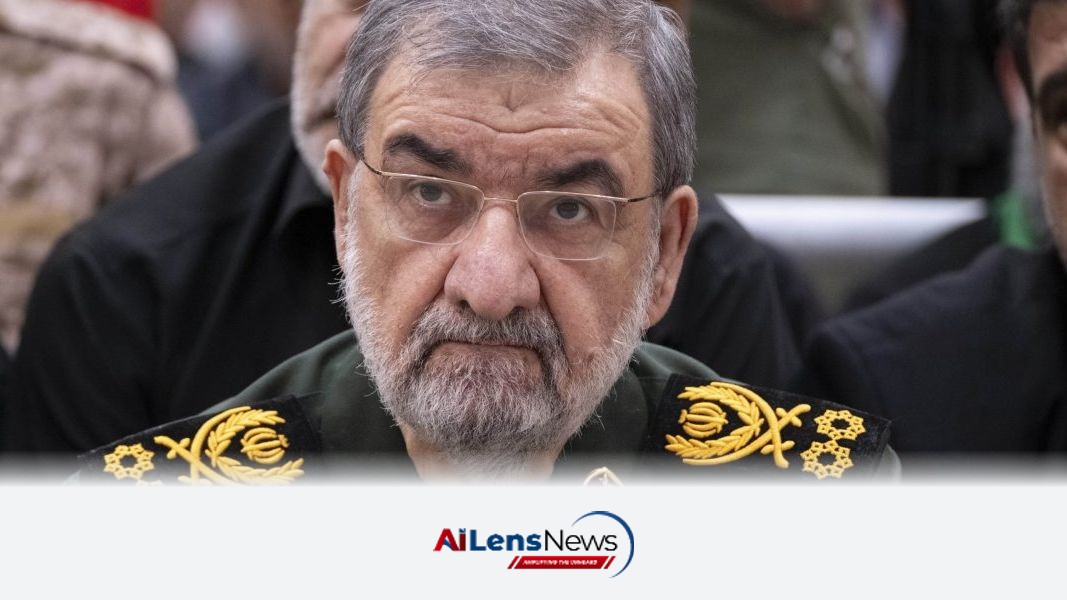



Iran's top security official declares any support for U.S. sanctions as an 'act of war,' while the country seeks to revive diplomatic talks amid escalating tensions.
Washington DC, United States Aug 24, 2026 ALN: The new head of Iran’s top security body has issued a stern warning regarding the implications of any country supporting new U.S. economic measures against the Islamic Republic. This warning, articulated on Sunday, emphasizes that Tehran will interpret such support as an "act of war." The remarks come amid escalating tensions between Iran and the United States, which have been exacerbated by a series of economic sanctions that have been imposed on Iran over the years. These sanctions have had profound effects on Iran's economy, limiting its ability to engage in international trade and access financial markets.
In the backdrop of this situation, Iran’s president has defended a recently signed memorandum of understanding with the United States, asserting that it represents the best path forward in a conflict that has seen little progress towards resolution. The memorandum is seen as a potential stepping stone towards easing tensions, although its effectiveness remains uncertain. The U.S. Treasury Secretary, Scott Bessent, is expected to announce new economic measures on Monday, following the U.S. pledge to impose an "unprecedented" level of economic warfare against Iran. This commitment to economic isolation reflects a long-standing U.S. strategy aimed at curbing Iran's influence in the region, particularly concerning its nuclear program and its support for proxy groups in neighboring countries.
Additionally, the geopolitical landscape is further complicated by the anticipated visit of Pakistan’s army chief to Iran, as mediators seek to revive discussions aimed at de-escalating the ongoing conflict. This visit underscores the role of regional powers in attempting to mediate tensions between Iran and the United States, as well as Iran's relationships with its neighbors, which have been strained in recent years.
The hard-line leader of Iran’s Supreme National Security Council, Mohsen Rezaei, has issued a pointed warning through social media, which was quickly disseminated by Iranian state media. This warning follows Rezaei’s most extensive public statements since his appointment earlier this month. During an interview with state broadcaster, he declared, "If (Trump) wants to do something, we will retaliate in a seismic manner," indicating that Iran would not hesitate to respond aggressively to perceived threats.
Rezaei has elaborated on the potential targets of Iranian retaliation, specifically mentioning alternative oil-shipping routes from the Persian Gulf, highlighting Iran's strategic positioning in a region that is crucial for global energy supplies. His background as a former Revolutionary Guard commander and military adviser to Supreme Leader Ayatollah Mojtaba Khamenei positions him as a key figure in Tehran’s hardline approach, which appears to be solidifying under the current political climate.
In contrast to the hardline rhetoric from Rezaei, Iranian President Masoud Pezeshkian has advocated for diplomatic solutions to the ongoing conflict. He expressed on Sunday that the memorandum of understanding signed in mid-June represents the best opportunity to move beyond a state of "neither war nor peace." This reflects a recognition of the dire economic situation in Iran, which has struggled to attract foreign investment amid the ongoing war and sanctions.
Pezeshkian emphasized that there is "not a single provision in this agreement that amounts to capitulation," asserting that the supreme leader sets the policies that the government will follow. This statement seeks to reassure both domestic and international audiences that Iran is not yielding to external pressures but is instead seeking a pragmatic resolution to its challenges. The interim deal opened a 60-day period for negotiations aimed at resolving the conflict and reaching an agreement regarding Iran’s nuclear program. However, this period ended last week without any visible signs of compromise or extension, which raises concerns about the future of diplomatic efforts.
Despite the heightened tensions, reports indicate that there have been no confirmed attacks in the Strait of Hormuz over the past 48 hours, according to a multinational coalition overseen by the U.S. Navy. However, shipping traffic in the area remains at reduced levels, reflecting the ongoing uncertainty and risk associated with maritime operations in this strategically important waterway. The U.S. military has reported that its blockade of Iranian ports has redirected 70 commercial ships and disabled three as of Sunday, showcasing the tangible impacts of U.S. sanctions and military presence in the region.
In a related development, Iran’s newly established Persian Gulf Strait Authority, which has been sanctioned by the U.S., published a list of dozens of ships that it claims have violated arrangements for transiting the strait. These vessels are now subject to future restrictions, including potential fines or seizures. The Strait of Hormuz, which has historically been regarded as an international waterway, has become a focal point of contention following a series of military confrontations, including a notable attack on Iran on February 28.
As tensions continue to rise in this complex geopolitical landscape, the international community is closely monitoring developments. The situation remains fluid, with potential implications for global oil markets, regional security, and the broader dynamics of U.S.-Iran relations. The interplay between military posturing, economic sanctions, and diplomatic efforts will likely shape the future trajectory of this conflict, as both sides navigate the challenges posed by their respective domestic and international agendas.
To learn more about the latest developments in Political Controversies, stay updated with our exclusive reports and analyses on AILensNews.

