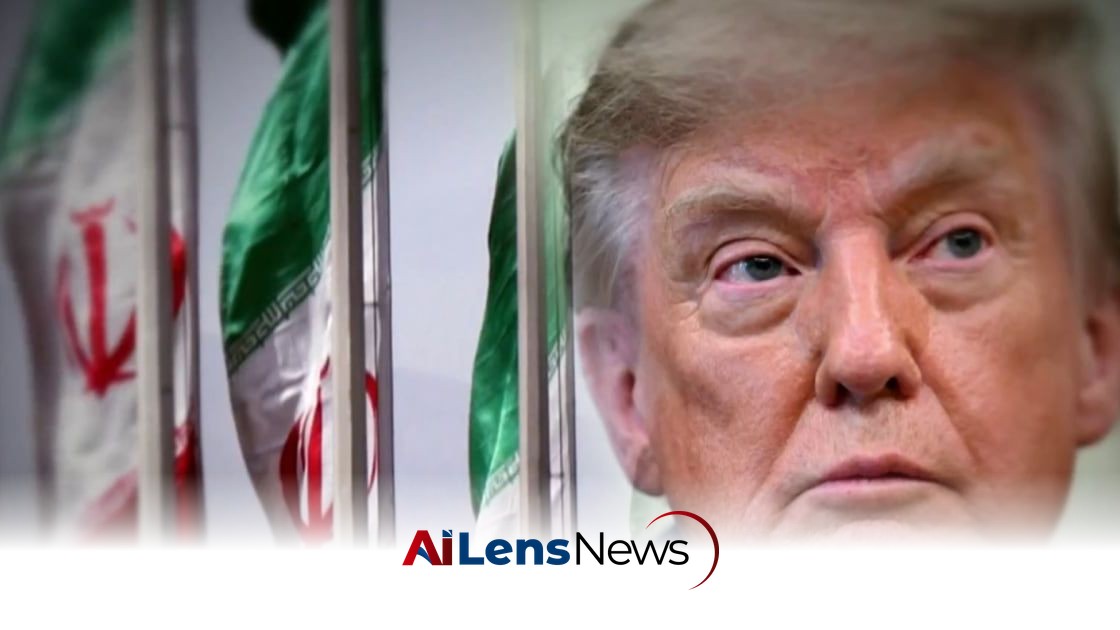


Iran has urged the U.S. to recognize its defeat and cease its delusions following President Trump's remarks about the Strait of Hormuz.
Washington DC, United States Aug 16, 2026 ALN: A defiant Iran has issued a strong statement urging the United States to "accept the reality of defeat and stop indulging in delusions." This statement comes in response to President Donald Trump's recent suggestion that he would soon declare the Strait of Hormuz a "territory of the United States." This provocative assertion by the U.S. president has reignited longstanding tensions between the two nations, particularly concerning the strategic waterway that is crucial for global oil shipments.
The Strait of Hormuz is a narrow passage that connects the Persian Gulf to the Gulf of Oman and the Arabian Sea. It is one of the most critical maritime chokepoints in the world, with a significant percentage of the world's oil supply passing through it. In recent years, the strait has become a flashpoint for U.S.-Iran relations, especially as Iran's government has repeatedly threatened to block it in retaliation for U.S. sanctions and military actions in the region. The U.S. has responded by increasing its naval presence in the Persian Gulf, aimed at safeguarding the free flow of commerce and deterring any aggressive moves by Iran.
Iran's Foreign Ministry spokesperson emphasized that such claims from the U.S. are not only unrealistic but also indicative of a misunderstanding of regional dynamics. This assertion highlights a critical aspect of the ongoing U.S.-Iran conflict: the differing perceptions of power and influence in the region. Iran views the Strait of Hormuz as a vital national interest and a symbol of its sovereignty, while the U.S. sees it as a key area for maintaining global energy security.
President Trump's comments have raised concerns among international observers, who fear that such rhetoric could escalate tensions further. Analysts suggest that Iran's reaction is part of a broader strategy to assert its influence in the region and counter perceived U.S. hegemony. Iran's leadership has consistently framed its resistance to U.S. policies as a struggle against imperialism, appealing to nationalist sentiments among its populace. The Iranian government frequently uses the Strait of Hormuz as a bargaining chip in its negotiations with the U.S. and its allies, threatening to close it in response to sanctions or military provocations.
The implications of this ongoing standoff are significant. The Strait of Hormuz is not only vital for oil shipments but also for the broader geopolitical landscape of the Middle East. Any disruption in the strait could lead to skyrocketing oil prices and a ripple effect on global markets. Furthermore, the potential for military confrontation in this region poses a direct threat to international shipping and trade. As both nations continue to assert their positions, the risk of miscalculation increases, raising the stakes for all involved parties.
As the situation evolves, diplomatic channels remain crucial in preventing misunderstandings that could lead to conflict. The U.S. and Iran have a history of engaging in back-channel communications, and it is essential for both sides to find a way to de-escalate tensions. The international community has a vested interest in maintaining stability in the Strait of Hormuz, given its importance to global energy supplies. Countries that rely heavily on oil imports from the Gulf region are particularly concerned about the potential for conflict, which could disrupt their energy security.
In conclusion, Iran's call for the U.S. to recognize its defeat reflects ongoing geopolitical tensions and highlights the complexities of U.S.-Iran relations. The rhetoric surrounding the Strait of Hormuz symbolizes broader issues at play, including nationalism, regional power dynamics, and the struggle for influence in the Middle East. As both sides navigate this delicate situation, the potential for conflict looms large, and the international community will be watching closely for any signs of escalation or resolution. The future of U.S.-Iran relations, and the stability of the region as a whole, may hinge on the ability of both nations to engage in constructive dialogue and find common ground.
To learn more about the latest developments in Political Controversies, stay updated with our exclusive reports and analyses on AiLensNews.

