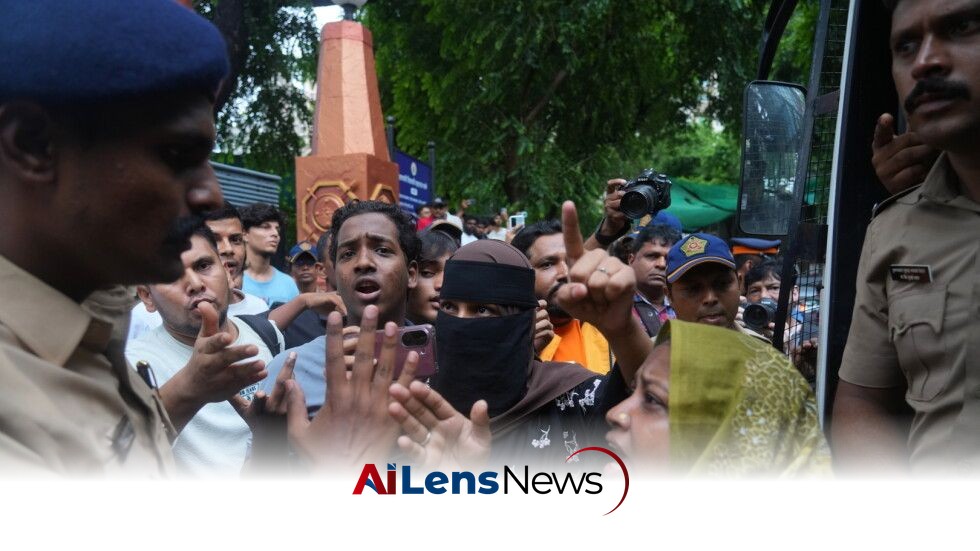


Thousands of young protesters in New Delhi defy police restrictions, showcasing the growing strength of the Cockroach movement against Prime Minister Modi's government.
Washington DC, United States Jul 24, 2026 ALN: In a bold display of defiance, thousands of young protesters have set up camp on the streets of New Delhi, challenging the government's heavy-handed restrictions. This sit-in is part of the Cockroach movement, which has emerged as a significant force against Prime Minister Narendra Modi's administration. The movement's name symbolizes resilience, as cockroaches are known for their ability to survive in adverse conditions, much like the protesters who are determined to voice their grievances despite facing significant challenges.
The Cockroach movement has its roots in widespread dissatisfaction among various segments of the Indian population, particularly the youth. In recent years, India has experienced a growing wave of protests, driven by issues such as unemployment, economic inequality, and government policies perceived as oppressive. The movement began to gain traction during the height of the COVID-19 pandemic, when many young people faced job losses and economic hardships. As the situation worsened, a surge of activism emerged, leading to the formation of this unique movement.
Participants in the Cockroach movement come from diverse backgrounds, including students, professionals, and workers. They are united by a common desire for change and a belief that the current government is not adequately addressing their needs. The movement has adopted a grassroots approach, utilizing social media and community organizing to mobilize supporters and spread its message. This strategy has allowed the Cockroach movement to resonate with a wide audience, particularly among the younger generation, who are increasingly disillusioned with traditional political structures.
On Thursday, protesters faced a heavy police presence as they attempted to gather in key areas of the capital. The authorities have deployed additional security forces in an effort to deter the protests, leading to confrontations between police and demonstrators. Despite the risks, many young activists remained steadfast, chanting slogans and holding banners that called for accountability and reform. The determination of the protesters highlights their commitment to their cause, even in the face of potential arrest and violence.
The police crackdown has included the use of barricades, water cannons, and tear gas in some instances, raising concerns about the government's approach to dissent. Many human rights organizations have condemned these actions, arguing that they violate the right to peaceful assembly and expression. As the situation escalates, the protesters continue to adapt their strategies, employing tactics such as sit-ins and mass gatherings to draw attention to their demands.
The protests reflect a broader sentiment of discontent among the youth in India, who are increasingly frustrated with issues such as unemployment, rising prices, and perceived governmental overreach. Economic challenges have been exacerbated by the pandemic, leading to widespread job losses and a lack of job creation. Many young people feel that the government has failed to provide adequate support during these difficult times, contributing to a growing sense of disillusionment.
The Modi administration's response has been to tighten security measures, which has only fueled the protesters' resolve. Government officials have characterized the movement as a threat to national stability, framing their crackdown as necessary to maintain order. However, this narrative has been met with skepticism by many, who view the government's actions as an attempt to silence dissent rather than address the legitimate grievances of the population.
Public opinion remains divided, with some segments of society supporting the government's approach, while others express solidarity with the protesters. The situation has ignited debates about civil liberties, the role of the state in regulating dissent, and the responsibilities of the government to its citizens. As the protests continue, the dialogue surrounding these issues is likely to intensify.
The Cockroach movement has garnered international attention, with observers noting its potential to reshape the political landscape in India. Activists are calling for solidarity from global communities, urging them to support their cause for democratic rights and social justice. The movement's messaging has resonated beyond India's borders, drawing parallels to other global movements advocating for change and accountability.
International human rights organizations have expressed concern over the government's response to the protests, emphasizing the importance of protecting the right to peaceful assembly. Some foreign governments have also weighed in, calling for restraint and dialogue between the protesters and the government. This international scrutiny adds another layer of complexity to the situation, as the Indian government navigates its domestic challenges while managing its image on the global stage.
As the sit-in continues, the Cockroach movement is poised to challenge the status quo in India. The resilience of these young protesters serves as a reminder of the power of collective action in the face of adversity. Their determination to advocate for change reflects a growing consciousness among the youth regarding their rights and the role they play in shaping the future of their country.
The ongoing protests may have significant implications for India's political landscape, potentially influencing upcoming elections and government policies. As the movement evolves, it will be crucial to monitor the responses from both the government and the public, as well as the broader impact on civil society in India.
Protests are not new to India; the country has a long history of civil disobedience and mass movements advocating for social, political, and economic changes. The legacy of the Indian independence movement, led by figures like Mahatma Gandhi, has influenced contemporary activism, with many current movements drawing on the principles of non-violent resistance and collective action. The Cockroach movement, while unique in its branding and approach, is part of this broader tradition of protest in India.
In the past decade, India has seen numerous protests addressing various issues, including the anti-corruption movement, the protests against the Citizenship Amendment Act (CAA), and the farmers' protests against new agricultural laws. Each of these movements has highlighted different grievances but shares a common thread of public dissatisfaction with government policies and practices. The Cockroach movement can be viewed as a continuation of this trend, as it seeks to unite disparate voices under a single banner of resistance.
One of the defining features of the Cockroach movement is its use of social media as a tool for mobilization and awareness. Platforms such as Twitter, Facebook, and Instagram have allowed activists to organize quickly, share information, and build networks of support. This digital landscape has enabled the movement to reach a global audience, garnering international solidarity and attention.
Social media has also played a crucial role in documenting the protests and the government's response, providing a platform for activists to share their experiences and raise awareness about human rights violations. However, the use of these platforms has not been without challenges, as the government has at times attempted to restrict internet access in protest areas, raising concerns about censorship and freedom of expression.
The Cockroach movement's emergence signals a critical moment for India, particularly as the youth demographic continues to grow and assert its voice. With over half of India's population under the age of 25, the concerns raised by this movement are reflective of a larger generational shift in political engagement and activism. Young people are increasingly demanding transparency, accountability, and a government that prioritizes their needs and aspirations.
The implications of the Cockroach movement extend beyond immediate policy changes; it may also influence the political landscape in the long term. As young voters become more active and engaged, political parties may need to adapt their platforms to address the issues that resonate with this demographic. This shift could lead to a reconfiguration of political alliances and priorities in the coming years, potentially altering the trajectory of Indian politics.
The ongoing protests led by the Cockroach movement represent a significant chapter in the narrative of Indian activism. As young people continue to mobilize and demand change, their actions may pave the way for a more inclusive and responsive political system. The resilience and determination displayed by the protesters serve as a powerful reminder of the enduring spirit of activism in India.
As the situation develops, it will be essential to observe how the government responds to the growing demands for reform and accountability. The Cockroach movement, with its unique identity and grassroots approach, may well be a catalyst for broader societal change, influencing not just policies but also the very fabric of Indian democracy.
To learn more about the latest developments in Political Controversies, stay updated with our exclusive reports and analyses on AiLensNews.

