

The House of Representatives has narrowly passed a resolution aimed at stopping U.S. military action in Iran, signaling a warning to President Trump as tensions rise.
Washington DC, United States Jul 24, 2026 ALN: The House of Representatives has once again taken a significant step by passing a resolution to halt U.S. military action in Iran. This decision comes amid escalating tensions and uncertainty regarding the future of the conflict. The resolution, passed on July 23, 2026, reflects the increasingly polarized views among lawmakers about the role of military intervention in foreign policy, particularly in the Middle East.
The passage of this resolution marks the second time the House has sent a warning to President Donald Trump regarding military engagement in the region, indicating a growing concern among lawmakers about the implications of unilateral military action. This trend of congressional pushback against presidential military authority has roots in the broader debates surrounding the War Powers Resolution of 1973, which was enacted to ensure that Congress has a say in decisions that could lead to military conflict.
The resolution aims to limit the President's ability to engage militarily without congressional approval, a move that many lawmakers believe is essential to uphold the checks and balances outlined in the Constitution. The framers of the Constitution intended for Congress to have the power to declare war, reflecting a belief that such significant decisions should not rest solely in the hands of the executive branch. This resolution is seen as a response to perceived executive overreach, particularly in light of recent military actions that have escalated tensions with Iran.
Historically, the relationship between the U.S. and Iran has been fraught with conflict, dating back to the 1979 Iranian Revolution and the subsequent hostage crisis. The U.S. has since imposed various sanctions on Iran, aimed at curtailing its nuclear program and regional influence. In recent years, the situation has further deteriorated, with incidents such as the assassination of Iranian General Qassem Soleimani in early 2020 and retaliatory attacks against U.S. interests in the region. These events have heightened fears of a larger military confrontation.
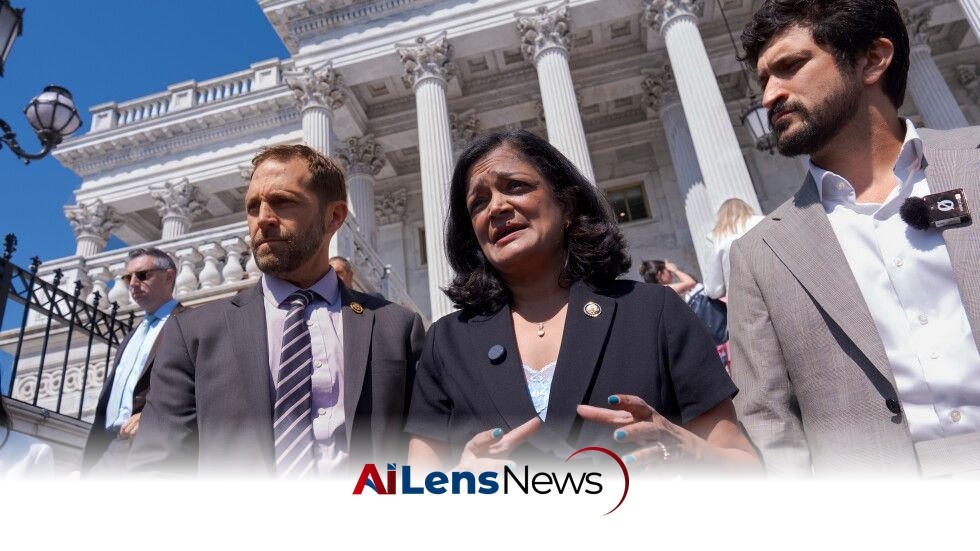
Following the vote, Representative Pramila Jayapal (D-Wash.) expressed her concerns about the potential for further military escalation. She emphasized the need for diplomatic solutions rather than military interventions, arguing that continued military engagement could lead to a protracted conflict with devastating consequences for both U.S. service members and civilians in the region. Jayapal's stance reflects a broader sentiment among many Democrats who advocate for a shift in U.S. foreign policy toward diplomacy and engagement rather than military confrontation.
Conversely, some lawmakers argue that military action is necessary to protect U.S. interests in the region. Representative Mike Johnson (R-La.) defended the administration's approach, stating that the resolution undermines national security. Johnson and other proponents of military readiness assert that a strong military presence in the Middle East is critical to deterring aggression from adversarial nations, including Iran, which they view as a destabilizing force in the region. This divide highlights the ongoing debate within Congress about the appropriate balance between military preparedness and diplomatic engagement.
This resolution could have significant implications for U.S. foreign policy in the Middle East. As tensions continue to rise, the ability of the President to respond swiftly to threats may be hindered. The resolution not only limits military action but also signals to both allies and adversaries that Congress is willing to assert its authority in matters of war and peace. This could lead to a recalibration of U.S. strategy in the region, potentially favoring diplomatic channels over military solutions.
Furthermore, the resolution may impact U.S. relations with its allies in the Middle East, particularly Israel and Saudi Arabia, who often rely on U.S. military support in their own security strategies. These nations may view the House's decision as a weakening of U.S. commitment to countering Iranian influence, which could lead them to reassess their own military postures and alliances. The implications of this shift could reverberate throughout the region, affecting everything from military cooperation to economic partnerships.
The future of U.S. involvement in Iran remains uncertain. With the House taking a stand against military action, the administration may need to reassess its strategy moving forward. This could involve increased diplomatic efforts, such as re-engaging in negotiations surrounding Iran's nuclear program or seeking to build a coalition of regional partners to address shared security concerns.
However, the path to diplomacy is fraught with challenges. The Iranian government has shown little willingness to compromise on its nuclear ambitions, and the recent history of U.S.-Iran relations is marked by mistrust and hostility. Any diplomatic overtures would require careful navigation to avoid perceptions of weakness, which could embolden hardliners in Iran and undermine U.S. credibility in the region.
The passage of this resolution highlights the ongoing debate within Congress regarding military engagement and the role of the President in foreign affairs. As the situation in Iran evolves, lawmakers will continue to grapple with the balance between national security and congressional oversight. The resolution serves as a reminder of the importance of bipartisan discussions on foreign policy and the need for a cohesive strategy that addresses both immediate security concerns and long-term diplomatic goals.
As the U.S. navigates this complex geopolitical landscape, the implications of this resolution will likely be felt not just in Washington, D.C., but throughout the Middle East and beyond. The outcome of this ongoing debate will shape the future of U.S. foreign policy and its approach to military engagement in an increasingly volatile world.
To learn more about the latest developments in Elections, stay updated with our exclusive reports and analyses on AiLensNews.

